Introducing TheStreet Pro’s Weekly Sentiment Survey


Elves. That’s what the world needs more of.
And I’m not talking about the kind that toil away in Santa’s workshop, although a few more of those would be great.
I’m talking about the kind that were on Wall Street Week with Louis Rukeyser back in the day. The Wall Street Week team would follow their predictions and publish an index to help investors stay on the right side of the market.
I joined Wall Street in the 1990s, just as Wall Street Week was becoming less of a must-see. Ironically, just a few years before TheStreet Pro, then called Real Money, was created. So, in some ways, TheStreet Pro has taken over from Wall Street Week. In most ways, I think we’re much better.
The thing is, to read everything we put out in a day is really hard. Hundreds of pieces of content weekly. Some weeks, I try to read everything, and I fail.
That got me thinking. As a supplement to everything our team writes, it would be helpful to survey them each week to find out where they stand on the market. And then share that information with subscribers.
So, last week, that’s what I did.
Each week, I’ll ask them a series of questions to help understand how they feel about the market’s direction, how they’re positioned, whether risk is high or low, and what kinds of surprises could be in store for traders.
This is week number one, so let me know what you think and how this could evolve.
Part 1: TheStreet Pro’s Sentiment Survey Results
Question 1: Direction: Over the next 2-4 weeks, how do you feel about the S&P 500?
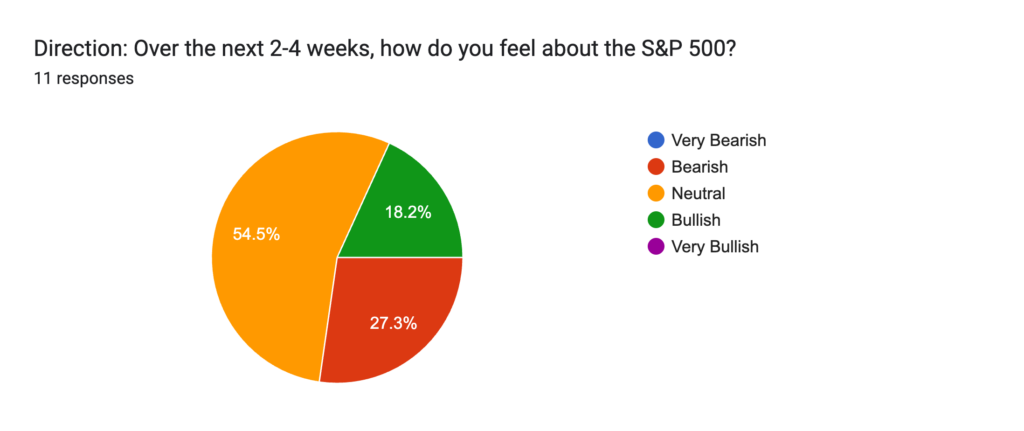
Score: -1
Commentary: The team was mixed here. Of the 11 respondents, most are neutral for the next 2-4 weeks. The 3 bears, however, beat out the 2 bulls to pull this one into the slight bearish column.
Question 2: Positioning: How are you currently positioned?
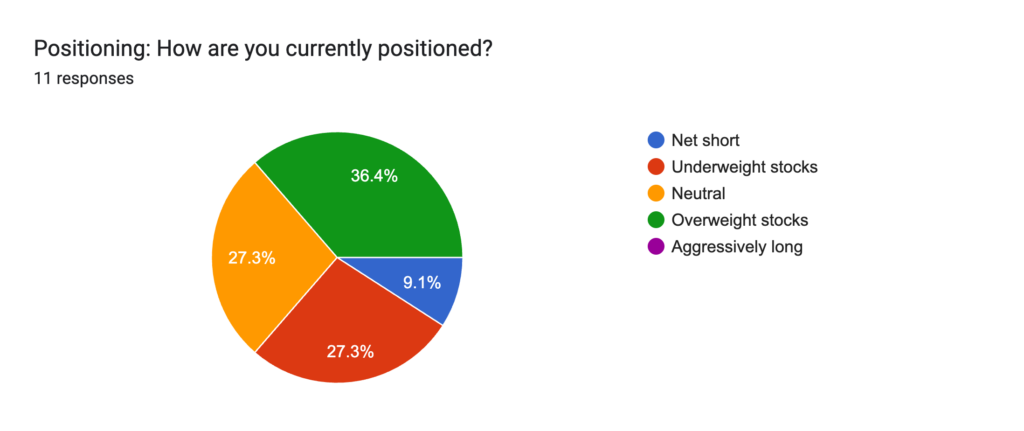
Score: -1
Commentary: Again, mixed, but with a little greater dispersion. While there were 4 bears and 4 bulls, one of the bears is more committed and has gone net short.
Question 3: Risk: How would you rate the overall market risk today?
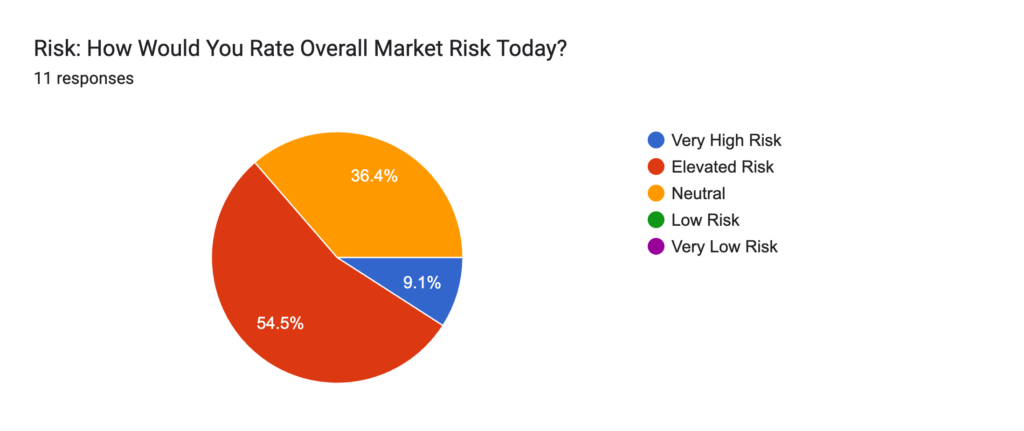
Score: -8
Commentary: 4 of the 11 respondents are neutral on risk. The other 7 think it’s a risky market, including 1 who believes risk is very high.
Question 4: Opportunity: Is it time to increase or decrease portfolio risk levels?
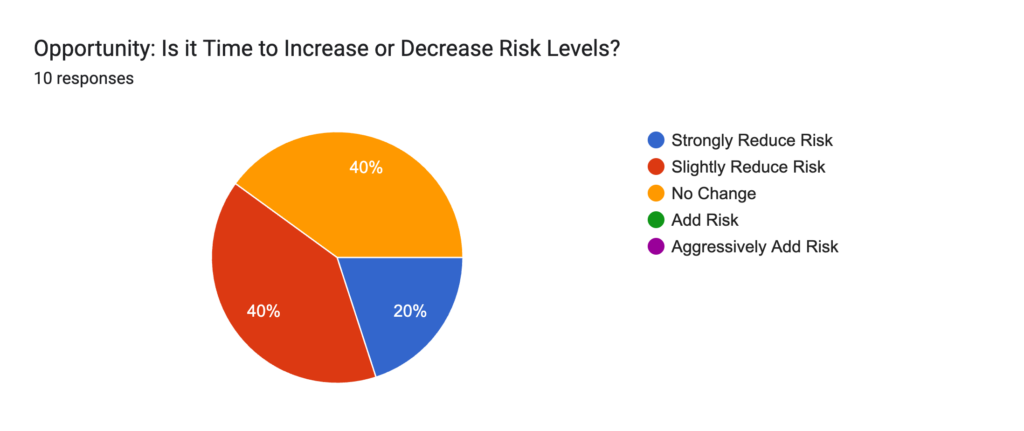
Score: -8
Commentary: 4 of the 10 respondents remained neutral on risk. The other 6 think it’s time to reduce risk, including 2 who think risk should be strongly reduced. They’re worried.
Question 5: Surprises: What is the most likely surprise over the next month?
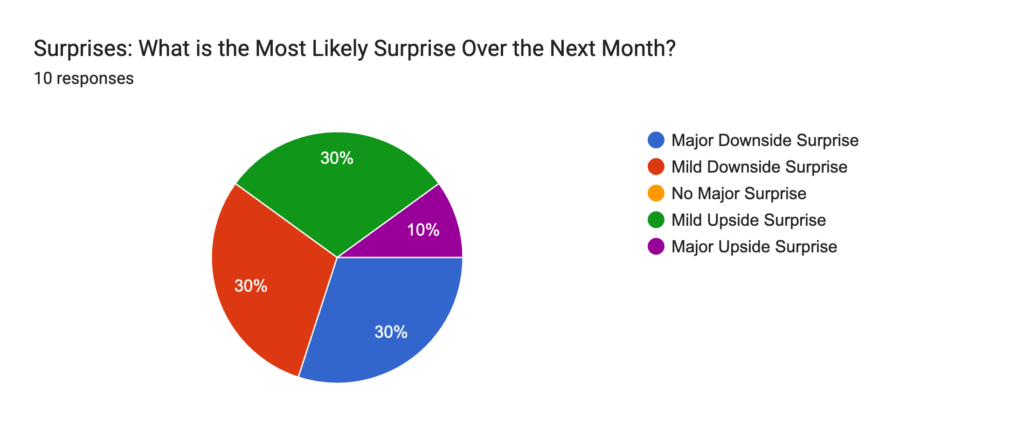
Score: -4
Commentary: Pretty much every box was ticked here. What does that mean? Well, when looking for surprises, you just don’t know. Generally, however, our team thinks a downside surprise is more likely than an upside. I guess that’s the case when the market is priced for perfection.
For now, I won’t tally the component scores into any kind of index. That’s for the future. However, you can see that our team has a cautious stance with the market climbing a wall of worry.
Additionally, one contributor noted that my survey didn’t really capture his stance. While he’s somewhat cautious, he isn’t bearish. Rather, he’s looking for continued rotation.
Part 2: Qualitative Questions
What companies will have the biggest impact this week?
Our team is watching the following companies: Marvell ($MRVL), Costco ($COST), Zscaler ($ZS), IBM ($IBM), Nvidia ($NVDA), and Walmart ($WMT)
What economic data are you watching?
Inflation was a big one, of course, mentioned by several members of the team. Real estate is important, too, and will be impacted by interest rates. Consumer sentiment and Thursday’s April Core Capital Goods Orders round out the list.
What technical indicators are you watching?
One person is buoyed by uptrends in the 50 and 200-day SMAs for the big indexes. Similarly, another sees the RSP:SPY ratio bullish for rotation. A bullish MACD for the Naz and S&P 500 has one other feeling optimistic.
On the bearish side, take a look at the consolidation in the 10-year treasury rate. An upside breakout has negative implications for stocks.
Final Thoughts
I’m excited to see how these results play out over the coming weeks and months. Our team is smart. They’re worried about the market, but, as professional traders and investors, they have a plan for how to manage risk and to profit.
Please leave a comment below and let me know your thoughts on this survey. Or the market! If there’s interest, maybe we’ll start something similar with our readers.
