Friday’s Closing Market Stats

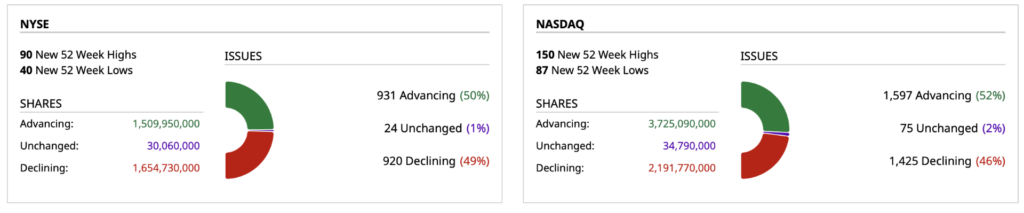
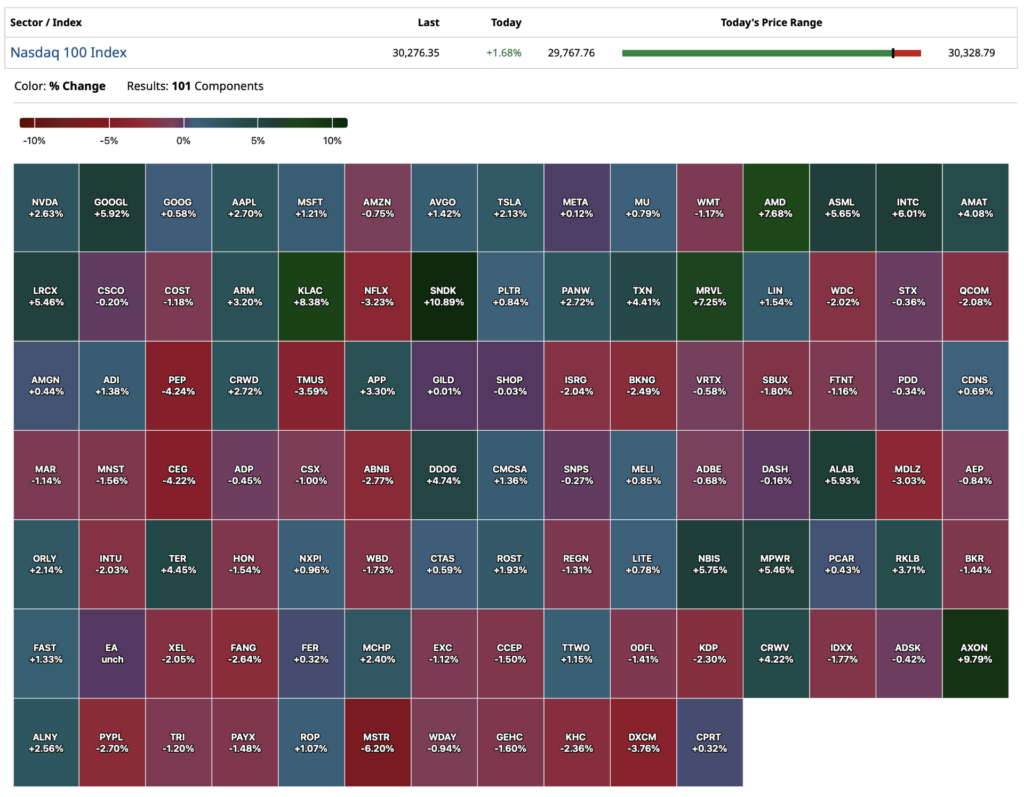
Closing Volume

– NYSE volume 10% below its one-month average
– NASDAQ volume 7% above its one-month average
– VIX index: down 9.31% to 17.63

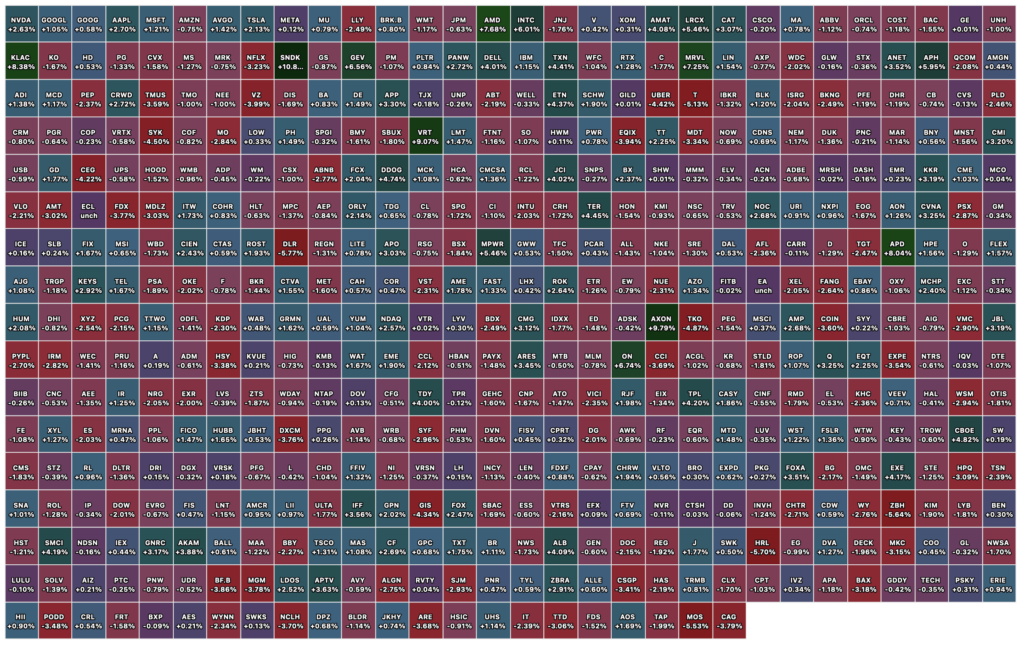
Breadth

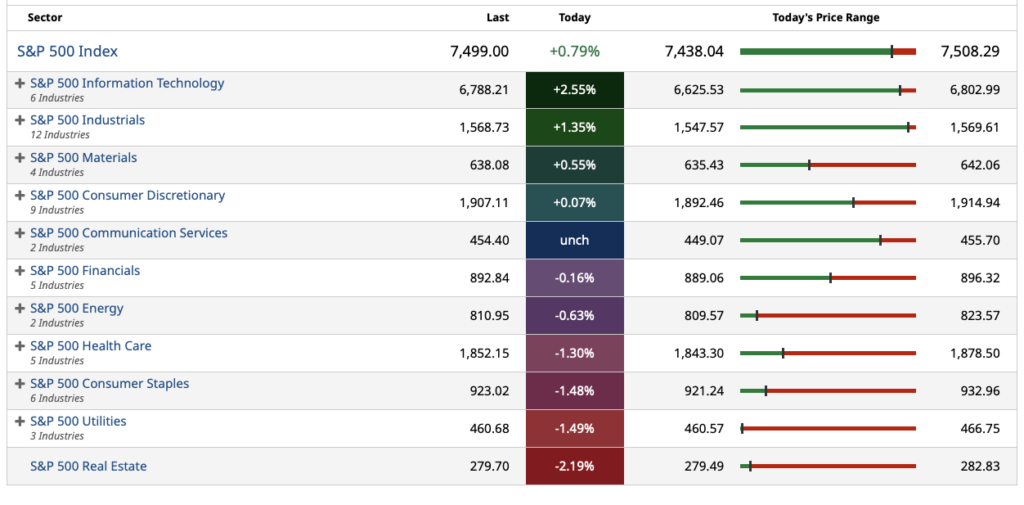
S&P 500 Sectors

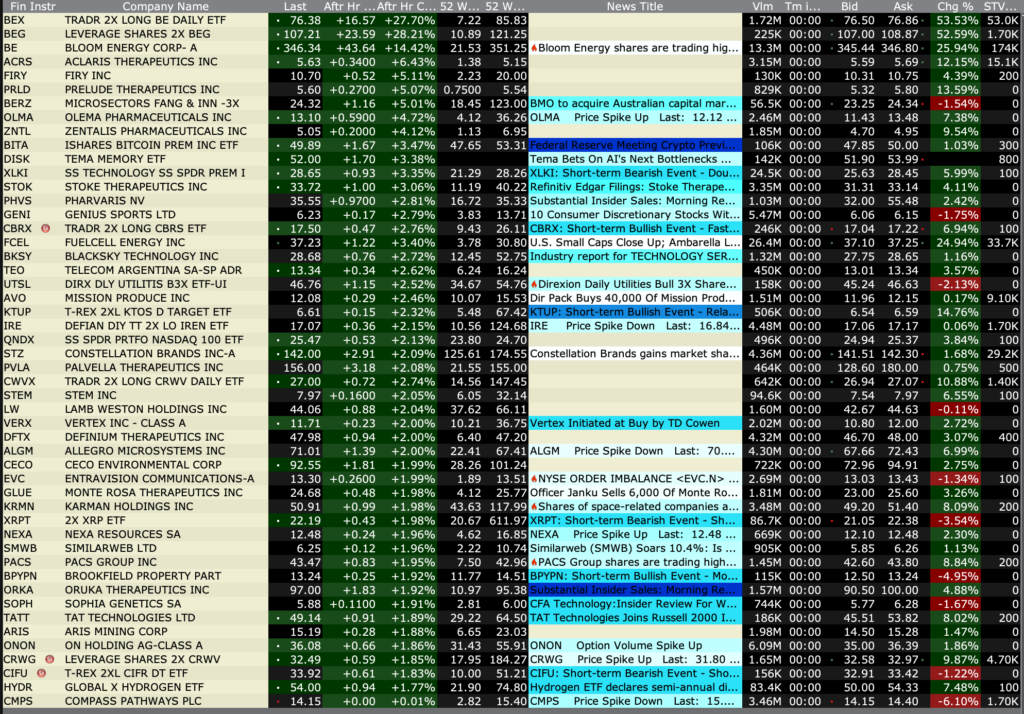
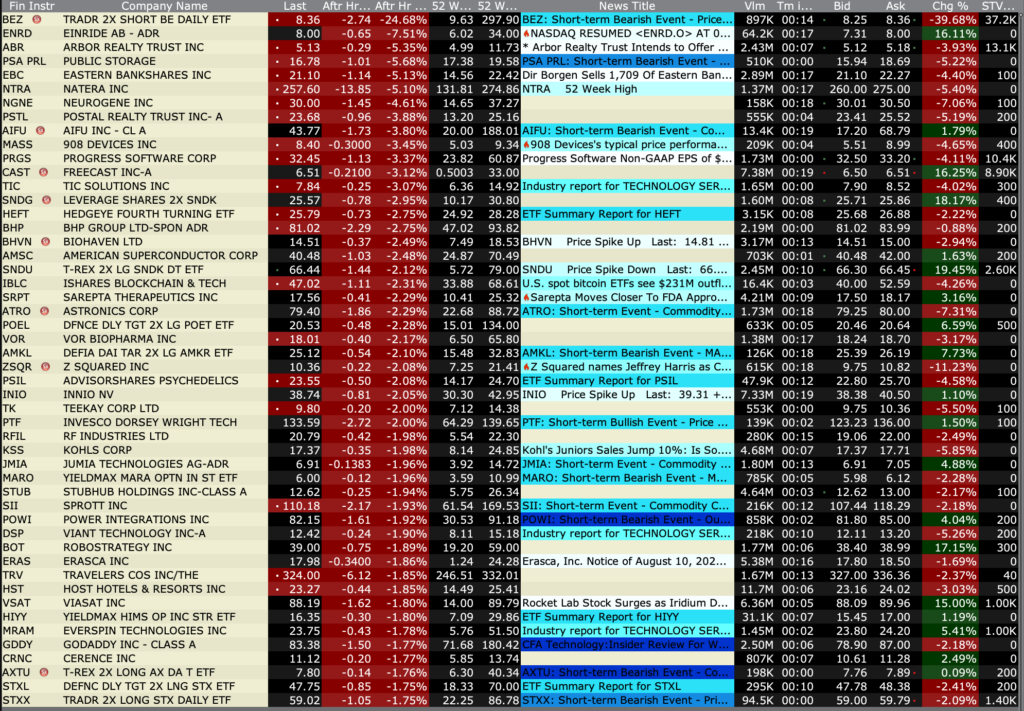
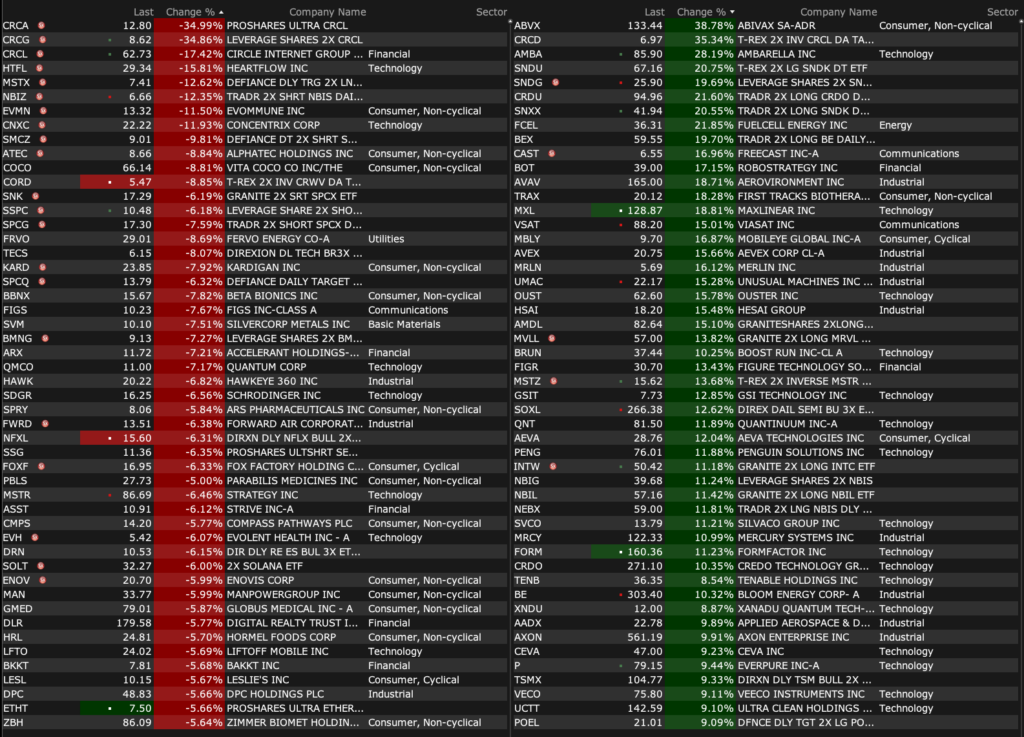
% Movers

Position: None

The News Is Out

Now that the SpaceX ($SPCX) IPO has occurred I am back shorting the beneficiaries of that transaction:

* $GS $1067.89

* &MS $215.15

Position: Short GS (VS), MS (VS)

Same High-Octane Short Package, Different Timeframe

With S&P cash +35 handles I have, once again, created a short package of high-octane (beta) equities.

I recently put on the same package and took a very quick profit.

My current expectations are based on a longer timeframe.

Position: Short SPY (VS), Spec Package 

Boockvar Takes Stock of the Week

From Peter Boockvar:

Succinct Summation of the Week’s Events:

Positives,

1)  Congrats to Elon Musk and team for building a business that has led to the biggest IPO on record.

2)  Off a record low, the June UoM confidence index rose to 48.9 from 44.8 with both the Current Situation and Expectations rising m/o/m. With the dip in gasoline prices, one year inflation expectations slipped to 4.6% from 4.8% while the 5-10 yr guess fell to 3.4% from 3.9%. The employment component was little changed but hovering around the lowest level on record. Income expectations were less negative. Spending intentions were mixed, rising for vehicles after falling last month but for buying a home, it fell to the lowest since last September. For a major household appliance, it rose 1 pt off a record low. UoM said, “This measured improvement in sentiment was widespread, seen across age, education, and political party. Lower-income consumers exhibited a particularly strong sentiment increase, consistent with the fact that gasoline comprises a larger share of their budgets.” But, “Even with June’s early gains, however, views of the economy are still relatively dour. Sentiment is currently 13% below January 2026 and 19% below a year ago, as consumers remain focused on kitchen table issues. They feel burdened by the recent escalation in inflation and worry that higher inflation could remain stubborn going forward, particularly in the short run…Consumers continue to express frustration about the persistence of high prices more generally. About 57% of consumers spontaneously mentioned that high prices were eroding their personal finances, unchanged from last month and up from 36% a year ago.”

3)  Not with help from lower mortgage rates as they were little changed from last week at 6.60%, purchase applications rebounded by 7.3% w/o/w after three weeks of declines. Refi’s rose 15.3% w/o/w after six weeks of declines. Months’ supply held at 4.5 while the y/o/y home price gain was 1.3%. First time buyers rose to 35% of all purchases vs 30% one year ago, a good sign.

4)  While still depressed, the closing of home sales in May (most contracts likely signed in February thru April)  , rose to 4.17mm from 4.04mm and above the estimate of 4.07mm.

5)  From RH: “I think as we’ve moved past the peak investment cycle this year we believe our top line is going to inflect, that kind of irrelevant of what the external market does unless it really, look, if we get into a war that massively impacts the economy, the inflation, so on and so forth, it’s going to put pressure on everyone where those things happen, but we don’t need a big move in the housing market to grow. We don’t even need a move in the housing market. I’m not counting on the guidance we just gave everyone. I’m not counting on the market getting any better. I mean, the market can get worse, and I’d be surprised if we don’t beat those numbers.”

6)  From Casey’s General Store: “So with respect to the consumer, I would say overall, I think consumers are hanging in there. They’re probably being a little more discerning about where they shop and how they spend their money. But we’re seeing growth across all of the income cohorts. And the way we look at that is below $50,000 a year in income is a low income, $50,000 to $100,000 a year is mid and above $100,000 is higher income. And I’d say that all three, we’re seeing growth, a little bit less so in the lower income. The other two cohorts, which is three quarters of our guest base, are spending comparably to what they’ve been spending on.”

7)  From Cracker Barrel Old Country Store: They are also benefiting from having a lower average check size relative to the industry. “In Q3, our average check was $15.85 compared to over $27 in casual dining and over $19 in family dining, underscoring our lower prices versus competitors. In fact, guests can order add-ons with us and their check will still be lower than an entree at many of our peers.” Business still fell in the quarter, with comps down 2.6%, “which included a traffic decline of 6.7%. Although traffic remained negative, we are encouraged by the gradual improvement in the underlying traffic trend. The restaurant average check increased 4.3%, including pricing of 4.4%.”

8)  From JM Smucker: “Total company net sales increased 6%, driven by growth in the Coffee, Away From Home, Pet Foods, and Frozen Handheld and Spreads segments.”

9)  From ABM Industries: Offering janitorial services to office buildings in particular, “the prime office recovery continues to gain traction. Although as mentioned, the market is still experiencing some softness on the West Coast. The US office leasing is approaching 2019 levels. Net absorption turned significantly positive in the first quarter, the strongest since 2020 and prime vacancy rates continue to tighten. New supply remains extremely limited with the construction pipeline nearly 90% below its 2020 peak.”

10)  As fully expected, the European Central Bank raised its deposit rate to 2.25% from 2.00%. While they have chosen to not look past the higher oil price shock, they also previously took its rate down to zero on a REAL basis which was already quite aggressive. In their statement they said “The outlook remains uncertain, with upside risks for inflation and downside risks for economic growth.”

11)  China reported its May trade data and note here too the likely inventory stocking mentality of those placing orders. Exports grew by 19.4% y/o/y, above the estimate of 15%. Imports jumped by 27.4%, just above the forecast of 26% growth. Their monthly trade surplus of $105 billion is still quite astonishing. About half of the growth of both imports and exports were tech related, particularly chips and computer hardware with a lot from price rather than volume. Auto exports were strong too as we know China cars are flooding other markets.

12)  Some pull forward of ordering was also likely seen in the somewhat dated April trade data out of Germany where exports rose .9% y/o/y vs the estimate of down .5% while imports grew by 1.2% vs the forecast of a decline of 2%.

Negatives,

1)  The May headline CPI rose .5% m/o/m as expected and by .2% at the core level which was one tenth below the forecast. The y/o/y figures of 4.2% and 2.9% were as estimated due to rounding and up from 3.8% and 2.8% respectively in April. Energy prices jumped by 3.9% in the month led by a 7% rise in gasoline prices and now higher by 23.5% y/o/y. Electricity prices in particular rose by .6% m/o/m and 5.9% y/o/y. Food prices were up by .2% m/o/m and 3.1% y/o/y. Services inflation ex energy saw prices higher by .3% m/o/m and 3.4% y/o/y led again by rents. Core goods prices were little changed again m/o/m, down one tenth and up by 1.1% y/o/y.

2)  When we include the downward revision in April for the heady PPI read, the May headline figure was as expected but showing a 2nd straight month of 1.1% wholesale price increases after a .7% gain in March and .6% gains in each of January and February. The y/o/y headline gain was 6.5%, up from 5.7% in April. The core rate was higher by .4% m/o/m after a .7% increase in the month before and which followed an .8% gain in January, .4% rise in February and .2% increase in March. Core wholesale prices are up by 4.9% for a 2nd month y/o/y. Core goods prices were up .8% m/o/m and by 5.1% y/o/y with plastic resins and industrial chemicals leading this ex food and energy category. On the services side, prices were up .3% m/o/m and by 4.9% y/o/y and higher asset prices were a factor. The BLS said “Over 40% of the May advance in the index for final demand services can be traced to a 4.8% rise in prices for portfolio management.”

3)  On the heels of seeing headline CPI for May rise 4.2% y/o/y, the Atlanta Wage Growth Tracker out yesterday showed a 3.5% y/o/y rate of growth and highlights the economic squeeze that continues on for many. For the ‘job switcher’, wages were up 4.3% y/o/y, holding the April gain. For ‘job stayers’, they were up higher by 3.6% which continues to decelerate.

4)  Initial jobless claims rose 4k w/o/w to 229k and that was 9k more than anticipated. This brings up the 4 week average to 219k from 215k and while still low, is the most since February. Continuing claims rose by 24k to 1.795mm which is a 7 week high but still below the 1.9mm ish that we saw last year.

5)  The NFIB May Small Business Optimism, today they reported their full report and the headline index fell to 95.3 from 95.9 and that was the weakest since October 2024. Plans to Hire fell to the lowest since May 2020 as did Job Openings Hard to Fill. Also of note, Higher Selling Prices rose by 6 pts to the highest since March 2023. The chief economist of the NFIB highlighted the two lane economy on the corporate side, “AI investment spending has contributed to some excitement in the economy. Despite the enthusiasm around AI, the overall picture is divided. More small business owners are struggling with significant and unpredictable hikes in fuel prices, which are more challenging for small businesses to pass on to their customers compared to their larger corporate competitors.” Also, “In May 19% of small business owners reported taxes as their single most important problem, up 2 pts from April and ranking as the top issue. Reports of inflation as the single most important problem rose for the 3rd consecutive month in May. 18% of business owners cited inflation as their single most important business problem, up 2 pts from April and marking the highest reading since December 2024.”

6)  From the May NY Fed’s Consumer Expectations Survey: “Perceptions…compared to a year ago deteriorated, with a larger share of households reporting a worse financial situation, marking the highest reading since January 2023, and a slightly smaller share of households reporting a better financial situation. Year-ahead expectations about households’ financial situation also deteriorated, with an increase in the net share of households expecting a worse financial condition. The net share of households expecting a better versus worse financial situation in one year is at its lowest level since October 2022.”

7)  Container shipping rates continue to rise. The Shanghai to NY average 40 foot container price jumped by another 6.6% to $5,870, the highest in a year. Shanghai to LA saw its price up by 2.6% w/o/w to $4,683 after spiking by 31% last week. The Shanghai to Rotterdam route rose to the most expensive since January 2025.

8)  A price war coming in the sector that is driving a large amount of economic growth and stock market performance? https://www.wsj.com/

9)  From Lennar: “Our second quarter of fiscal year 2026 was defined by the same stubborn headwinds that have challenged the housing market for the past several years – persistently elevated mortgage rates, constrained affordability, and cautious consumer sentiment, exacerbated by geopolitical uncertainty creating a resurgent inflation reading of 4.2% driven by higher energy prices…Our average sales price was $371,000, reflecting approximately 12.9% in incentives, along with base price adjustments necessary to sustain volume in a market where affordability remains the defining constant.”

10)  From Oracle: With CapEx needs rising even further and to help close their cash flow and large funding gaps, “we expect to raise around $40 billion in debt and equity in our fiscal year ‘27, and that includes our already announced $20 billion at the market equity issuance. We don’t anticipate raising additional debt funding in calendar year 2026.”

11)  From Chewy: “Pet remains a resilient category driven by recurring non-discretionary needs and strong emotional attachment. At the same time, consumers are growing more discerning, driven in part by elevated fuel prices and broader macroeconomic pressures…we are seeing a modest level of incremental pressure on premiumization and product attach rates amongst our current customer base…We no longer believe it is prudent to embed a meaningful acceleration in consumer spending into our outlook, given the current operating environment.”

12)  From JM Smucker: With respect to overall inflation, ex green coffee deflation and tariffs, “we do anticipate cost inflation of low single digits across the balance of our portfolio, and that’s largely coming through packaging, ingredients and transportation.”

13)  From Campbell’s: “So base inflation before the Middle East conflict, we were looking at base inflation of around 3%. So obviously with the price of oil where it is, and look, if oil stays around $100 a barrel, we’re looking at an additional 2% to 3% inflation on top of the core 3%. Also, as you probably know, there’s a driver shortage out there that not only are we having higher diesel costs, but that is causing higher inflation from a logistics and freight perspective as well.”

14)  The Bank of Canada Governor in his presser distilled the box central bankers are in quite succinctly. Tiff Macklem said “Economic weakness combined with rising inflation is a dilemma for monetary policy. Raising rates to dampen inflation could further slow the economy. Easing rates to support growth increases the risk that higher inflation becomes persistent. For now, holding the policy rate unchanged balances those risks.”

15)  In order to stem both the rising inflationary pressures but also the weakness in its currency, the Bank Indonesia unexpectedly raised rates by 25 bps to 5.50%. This was NOT a scheduled meeting and they now have hiked by 75 bps since April 22nd when they last left rates unchanged.

16)  China is seeing quite the spread between CPI and PPI. In May, CPI rose 1.2% y/o/y while PPI jumped by 6.3% y/o/y.

17)  German factory orders were weaker than expected, falling 3.8% m/o/m vs the expected drop of 2% and March was revised down by 5 tenths to a 4.5% gain. Declines were seen in auto, electrical equipment and machinery. The economy ministry said “There are growing signs that rising energy and commodity prices, as well as significantly heightened geopolitical uncertainty, are increasingly leading to lower demand, particularly for capital goods. Against the backdrop of rising costs and uncertainties, as well as growing supply chain bottlenecks, industrial activity is likely to continue to show only modest growth in the coming months.”

Positions: None.