More Remarkable Bond Stats

Positions: None.
Positions: None.
The following is from Peter Boockvar:
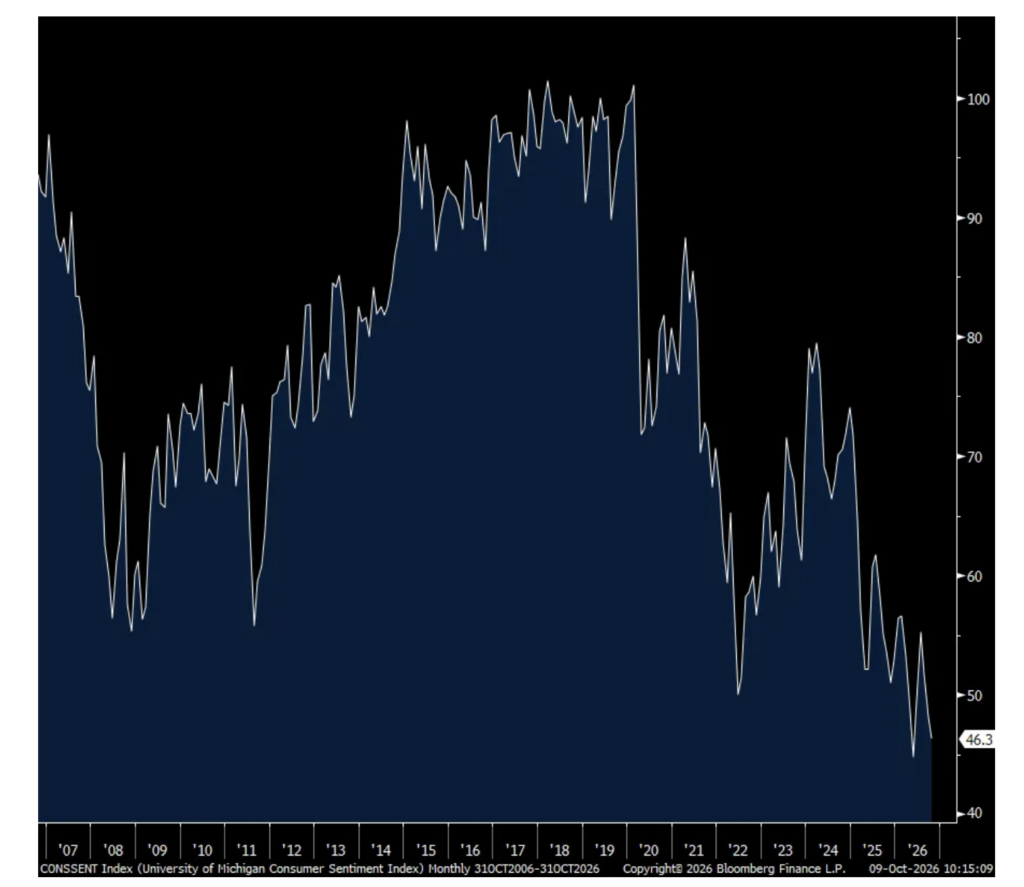
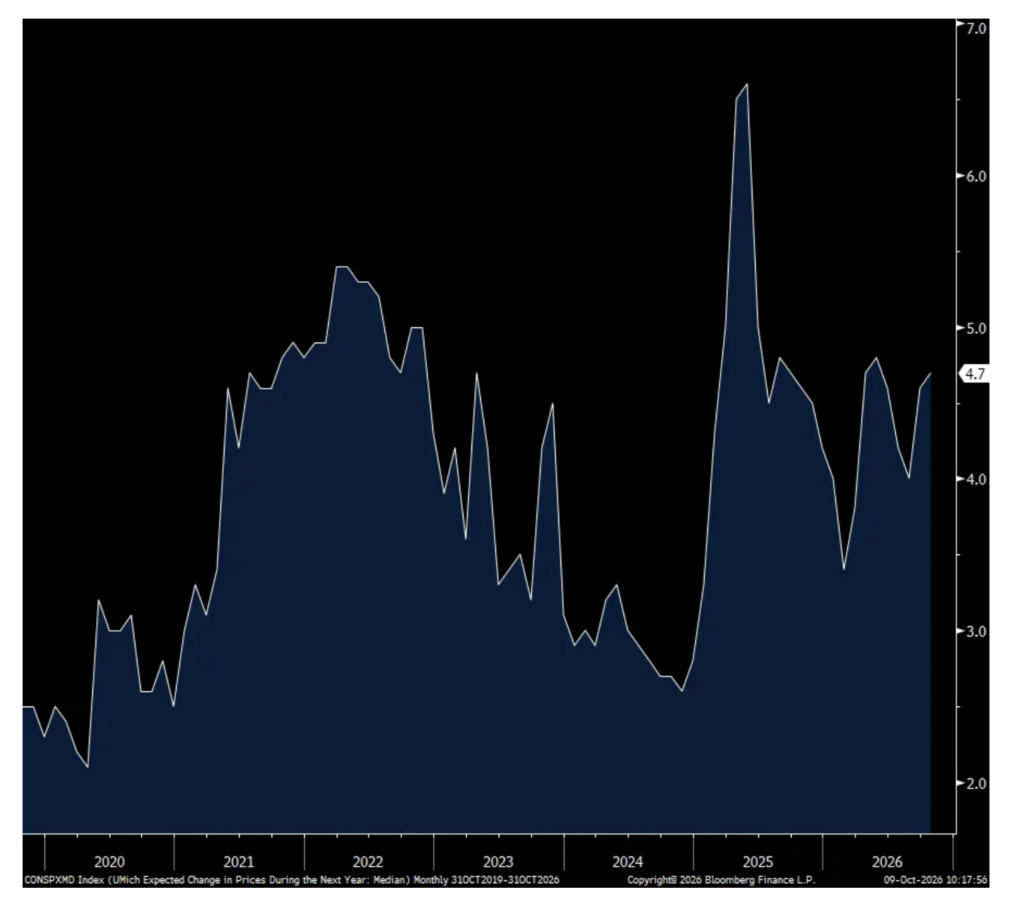
The preliminary October UoM consumer confidence index fell to 46.3 from 48.1. That was 1.3 pts below expectations and just off the record low. All of the drop was in the Current Conditions component which fell by 6.2 pts while Expectations gained 1 pt. One year inflation expectations ticked up a tenth from September to 4.7% while the 5-10 yr outlook was 3.5%, also up one tenth. Of note, more consumers are expecting lower gasoline prices in the coming 12 months relative to last month and we of course hope they are right.
After falling by 5 pts in September, employment expectations rose by 4 pts and the income component improved as well. The bright spot within the data.
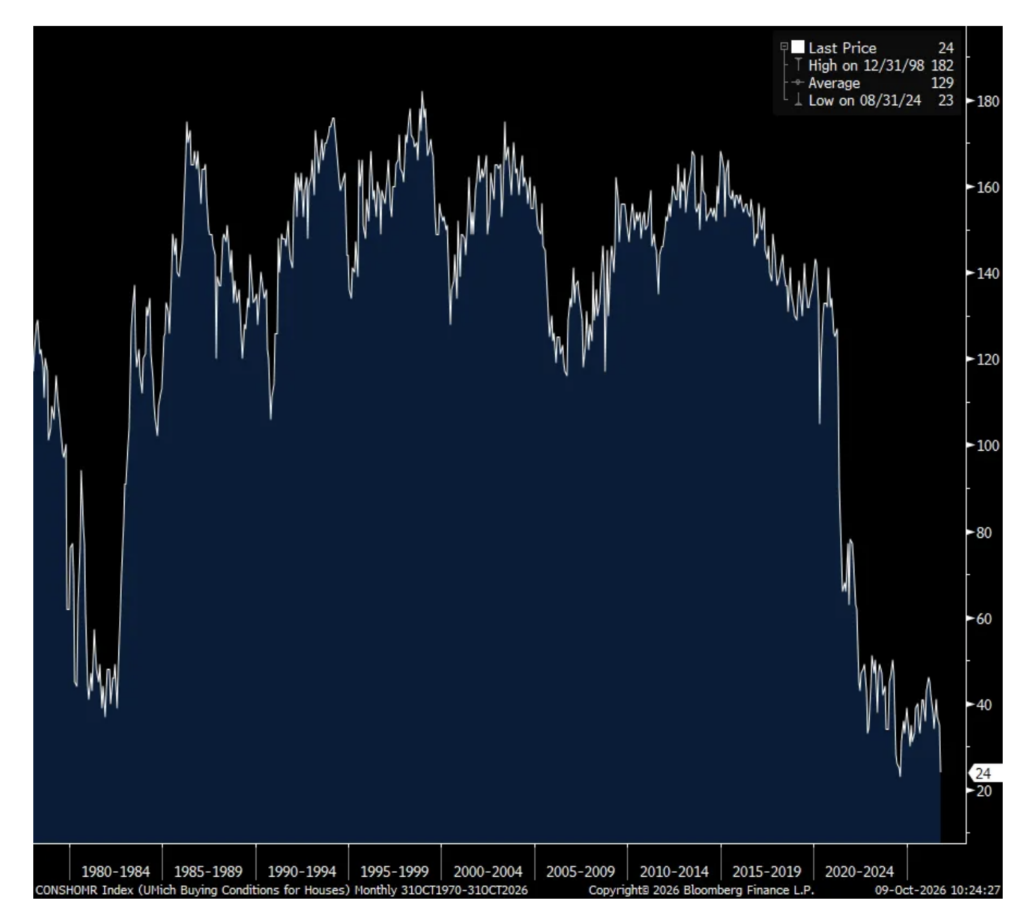
Spending intentions on big ticket items further weakened. In particular, those who think it’s a good time to buy a home fell to within one point of a record low, not surprisingly and I need to elaborate on this.
I hear from some boomers who tell me how they had a double digit mortgage rate back in the day and that a 7.5% rate now should not be alarming. My push back is that back then, the median home price relative to the median income was about 3.5x. Today is around 5x. That is 43% more. Thus, just comparing one’s mortgage rate with other time periods is NOT apples to apples.
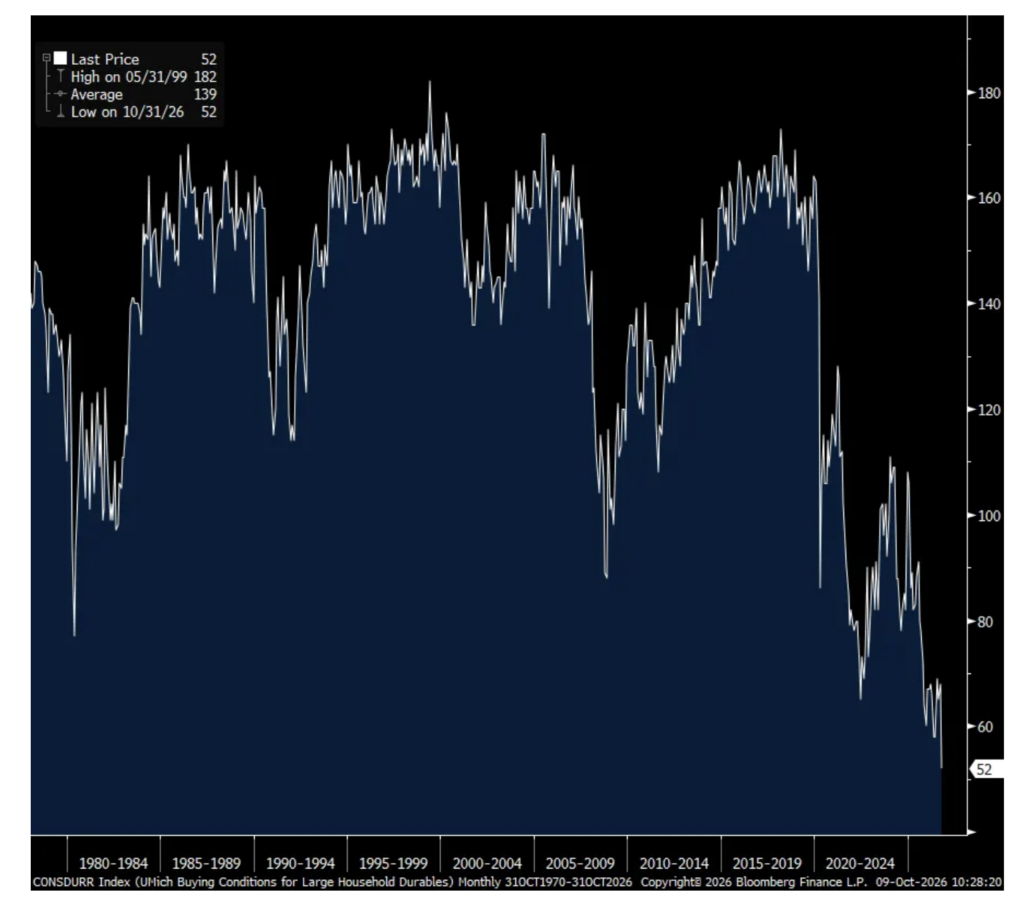
Intentions to buy a major household item fell to a record low dating back to 1978. As for the mood towards buying the other big ticket thing, a car, it fell by 3 pts to 41 but a bit above the recent lows.
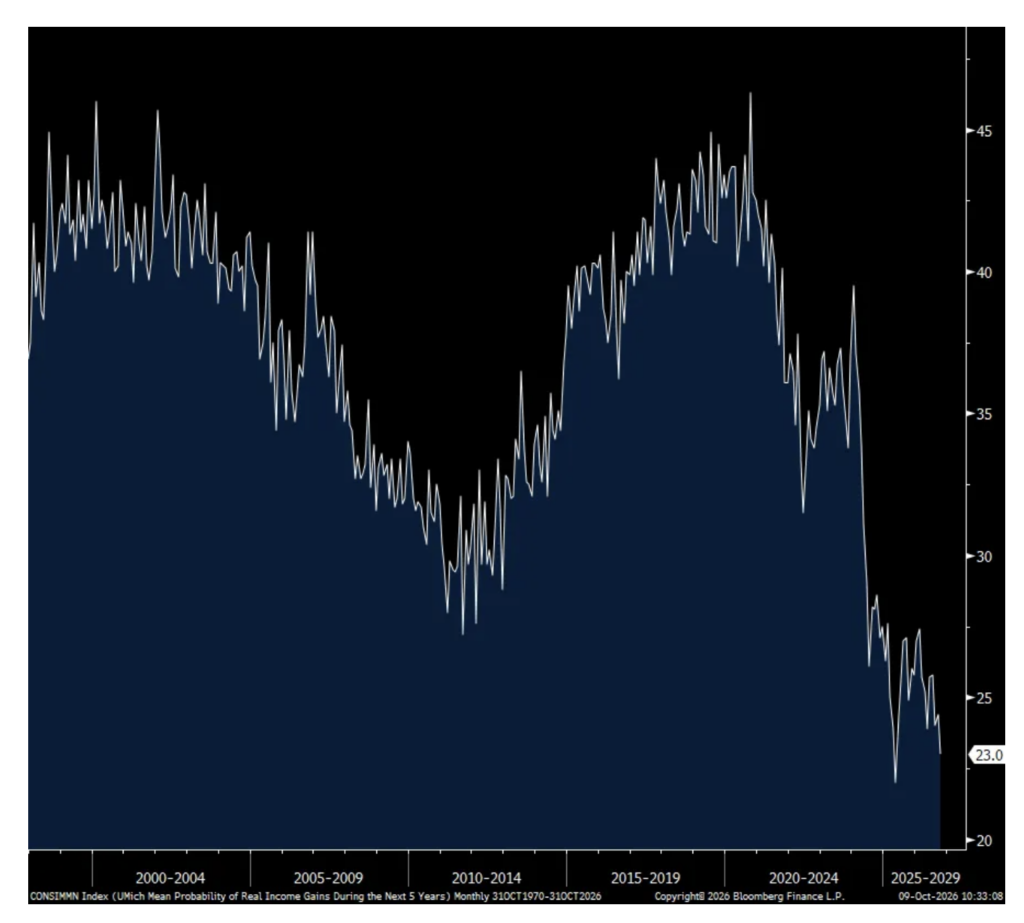
The line item in the report that helps to explain the dour consumer mood was the question of ‘do you expect higher REAL income in coming 5 years’. Just 23% said yes, one point off a record low dating back to when it was first asked in 1998.
Adding commentary to this from the UoM, “Overall, sentiment for lower-income consumers and those with smaller stock portfolios dropped steeply this month, groups that have fewer resources to weather increases in prices. Frustration over cost-of-living continues to mount, as consumers across the political spectrum believe that the trajectory of the economy has weakened since the beginning of the year.”
And more to this impact of whether one owns assets or not, “Sentiment among low-wealth consumers—non-stockowners along with those with the smallest stock portfolios—has collapsed about 25% since January. In contrast, those in the middle and largest tercile of stock holdings have had far more modest declines of less than 10%. These patterns reflect the fact that strong asset values can cushion the pain of high prices, but only for asset owners.”
Bottom line, nothing new here but just a reminder of how uneven the US economy is.
UoM
One yr Inflation Expectations
Intentions to Buy a Home
Intentions to buy a Major Household Item
% Expecting Higher Real Income in Coming 5 yrs
Sentiment slips to just 1.5 points above its all-time low with current conditions at a record while inflation expectations rise.
SOURCE: Interactive Brokers
SOURCE: Barchart
SOURCE: TheStreet Pro
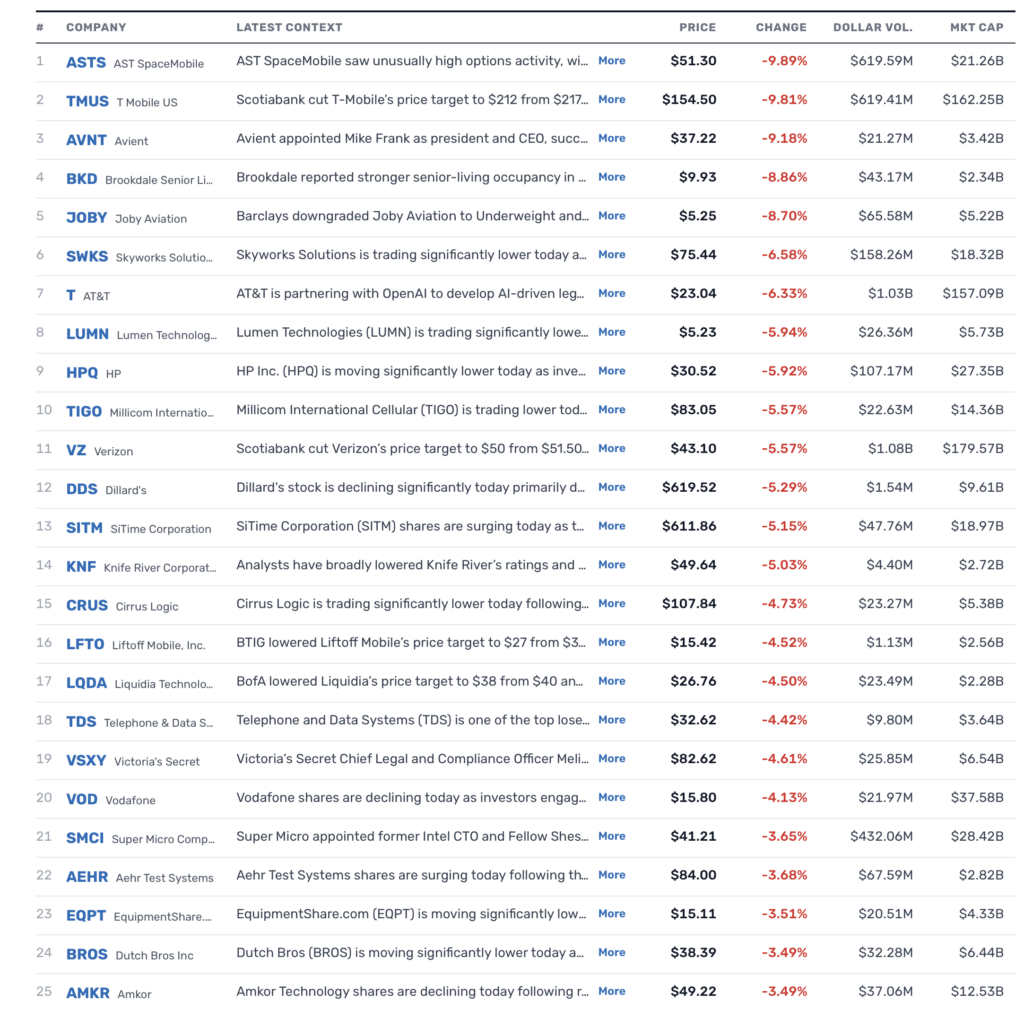
SOURCE TheFly
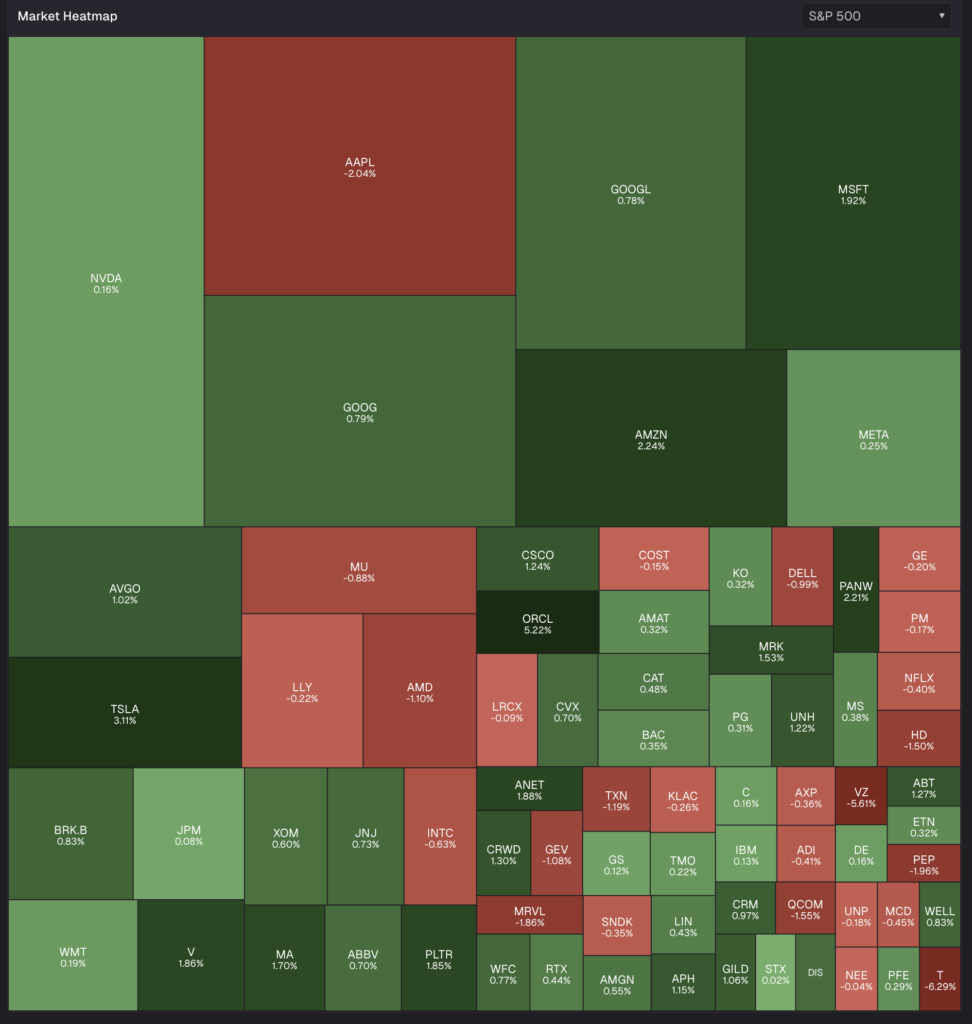
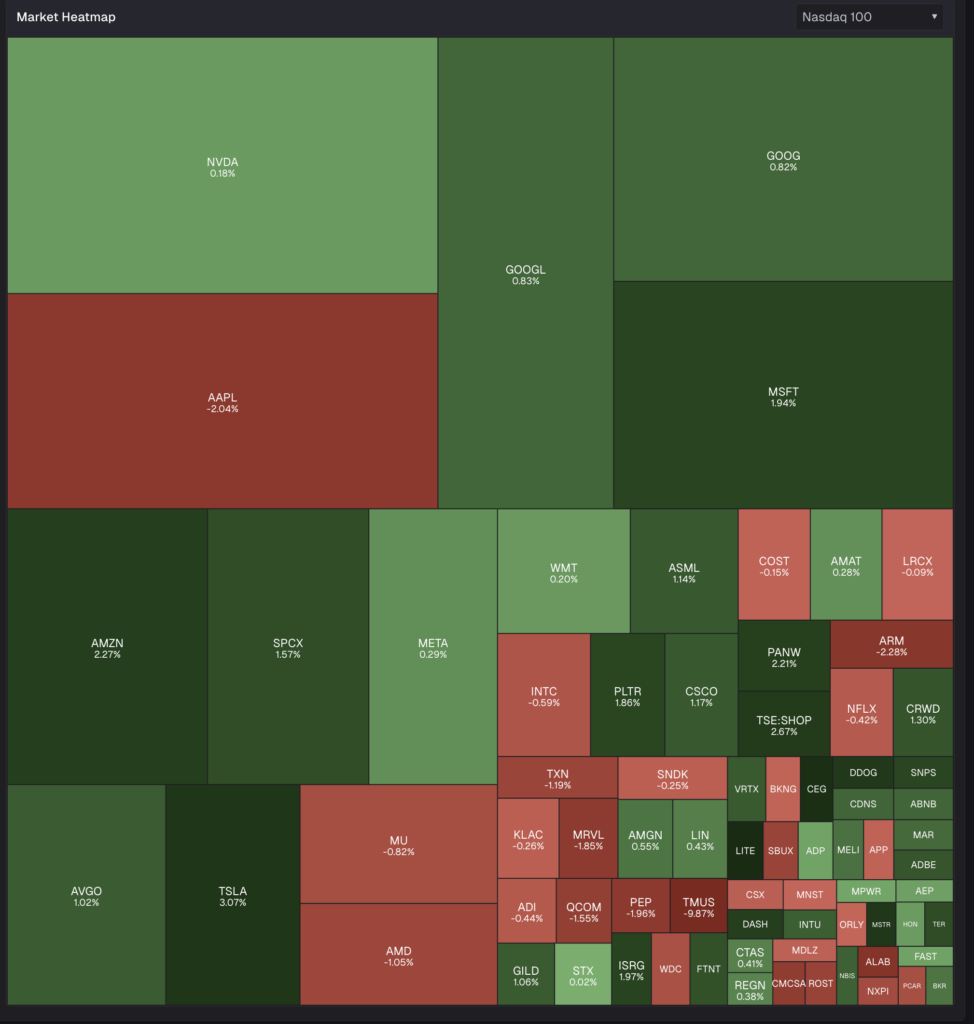
For the second day in a row a reversal from much higher to flat on the day – $NVDA.
We added, as I suggested, on the +$3.50 rally earlier.
Positions: Short NVDS S
Let’s check out two biopharma plays that scream ‘growth at a reasonable price.’
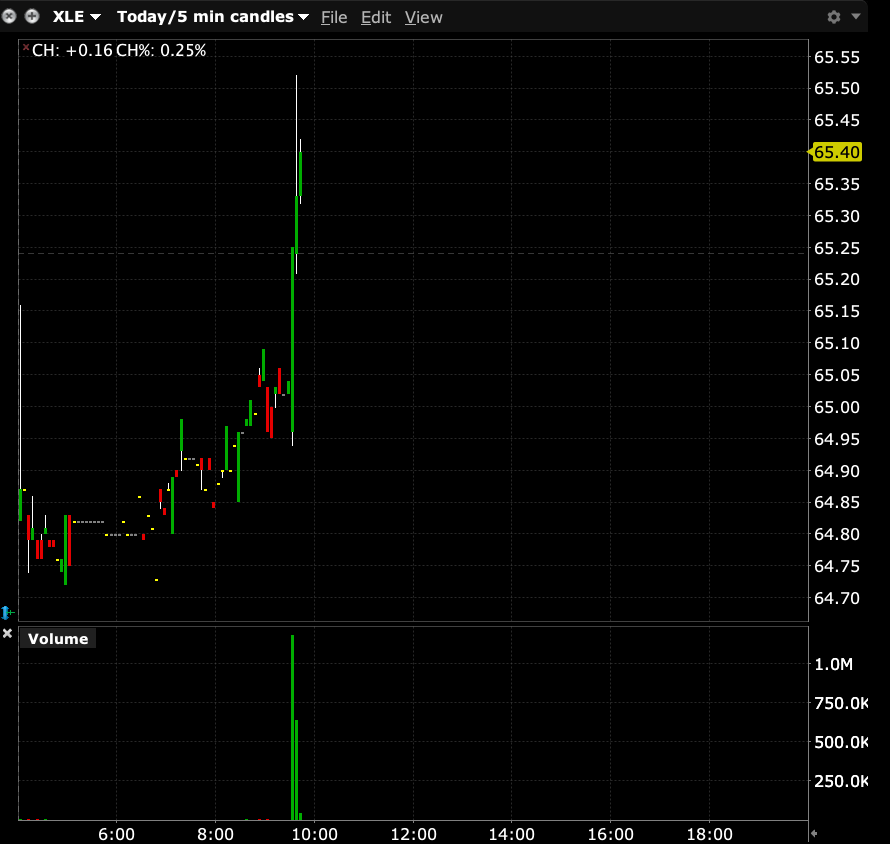
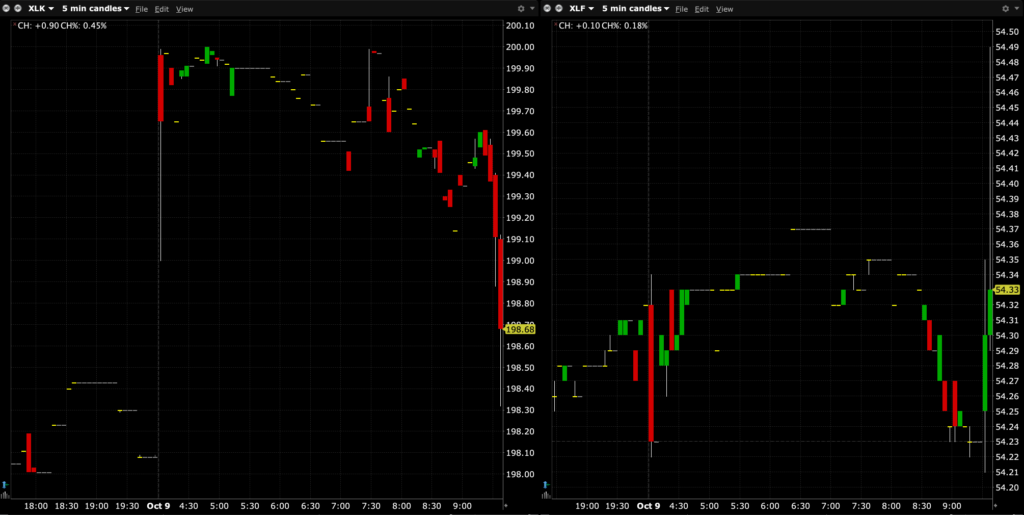
Charts from 9:40 a.m. ET
The following is from Peter Boockvar:
Whatever the methodology and/or nuance of how OpenAI calculates its revenue figure and whether it matched up with investor estimates or not, I think the most relevant big picture point is that a massive chunk of the GenAI data center buildout is literally reliant on two companies and whether all the CapEx will be money well spent will be hugely dependent on the ultimate profitability, or not, of OpenAI and Anthropic. And to add, a large piece of the future cloud backlog of Microsoft, Oracle, Amazon and Google are these two AI model makers. For the sake of the economy and the stock market, fingers crossed.
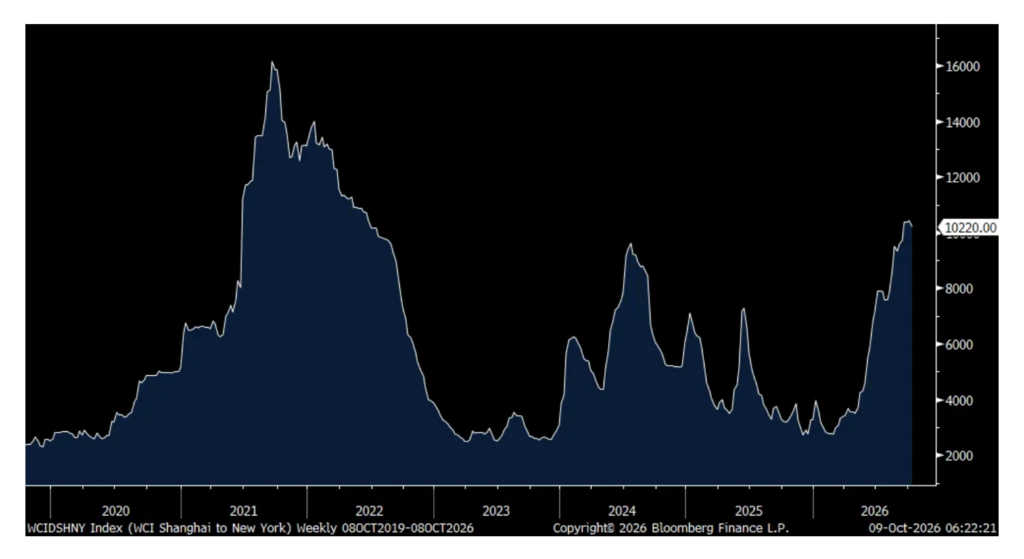
The container shipping lanes got some relief this past week with a drop in prices. The Shanghai to NY trip was lower by 2% w/o/w, though still holding above $10,000. The trip to LA was lower by 2.7% w/o/w.
WCI Shanghai to NY
The Investors Intelligence Bull/Bear spread remained above the extreme read of 40 but a bit less so. Bulls fell a touch to 56.9 from 57.7 while Bears were up a bit to 15.7 from 15.4. In the volatile and less reliable AAII survey, Bulls were up by 5.7 pts to 40.3 and that now exceeds Bears for the first time in a month and which fell by 7.5 pts to 39.
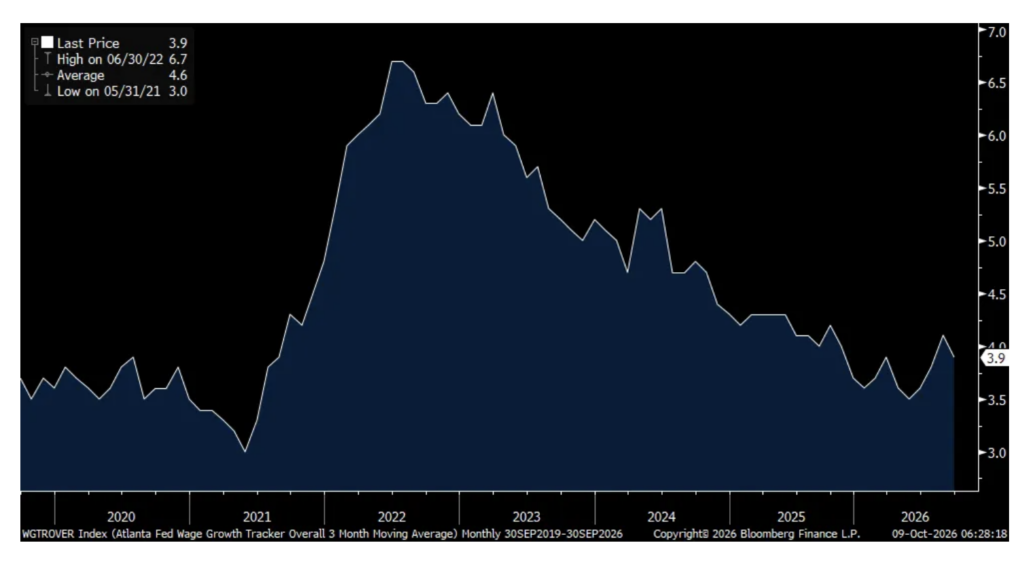
With inflation still running around 3.5%, depending on which metric you use, REAL wages are no longer growing much and that was seen with the Atlanta Wage Growth Tracker which came out yesterday for September. It was up 3.9% y/o/y and pretty much back to its pre Covid trend.
For those changing jobs, pay was up 4.7% y/o/y vs 5% in August. For those staying, it slipped to 3.4% from 3.6%.
Bottom line, part of the reason why the savings rate is at an 18 year low, not including the post Covid data noise, is due to the real wage squeeze. Along with the tremendous wealth gains for those that own assets and feel less need to save via their income relative to spending.
Atlanta Fed’s Wage Growth Tracker
Maybe price vs wage growth now matters for Apple phones. Nikkei Asia is reporting today that “Apple has told some of its suppliers to cut production of components for its newly launched iPhone 18 Pro and iPhone 18 Pro Max, after soaring memory chip costs forced price increases that have dampened consumer demand. Multiple people familiar with the matter told Nikkei Asia that the Silicon Valley-based tech giant has turned more conservative on shipments since early September, with two of them saying that component orders for this month have been slashed by at least 15% compared to what was originally requested, due to weaker-than-expected market demand.”
Apple is down pre-market in response.
This was said by Pepsi of note yesterday, a stock we own and up 3.7% yesterday after recent weakness:
“Our business in North America performed below our expectations and represents a meaningful opportunity for improvement. U.S. convenient foods organic revenue trends improved sequentially, reflecting volume share gains and U.S. salty and savory snacks volume growth. In addition, year-to-date household penetration, purchase frequency and velocity trends have improved as the innovation and affordability initiatives have resonated well with consumers.”
“In North America beverages, organic volume trends improved sequentially, with functional hydration and zero sugar offerings continuing to perform well while our performance in carbonated soft drinks trailed category performance.”
International outperformed.
With regards to how they plan from here on pricing their products, “we’re going to see a mix of net revenue management tactics that will impact some pricing, but also mix and all the decisions that we can make around that…making sure that next year’s pricing is going to be below ‘25, so we continue to be very affordable.”
Value and affordability remain key “with a consumer that is clearly challenged, and we don’t expect the consumer to suddenly become in a much better place in the next 12 months, 18 months.”
The beaten and battered consumer staples stocks remain one of my favorite sectors and we own a bunch of stocks in the space.
From Delta’s earnings release and whose stock is lower pre-market because they missed both top and bottom line estimates:
They are still optimistic, “Demand remains strong, supported by consumers’ growing preference for experiences and travel, with air travel continuing to be one of the best values in the consumer economy.”
“For the full year, we expect to generate a pre-tax profit of roughly $4.5 billion, absorbing a $6 billion increase in fuel costs.”
“Main cabin unit revenue grew 17% over prior year on seats down low single digits, marking another quarter of sequential progress…Premium revenue grew 18% y/o/y with double digit unit revenue growth driven by yield and load factor on a 6% increase in seats.”
Positions: None.
Advanced Micro Devices’ high expectations are justified by the chipmaker’s phenomenal growth.
Dougie Kass
10m ago
For now I have stopped tweeting critical stuff on Fin TV.
I dont have the time and have concluded there will be no change in personnel or programming.
But the news at $DAL $APPL and other stocks this morning – support my view that few of the panelists have any investment process or rigor.
The believe “price is truth” and everything (from Best Stocks segment to individual panerist picks) are based on price and momentum and moving monkeys.
The know everything about price and nothing about value.
They are mostly asset gatherers (or selling another service).
Stated simply, I don’t play that game.
Positions: None