Initiated QQQ Short, Added to SPY One

I have initiated a $QQQ short at $720.02 and I have added to my $SPY short at $769.56.
Position: Short SPY (M), QQQ (VS)
I have initiated a $QQQ short at $720.02 and I have added to my $SPY short at $769.56.
Position: Short SPY (M), QQQ (VS)
With S&P cash +42 handles I am shorting more $SPY at $769.23 and I have moved to medium sized.
Positions: Short SPY M
Reports loom for Microsoft, Alphabet and Amazon, but I see no edge in trying to bet on those outcomes. Here’s what I’ll do instead.
– NYSE volume 14% below its one-month average;
– Nasdaq volume 3% below its one-month average;
– VIX index: down 3.48% to 17.75
SOURCE: Interactive Brokers
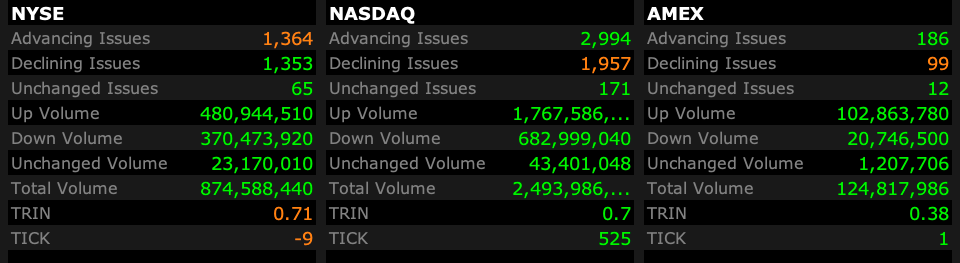
SOURCE: Interactive Brokers
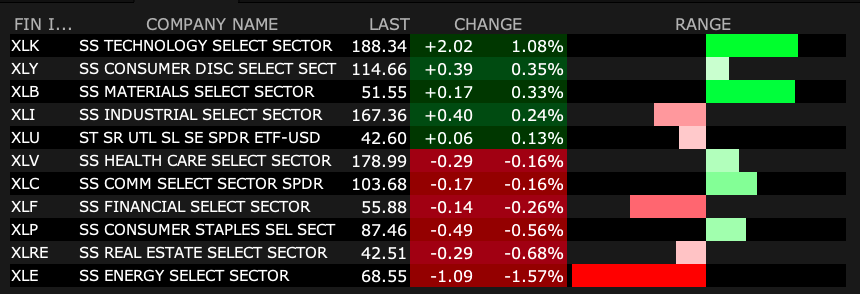
SOURCE: TheStreet Pro
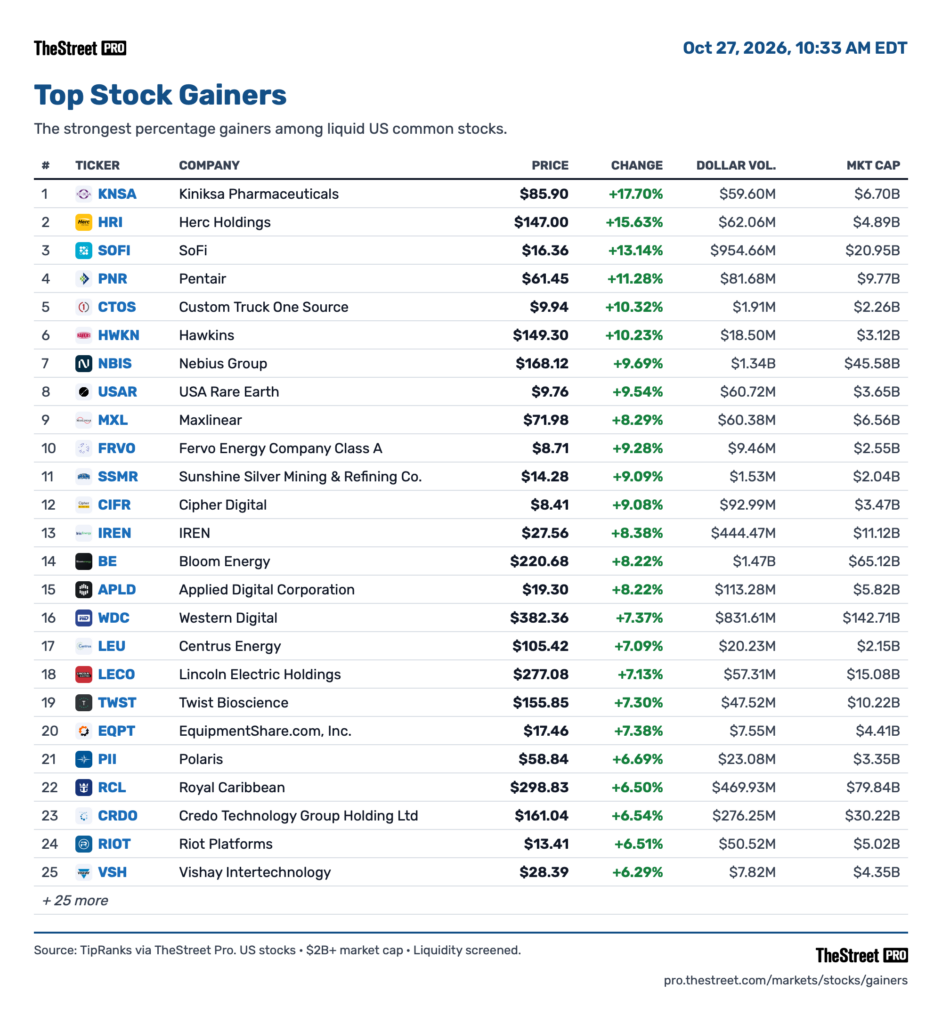
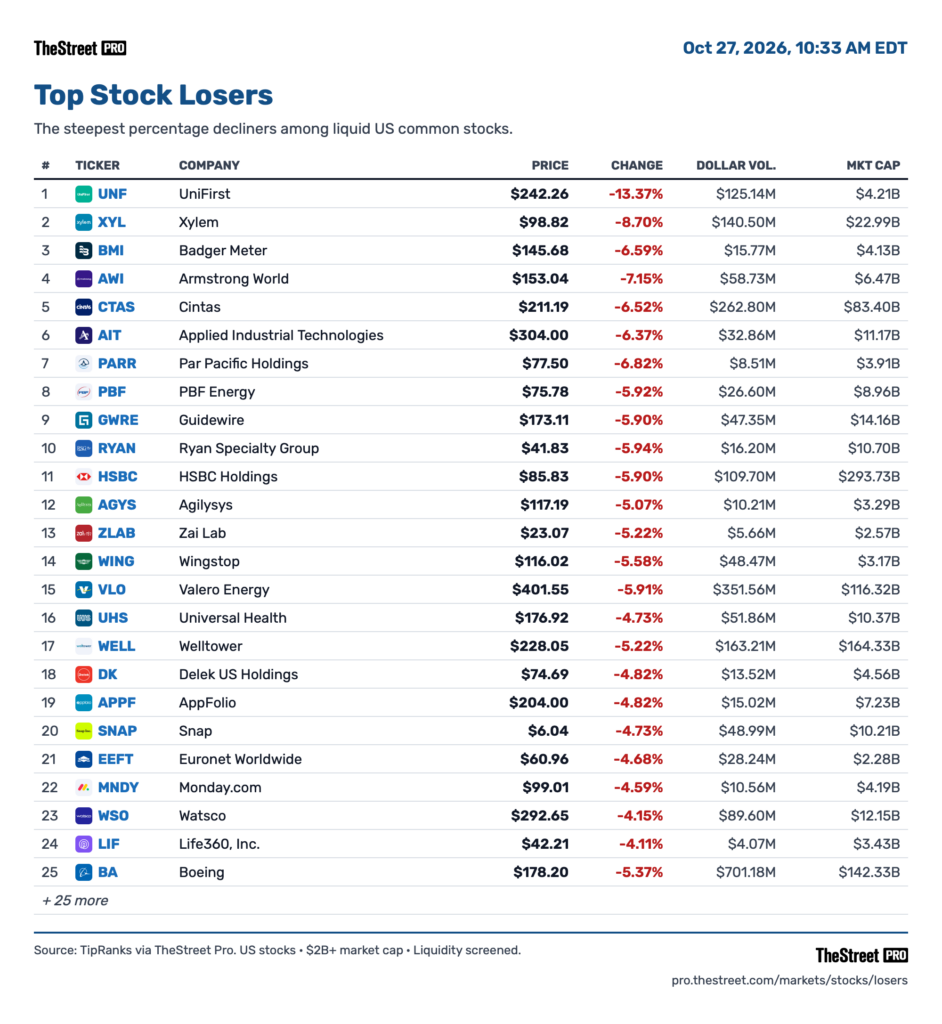
SOURCE TheFly
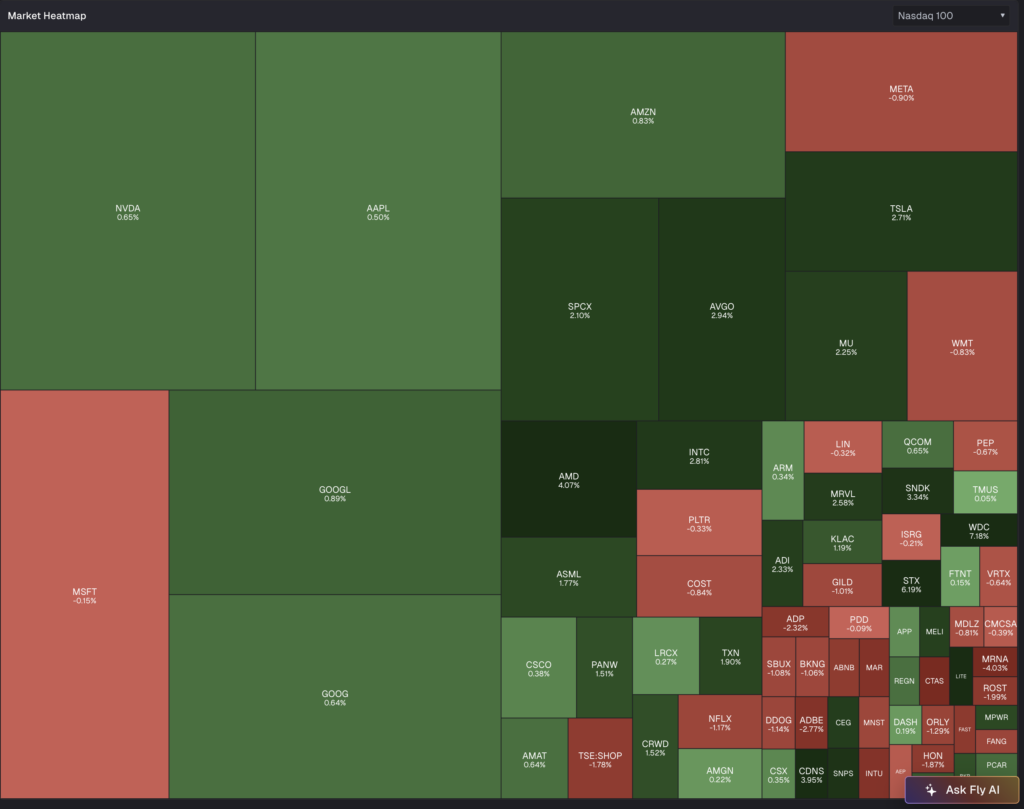
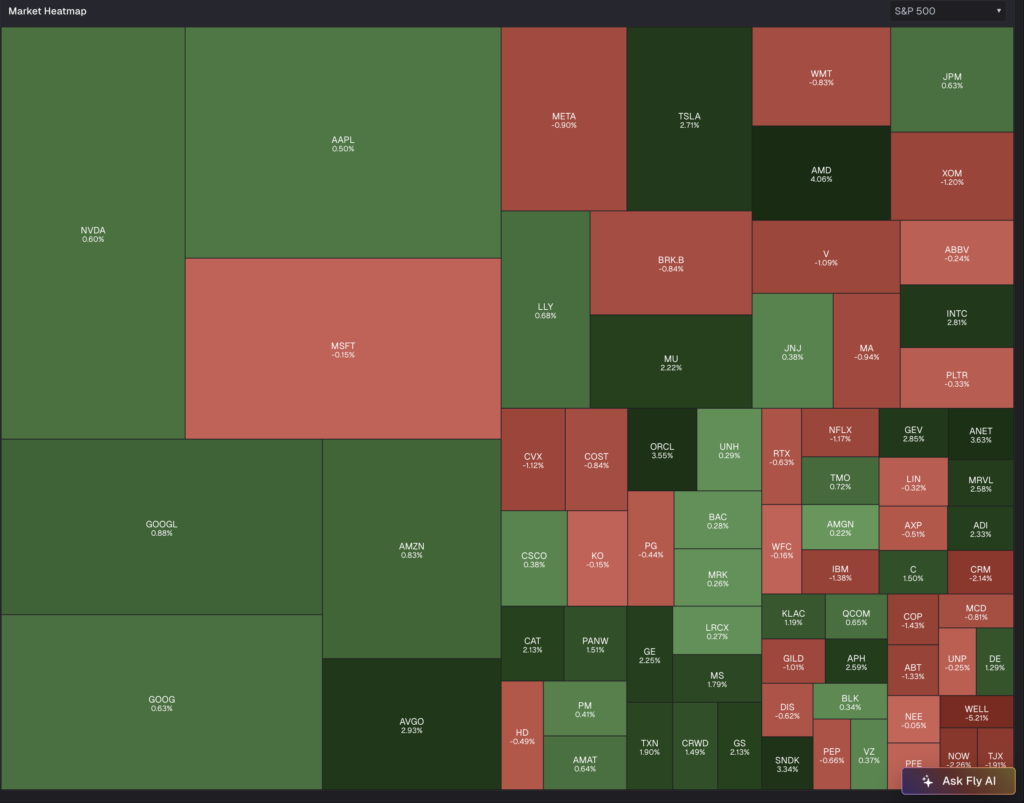
Aircraft orders drove a 1.8% headline jump, but core equipment shipments grew at their fastest quarterly pace since 2020, a boost for Q3 GDP.
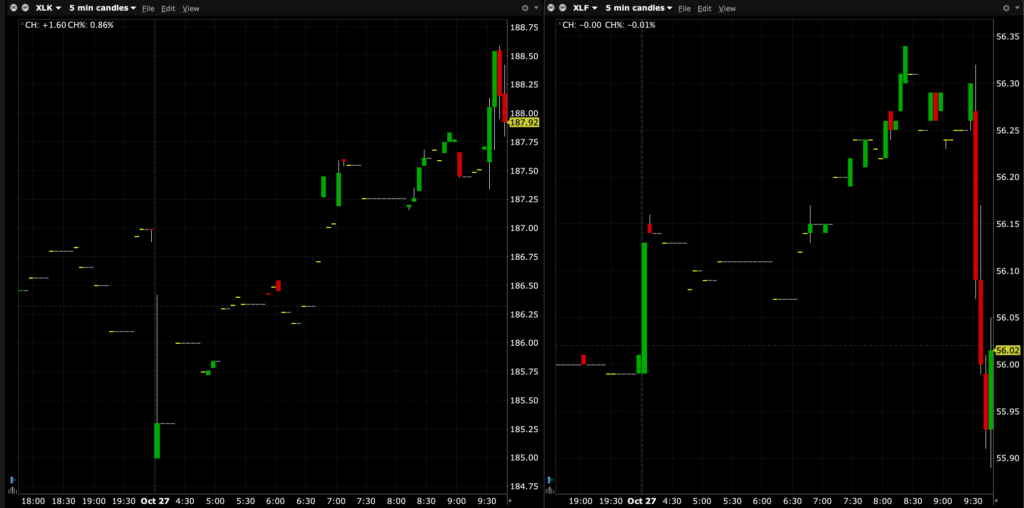
The post-election selloff pushed this ETF into oversold territory. Here’s how I reacted.
Tech (XLK) vs Financials (XLF) at 9:48 a.m.
The following is fro Peter Boockvar:
I’ll be out all morning so won’t be able to comment on the flood of data, though none is market moving.
At the end of the day, we know the entire AI infrastructure ecosystem is so dependent on Anthropic and OpenAI and at least we are a step closer to seeing and forecasting the financial state of them. In coming years though, it will not just be the US customers/subscribers they need to capture, it is competition for them around the world where open source/weight will be an intense challenger.
This was an interesting chart in yesterday’s FT which highlights the extent to which some companies have lower bond yields than the countries in which they are domiciled.
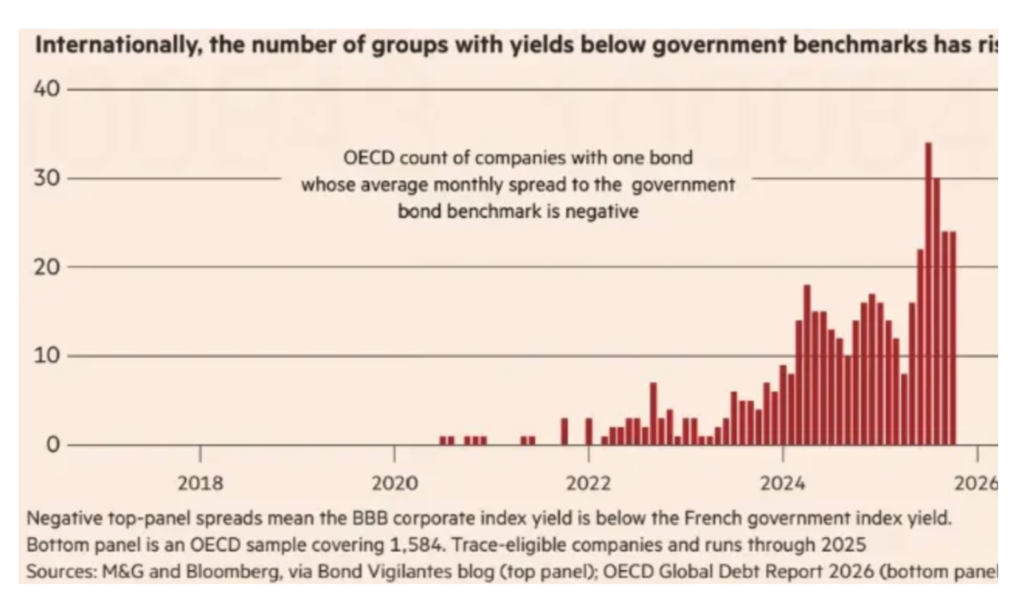
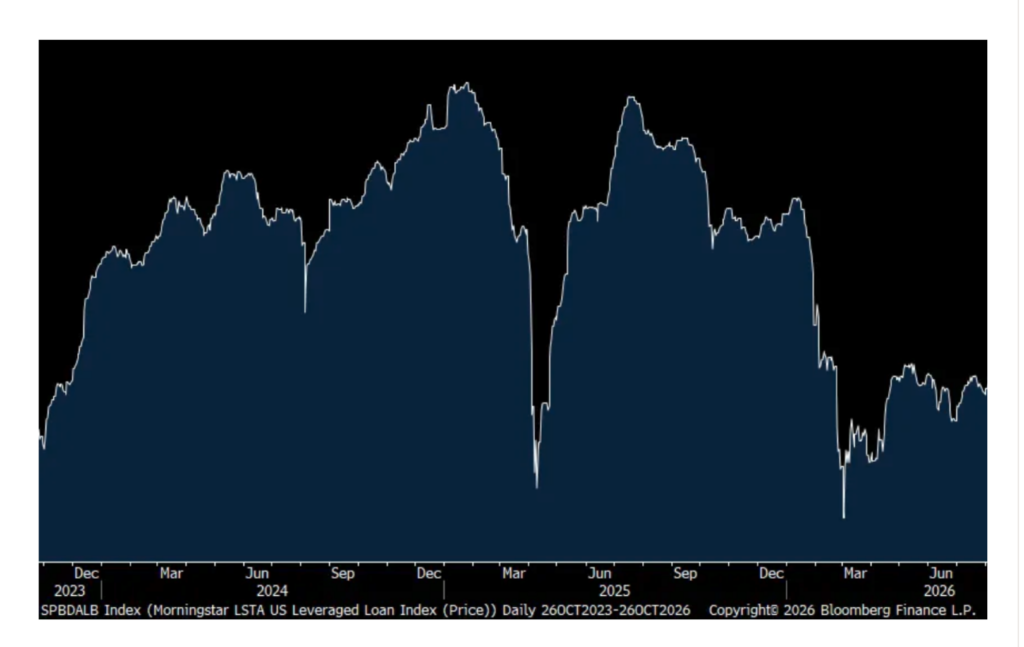
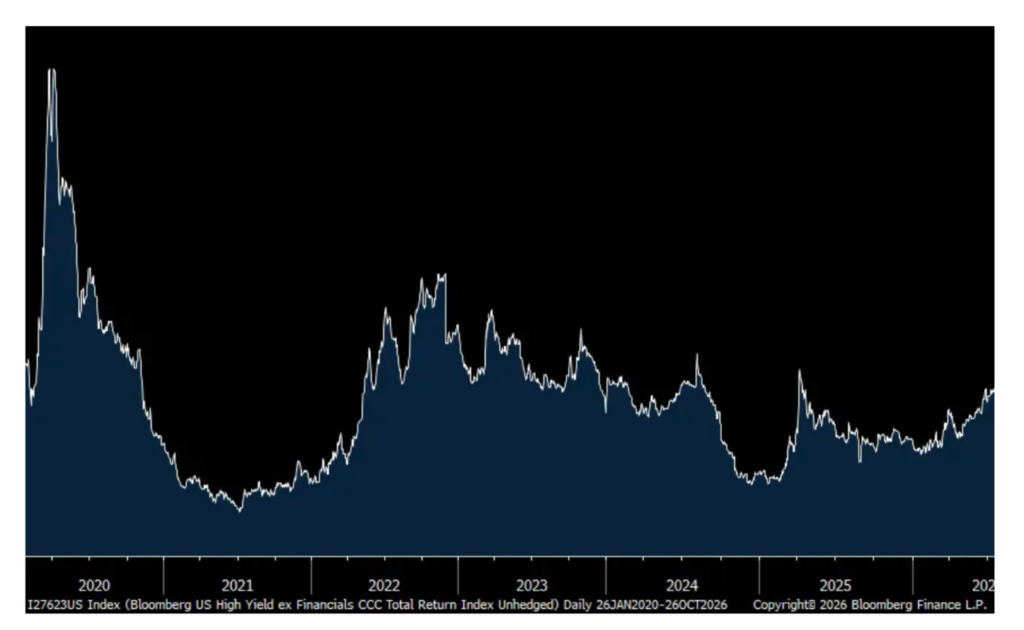
On the opposite end of the credit curve is of course the lower rated companies and capturing some of that is the LSTA leveraged loan index which closed yesterday at the lowest level since right after the Middle East conflict began at just $.9425 on the dollar. That’s below the ‘Liberation Day’ lows. The CCC credit spread is nearing 1300 bps at 1273 bps, the highest since the Covid shutdowns.
LSTA Leveraged Loan index
Bloomberg CCC Credit Spread index
What was interesting in the Verizon earnings call were the comments on the upcoming competition with SpaceX:
“Clearly, the tech and the wireless landscape is rapidly evolving, and we need to rapidly evolve along with that. I’m pushing hard on everyone so that we can shape the market and not react to it.”
“I also operate under the assumption that everything SpaceX says they will do, they will do, and that they will execute flawlessly…I think we should take it quite seriously. And from what we see and what we hear in the market because there are no secrets in the market, we know exactly what they’re going to do…It’s going to cost hundreds and hundreds of billions of dollars. I assume somewhere between $300 billion and $.5 trillion over the next, like, seven or eight years.”
From the Whirlpool earnings press release and trading down premarket:
“Excluding currency, net sales decreased 8.2% y/o/y driven by soft industry demand.”
“Announced price increase of 7% effective in Q4, supported by product innovation.”
From the Celestica press release, the original equipment manufacturer making many things going into the data centers and trading up premarket after good numbers:
“Celestica is well positioned to continue to support leading hyperscalers and frontier AI labs through the ongoing AI infrastructure supercycle. The demand environment continues to be very robust, supporting our 2027 revenue outlook, with customer demand forecasts meaningfully higher for 2028.”
In yesterday’s Dallas Fed’s manufacturing index for October which rose to 13.4 from 9.8 as the manufacturing recovery continues, here were some notable respondent comments:
Beverage and tobacco product manufacturing
· We continue to see pressure on profitability. We are profitable, but barely. The challenge is the increase in costs we are paying for our raw materials. The increase in diesel costs is the justification we are being told from our suppliers. Being able to give our employees year-end raises to keep up with inflation will be a further pressure on profitability.
Computer and electronic product manufacturing
· Higher interest rates affect our industry in a big way.
Fabricated metal product manufacturing
· Some product mix changes, but overall we’re forecasting a fairly positive picture over the next 6 months.
Food manufacturing
· Geopolitics, labor issues and recession/inflation worries.
Machinery manufacturing
· Business is strong, with many new existing projects ramping up, and we’re continually receiving new business opportunities.
· Activity is up and down; right now we are up.
· The data center bubble will burst soon, but a viable business model underlies it that will survive, just on a smaller scale. The creative destruction of the free-market system will prevail.
Nonmetallic mineral product manufacturing
· It’s difficult to find manual labor workers right now. We are hopeful the political climate will change in November and things overall will get better.
Printing and related support activities
· Data centers spending money on flimsy steel and HVAC systems does not make the economy robust. Rates should come down for those of us that have to support the system in the long term.
· We are getting to be really slow and low on work which concerns me greatly. Many of our competitors were slow this summer when we were busy with large projects we have done for many years in a row during the summer months. Now it’s our turn I guess to be slow.
Transportation equipment manufacturing
· Fuel pricing and the cost of domestic product increasing are dramatically tempering a recovery in the freight market.
· Outlook plans will depend on the midterm outcomes and the Fed’s interest rate action.
The financial services firm appears to be cooking with gas.
Israelis are voting today in what many on both sides call the most consequential election in the country’s history. It’s the first since the Oct. 7, 2023, Hamas attack and the wars in Gaza, Lebanon and Iran that followed, and turnout is running at the fastest pace in nearly half a century, per Reuters.
The choice is stark. Prime Minister Benjamin Netanyahu, Israel’s longest-serving leader, is running on his record against Hamas, Hezbollah and Iran, backed by an endorsement from President Trump, and says only he can keep the country safe. His main challenger, former military chief Gadi Eisenkot, is campaigning on accountability for Oct. 7, per the FT. That includes a state inquiry that Netanyahu’s coalition has resisted, reversing parts of the judicial overhaul and ending the military-service exemption for ultra-Orthodox men. On security, though, the gap is narrower. Both oppose a Palestinian state, and Eisenkot has pledged to end Hamas’s rule in Gaza within 18 months, per the WSJ.
What the vote probably won’t deliver quickly is a government. Final polls had Eisenkot’s bloc at about 54 seats and Netanyahu’s coalition at about 50, both short of the 61 needed for a majority in the 120-seat Knesset, with Arab and unaligned parties holding the rest, per the FT. Both camps have pledged not to rely on the Arab parties. The final count is expected by Friday, with official results on Nov. 4. President Isaac Herzog will then designate a candidate, who gets up to 42 days to build a coalition, per Al Jazeera. If that fails, the process can pass to another candidate and then to parliament before new elections are called. That sequence produced four inconclusive elections between 2019 and 2021. Netanyahu would remain caretaker prime minister throughout, leaving him free to act on his pledge to resume the war with Iran, Bloomberg notes. Herzog has said he’ll try to avoid a repeat, raising the prospect that he pushes for a national unity government, per the FT.
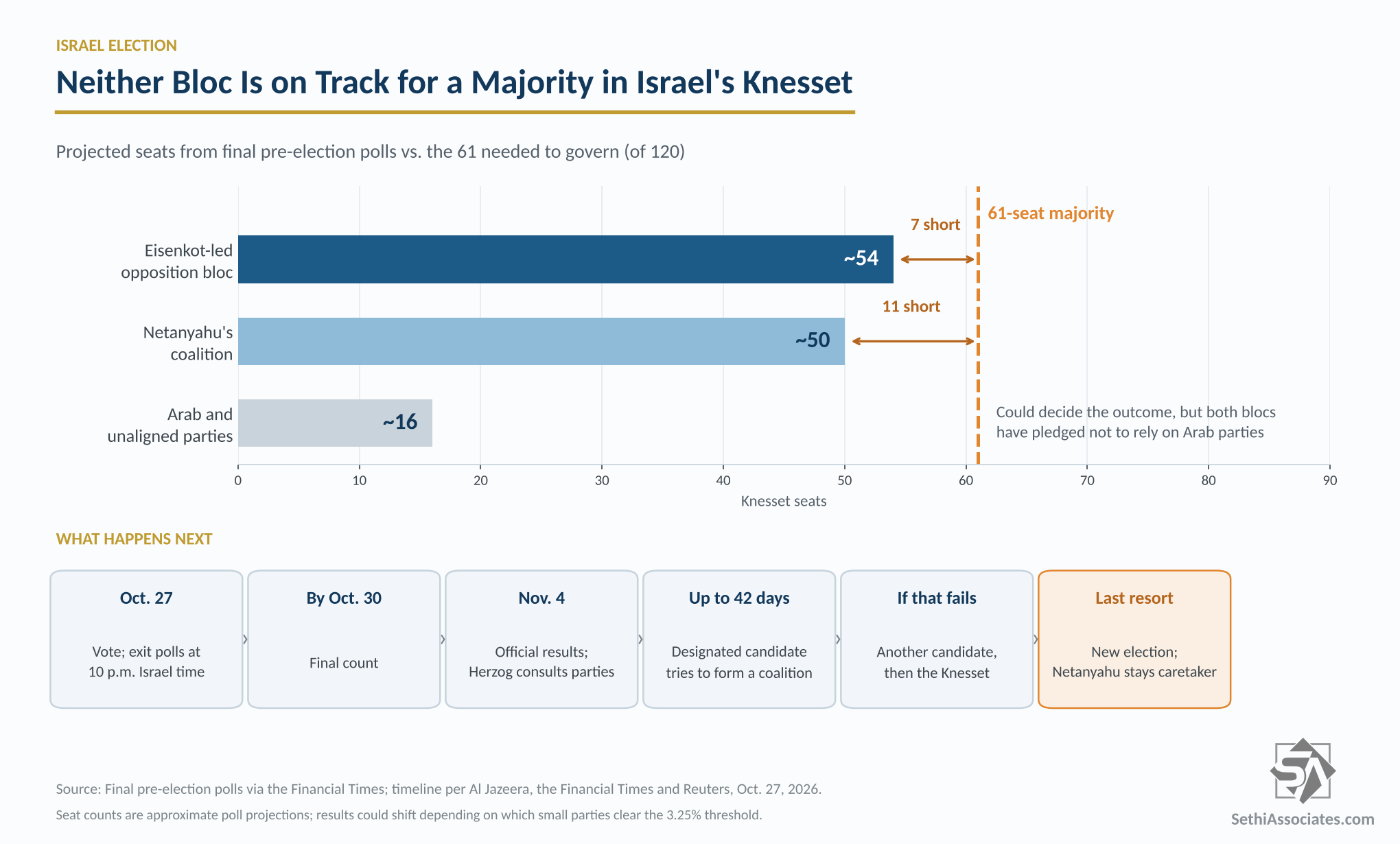
Prediction markets lean toward change: Polymarket bettors gave Eisenkot about a 60% chance of becoming prime minister and Netanyahu 27%. As Brazil showed on Sunday, though, they can be quite wrong.
For markets, some investors see a prolonged deadlock as a bigger risk than either outcome, per Reuters. Tel Aviv stocks are up about 130% since Oct. 7, 2023, versus about 80% for Wall Street, and roughly 12% this year. The shekel has gained about 25% since then, though both stocks and the shekel are down about 10% since May. In past elections, Tel Aviv volatility rose as much as 45% in the weeks after the vote, but initial losses were usually recovered within a month, per Tel Aviv Stock Exchange research.