Why Is Bessent Propping Up the Yen? Call it ‘Enlightened Self Interest’

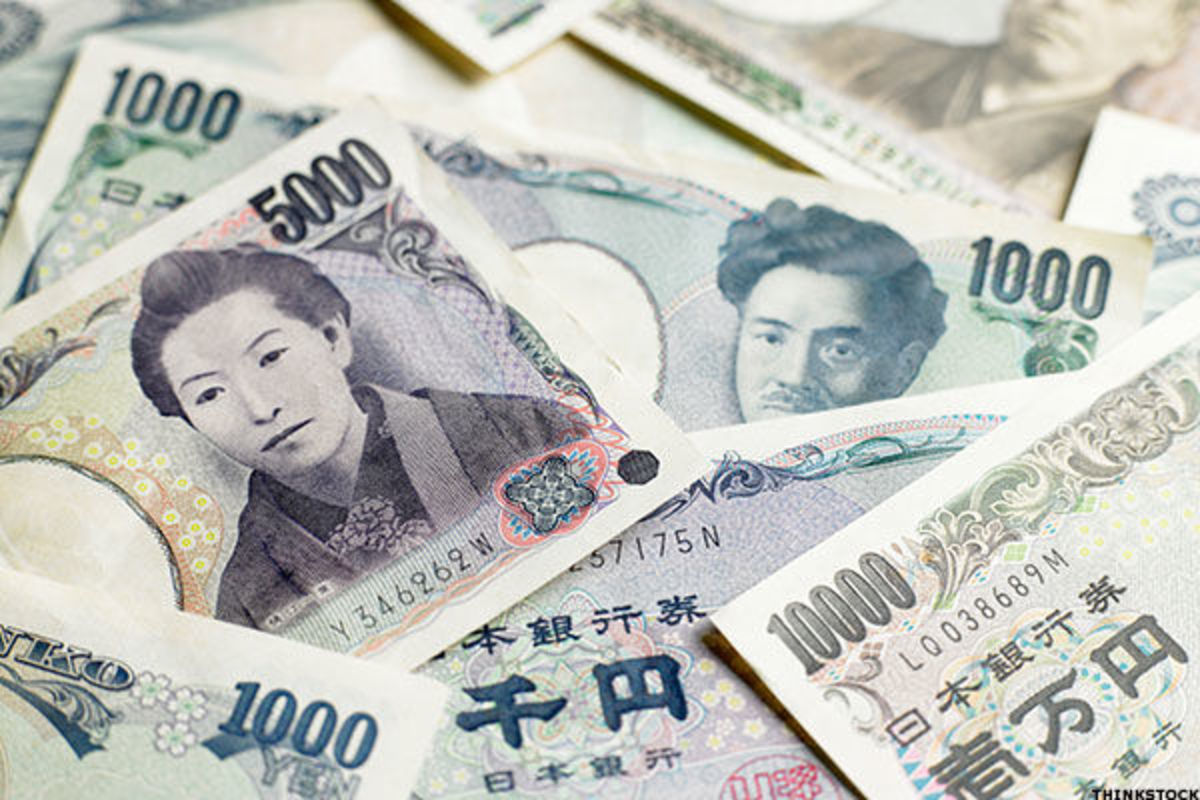
While the semiconductor selloff has been the story of the summer (so far), the sector now seems to have at least stabilized. Which leaves me looking at the yen.
The United States and Japan teamed up on a highly unusual joint intervention into foreign-exchange (FX) markets on Friday to prop up the Japanese currency. The tag teaming certainly took traders by surprise.
Where Does the Yen Stand?
The yen shot from just shy of ¥164 to the U.S. dollar to a strong point of ¥155.81, a sudden gain of 4.8%. The yen has since drifted a little weaker, trading at ¥157.89 to the dollar as I write.
This intervention has taken the Japanese currency below the ¥160 marker that the Japanese government wants to protect. But that’s just the latest in a series of lines basically drawn on sand, the barriers at ¥120, ¥130, ¥140, ¥150 all washed away over the last four or so years. The yen is at 40-year lows, levels last seen in 1986.
Will this current level hold? The answer has important ramifications for U.S. investors.
The Case for Unhedged Japan Equities
I have made the case that a strengthening yen will augment any gains in unhedged Japanese equities for investors outside Japan. The foreign-exchange effect of a stronger yen would magnify any gains when translated back into, for instance, U.S. dollars.
The opposite effect means a weak yen is good for “Japan Inc.,” the country’s major exporters. Revenues made in U.S. dollars for the likes of Toyota Motor ($TM) (T:7203) generate bigger profits when goosed back into Japanese yen. But a weak yen raises consumer and corporate costs, particularly for energy, with Japan importing all its oil (priced in U.S. dollars).
The intervention has stemmed yen selling — for the time being. We have the threat that the two governments say they “would not hesitate” to intervene again if necessary.
An Expensive Effort
But it is expensive to wade into the currency markets, and the effects are short-lived.
Japan’s Ministry of Finance has recently spent $80 billion on intervention efforts on July 30 and 31 alone, and has only ever been able to temporarily turn the tide. This intervention used up half of the ministry’s foreign-exchange holdings of $162 billion, according to Nomura calculations. We’ll get exact figures on the intervention and the ministry’s FX reserves this coming Friday.
The comical “to do” list on U.S. Treasury Scott Bessent’s desk at an on-the-record briefing at Camp David tells us the treasury intended to spend $5 billion to $10 billion to “Buy Japanese Yen (JPY)” as an over-the-shoulder shot of Bessent’s note pad illustrated. You can see his reminder to self, “Oh yeah, intervene in FX markets,” here.
The U.S. Treasury did at least issue a notice to banks, via the Federal Reserve Bank of New York, that it could be about to intervene to counter “disorderly yen movements,” as Bessent described them.
Why Is U.S. Treasury Involved at All?
Why is the United States getting involved? Call it enlightened self interest.
The U.S. Treasury is worried that Japan may sell U.S. treasuries to buy the yen. That would cause treasury yields to spike, instantly driving up the cost of servicing mortgages, car loans and company lines of credit that are benchmarked off treasury yields. To avoid a dollar selloff, the U.S. Treasury sold euros to buy the yen.
Bessent is now also calling on the U.S. Federal Reserve to “upsize” over the next few months a repurchase-agreement or “repo” facility that allows central banks like the Bank of Japan to access U.S. dollar liquidity by temporarily selling U.S. Treasuries to the Fed, instead of trading in open markets. The repo facility currently allows $60 billion in U.S. dollar loans over the course of seven days.
Japan holds $1.14 trillion in U.S. treasuries, more than any entity worldwide other than the Fed itself. Expanding the facility would allow Japan to temporarily raise money to buy the yen without having to sell the treasuries outright.
‘Skeptical’ About Durability of Yen Strength
While the ability to tap that repo facility will make intervention simpler, markets “remain skeptical about the durability of the move,” in the words of Commerzbank’s FX analysts.
There was a sudden unwinding of the yen carry trade in August 2024 — exactly two years ago. An unexpected Bank of Japan (BoJ) rate rise coupled with a weak U.S. jobs report caused a sudden strengthening of the yen. The Tokyo broad-market Topix benchmark lost 12% on August 5 alone, and U.S. stocks also sold off.
But it didn’t last. The BoJ has moved exceptionally slowly to raise rates, and faces pressure from the ruling administration of Prime Minister Sanae Takaichi to keep rates low. The Takaichi team are also pushing efforts to reflate the Japanese economy, with the prime minister stating she still does not believe Japan has truly exited the devastating deflation that plagued it for the better part of three decades.
Bank of Japan Not Coming to the Party
It is noteworthy that the BoJ did not raise interest rates at its meeting on Friday. In an 8-1 decision, the central bank kept the short-term policy rate at 1%, after raising the rate to that 31-year high in June. If Japan is truly serious about correcting the yen, it needs to be raising rates at a faster clip.
“I’m frankly puzzled that the U.S. chose to intervene without the other party showing up,” Steven Englander, the global head of G10 FX research at Standard Chartered, said in a Bloomberg interview on Tuesday.
BoJ Governor Kazuo Ueda did little to instill currency confidence. He noted that inflation may well overshoot the central bank’s 2% target, and cause prices to rise. But he simply said the central bank committee “will debate our policy from our next meeting onward with this point in mind,” not even committing to a potential rate rise at the September policy meeting.
Ueda is back at the helm after missing the last meeting while receiving hospital treatment for an infected liver cyst. The lone dissenter, economist Hajime Takata, argues for an immediate hike to 1.25%.
It means that the 1% interest rate in Japan remains well below the 3.75% U.S. interest rate at the higher end of the Fed’s band. And there’s the rub. It makes sense for Japanese institutional investors to borrow in Japanese yen and then buy U.S. assets, making a handy profit even if they just buy U.S. treasuries.
Yen Carry Trade Persists
It’s that outflow of capital — the yen carry trade — that must be addressed if the yen is truly going to strengthen without the artificial help of intervention.
The odds are now higher, with a 65% likelihood, that the Fed will hike rates in September than the BoJ, with markets pricing a 33% to 50% chance of that. To see U.S. rates rise while the BoJ stands pat would only worsen the interest-rate differential that’s the root cause of yen weakness.
For instance, Takaichi is pledging to slash for two years the consumption tax on food (excluding restaurants) to 1% from the current 8%. It would be the first-ever reduction in the consumption tax, which has been raised three times since its introduction in 1989, and now accounts for about 30% of national tax revenue. While Takaichi has frequently touted the tax cut, particularly en route to securing a landslide victory in February’s elections, she has not once explained how she would pay for it.
Near term, we are likely to see downward pressure on the U.S. dollar-yen rate, Nomura’s global FX strategy team wrote in a note to clients. The currency will likely continue to trade between ¥155 and ¥160. However, “in the longer run, we think fundamentals for JPY need to change significantly for Japanese investors to become more bullish on the JPY,” they stated. “We are unlikely to be in a new regime that investors, especially onshore Japanese participants, are more confident about a persistently stronger JPY trend.”
