What If OpenAI Fails In 2027?


Reuters posted a story in recent days highlighting how OpenAI now projects it will burn through a collective $278 billion in cash from 2026 through 2030. And that is if the company meets its forecast of boosting annual revenues tenfold to $350 billion in fiscal 2030. Maybe I have become too skeptical as I have turned 60 years old this month. Maybe I have just watched one too many videos of interviews involving Sam Altman to not take these figures with a huge grain of salt — especially as much cheaper open-source AI models from China are increasingly gobbling up token utilization market share.
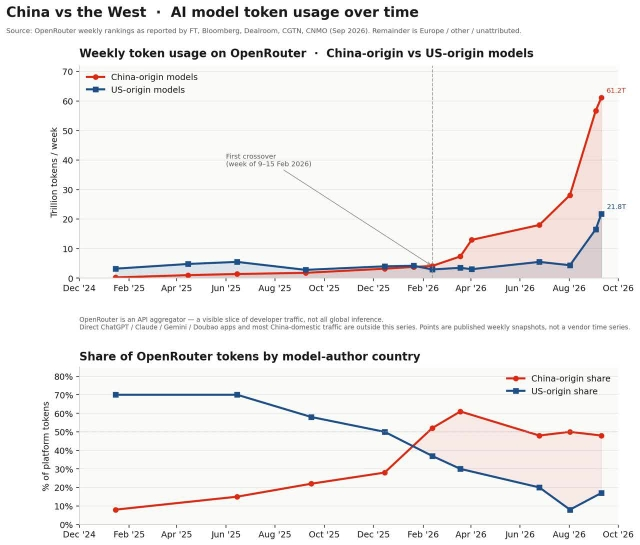
Anthropic is still moving forward with its planned initial public offering later this year hoping for a valuation of a cool $2 trillion. OpenAI has officially pushed back its own $1 trillion planned IPO into 2027. Stock market investors seem quite sanguine that OpenAI will be able to raise roughly $300 billion over the next five years with few problems. A big chunk of that initial funding need will come via OpenAI’s IPO.
The credit markets, however, are not nearly as optimistic. Credit default swap prices against Oracle’s ($ORCL) fast-growing debt load have hit record highs. The company has implemented large layoffs in 2026 after posting negative free cash flow of $23.7 billion in its fiscal 2026 year. The founder of the company just cancelled a planned $7.5 billion disposal of some of his stake in the company after it triggered too many headlines.
Oracle is building out huge data center complexes and is counting on being paid $60 billion annually by OpenAI over five years, starting in 2027. Much of the proceeds of OpenAI’s IPO in 2027, assuming it happens, will be rerouted to Oracle. If for any reason OpenAI fails to raise tens of billions of dollars in funding in 2027 at acceptable terms, it could put more than just Oracle in jeopardy.
Both the economy and the equity markets are now largely being driven by the AI Revolution. And the capital markets have largely been friendly as the hyperscalers have successfully raised a huge amount of proceeds by large equity and debt issuance to fund their burgeoning AI infrastructure capital expenditure budgets. Some $568 billion of AI-related debt has been issued so far in 2026 to fund these efforts; $259 billion came from investment-grade debt issuance with an additional $256 billion from private credit. The same private credit sector that experienced record default rates in Q2 while large private credit funds have significantly “gated” redemption requests in recent quarters. One of the primary drivers of these surging default rates were private credit’s over exposure to the software industry. Now the same complex is making huge bets on the AI infrastructure buildout. The irony is not lost on this investor. I mean, what possibly could go wrong?
It also should be noted that this surge of AI-related debt issuance is one reason behind the rise of the yields in the 10-Year Treasury this year as the federal government must compete against hyperscalers to fund its burgeoning debt load. Last week, the 10-Year treasury yield hit its highest level since 2007 before pulling back some in recent trading sessions. It stands at just around 4.95%, after starting the year at 4.2%.
In summary, a lot is riding on OpenAI being able to raise a huge sum of capital in coming years. The equity markets are signaling they are quite confident this will happen with minimal hiccups. The credit markets are not nearly of sure of that outcome. The phrase caveat emptor comes to mind for this investor.
At the time of publication, Jensen had no position in any security mentioned.
