The Mags Are Ugly on a Day With Good Breadth

Why was the market down on a day that breadth was positive? It’s that either/or market again.
Why was the market down on a day that breadth was positive? It’s that either/or market again.
AI demand is pulling through across sectors, but supply constraints remain a headwind.
SpaceX spent more, Tesla spent less, and Meta proved its spending works. The market is selling all three.
Blowout SpaceX results lifted a swath of AI names, sending the Nasdaq up over 1%.
One stop remains in our AI series, and it’s the one folks rarely think about.
Let’s look at who is really the most powerful banker in the world right now.
I wanted to make one more point on the circularity, which continues to fly under the radar.
The revenue quality issue.
See tweet below:
The circular financing goes well beyond Nvidia ($NVDA) and others funding their customers. It is also the Venture Capital firms who are financing the consumers of the compute, in the hopes that another greater fool takes them out at a higher valuation.
These companies that the VCs are financing are consuming the bulk of compute, NOT corporate America, which actually has a balance sheet and sustainable businesses of their own volition. There is no shortage of data coming out that corporate America is finding little utility from AI. In fact the data shows the opposite and it is becoming more clear that AI is just a cost.
At the end of day, AI is really all sort of an inter-linked Ponzi scheme and money recycling operation, underpinned by public market valuations that I believe have been goosed by Nvidia. The demand for compute is coming from businesses that really should not, and do not need to exist, and are just being financed by VCs that effectively are funneling money to compute infrastructure, in the hopes that valuations remain high and a greater fool takes them out of their investment.
But most will go the way of Character AI – with $2.7 billion in market capitalization to near zero… in a heartbeat.
Position: None
Is Nvidia ($NVDA) now the central bank and lender of last resort? Is the Federal Reserve’s Kevin Warsh the boss, or is it now Nvidia’s Jensen Huang?
Who really is the most powerful banker in the world right now?
Who has more impact on rates and the economy?
See the link below:
https://www.tipranks.com/news/nvidia-may-be-helping-finance-oracles-ai-data-centers-td-cowen-says
It does not stop. Now Nvidia needs to finance and backstop Oracle ($ORCL) along with everything else?
The Nvidia balance sheet soon may be bigger than the Fed’s at the rate the company is financing the economy to dig holes and fill them back up, so Nvidia can recognize revenue. The balance sheet and cash flow statement tell a very different story than earnings do. Amazing GAAP allows for this.
Then I still wonder: Does this industry have any chance of working? It still seems at the frontier lab-level, which underpins everything, the more numbers that come out, the less it makes sense. It seems this business does not and cannot scale. With every dollar of additional revenue, even at this size, comes more than an additional dollar of expense. As noted in “More Tales” this morning, Anthropic ex the accounting charge still lost $8.7 billion on $16 billion of revenue in the first six months of 2026.
Sixteen billion dollars is a lot of revenue and Anthropic still lost 50 cents on every dollar. This is why the company resorts to trying to report earnings before expenses. They have $518 billion of commitments over the next decade.
Do they have a bat phone connected to the Central Bank of Nvidia?
Positions: None.
In addition to the well-received SpaceX ($SPCX) headlines detailed last night (SpaceX Climbs as Musk Floats Tesla Merger), some other stories are boosting Tech shares this morning:
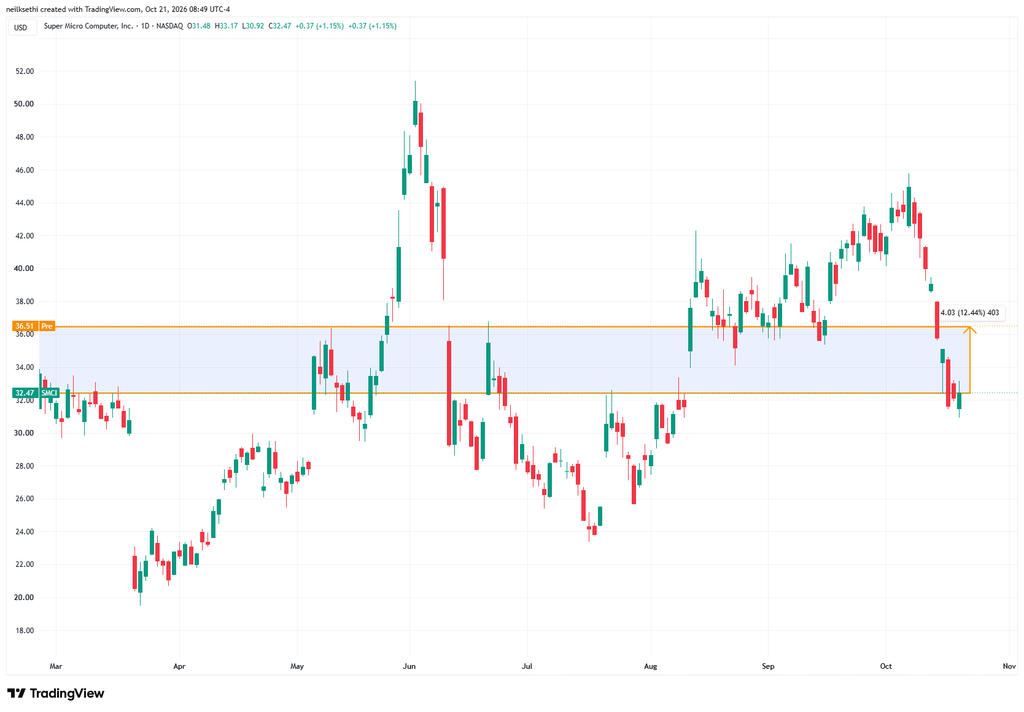
Shares of server maker Super Micro Computer ($SMCI) are up over 12% premarket after the firm released preliminary quarterly numbers for the period ending September 30, saying it expects revenue of $18.5 billion to $19.5 billion for the quarter. That compares with its earlier forecast of $14.5 billion to $15.5 billion and an average analyst estimate of about $15 billion. The company also raised its gross margin forecast to 12% to 12.5%, from 10.4% to 10.8%
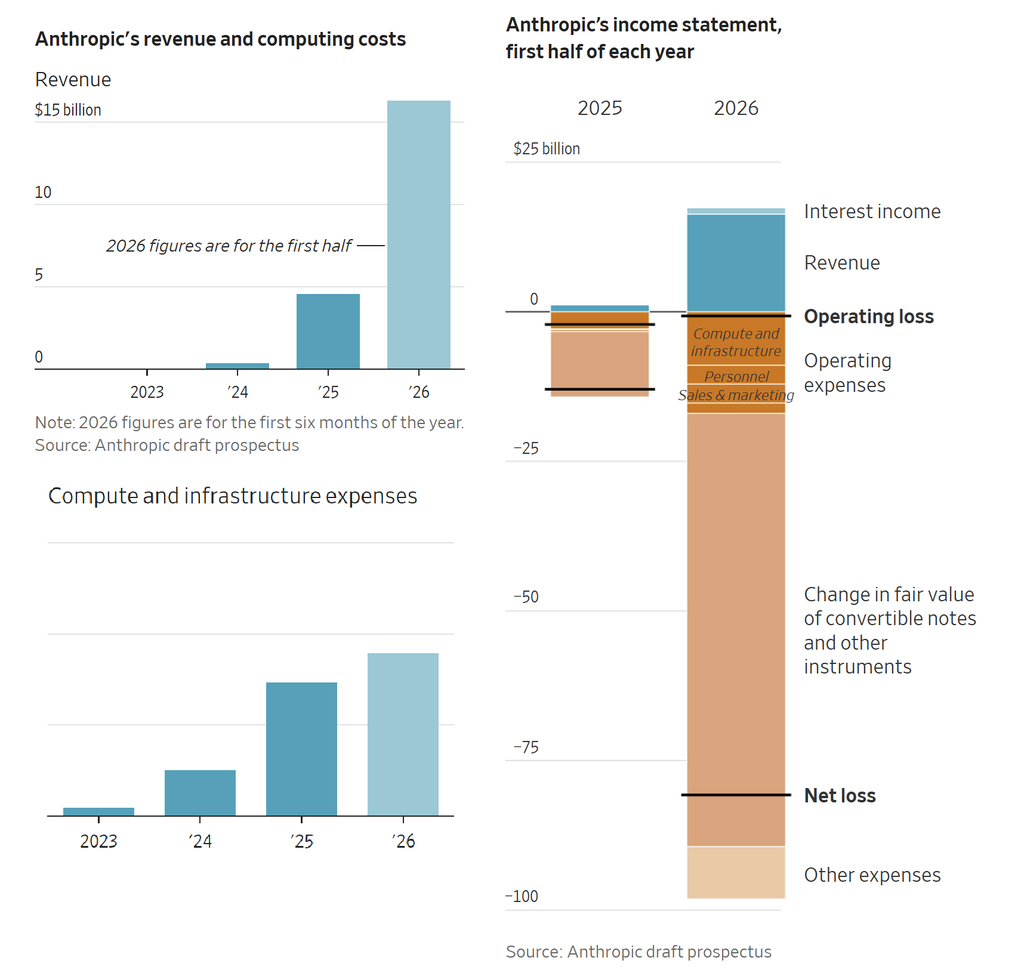
In addition, the Wall Street Journal is reporting that Anthropic’s draft prospectus signals coming spending on computer and power of as much as $750 billion in coming years, with $111 billion on contracts with Alphabet’s Google Cloud ($GOOGL), $110 billion with Amazon Web Services ($AMZN) and $31 billion with Microsoft ($MSFT) “regardless of actual usage.”
Anthropic also agreed to spend up to $86 billion renting Nvidia ($NVDA) chips from smaller AI cloud providers Nscale and Lambda.
And sales are growing at a blistering pace. The Journal reported revenues had grown to $16.3 billion in the six months ended June 30, up from $1.1 billion in the year-earlier period. That outpaced the nearly $9 billion on computing capacity and infrastructure, up from $2.3 billion.
Still it recorded a net loss of $80.7 billion, the vast majority ($72 billion) “tied to changes in the value of convertible notes and other instruments the company issued to raise funding.”
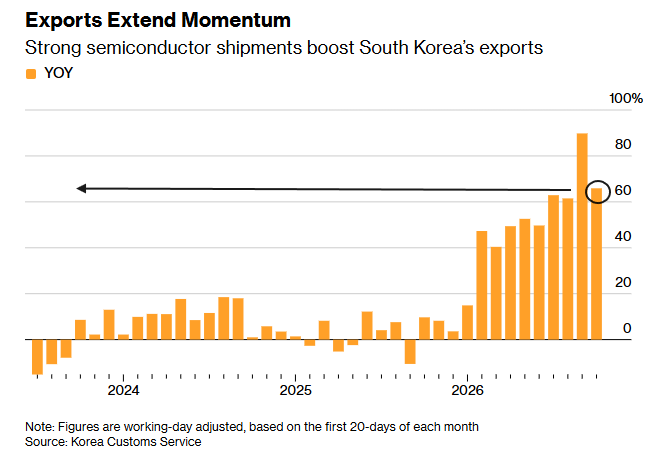
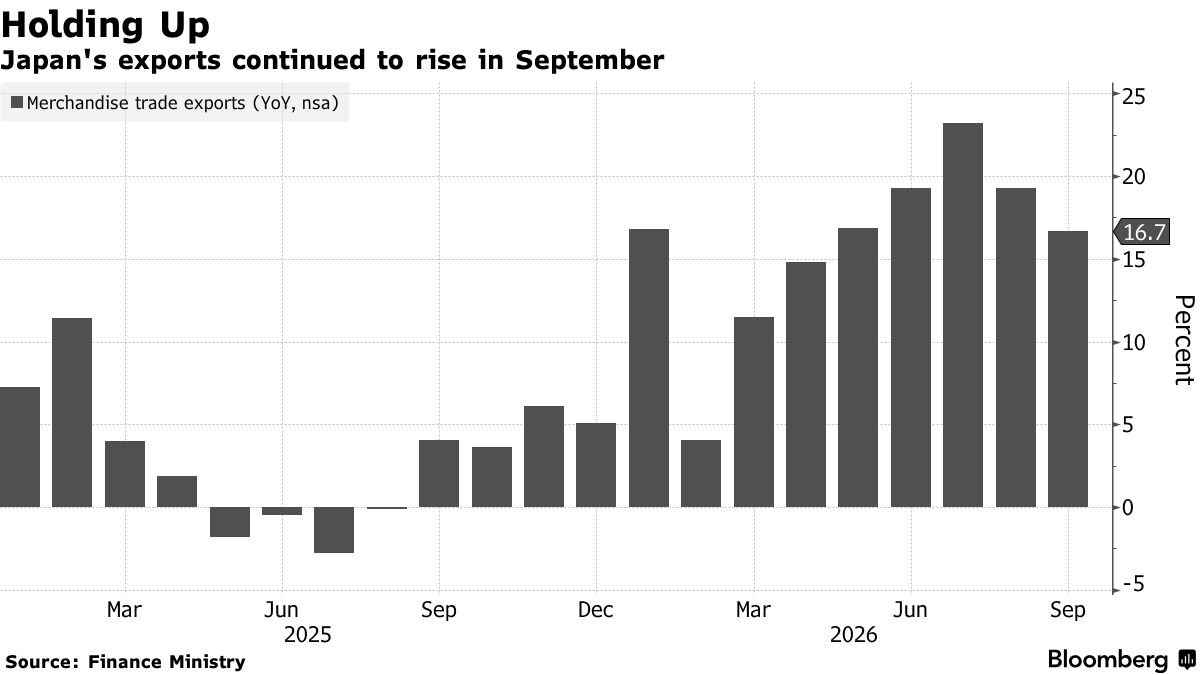
And finally, several Asian countries with large tech exposure (South Korea, Japan, Taiwan, etc.) are reporting strong export numbers led by semiconductor and other Tech shipments.
– $SMCI +12% (preliminary fiscal Q1 revenue outlook was raised well above expectations, with gross-margin upside)
– $SPCX +8.2% (Q3 revenue and profit crushed expectations, marking its first quarterly profit since the IPO, while special committees evaluate a potential TSLA merger)
– $CRDO +7.2%, $VRT +6.7%, $DELL +6.9%, $LITE +5.6%, $HPE +5.0%, $COHR +4.6% (AI-infrastructure suppliers rise as the SMCI outlook and SPCX AI-compute results reinforce data-center demand)
– $WDC +4.0%, $SKHY +3.7%, $SNDK +3.7%, $STX +3.6%, $MU +3.1% (memory and storage names gain on the stronger AI-infrastructure demand read-through)
– $APLD +4.0% (Texas AI data-center agreement and bullish analyst action)
– $INTC +2.3%, AMD +2.1%, $NVDA +2.0% (chip stocks rise as strong AI-compute and server demand updates lift the broader complex)
– $TSLA +1.4% (special committee formed with SPCX to evaluate a potential merger ahead of earnings)
– $TKNO -30% ($40M primary offering priced at $5 per share, a steep discount to the prior close)
– $NFLX -7.0% (Q3 profit beat, but the Q4 sales outlook missed and the 2026 advertising-revenue forecast was cut to $2.7B from $3B)
– $ISRG -6.7% (Q3 beat, but U.S. procedure growth slowed, instrument pricing reductions were outlined and the high end of the procedure-growth outlook was cut)
– $T -5.6% (Q3 beat and FY EPS guidance was raised, but postpaid phone additions missed expectations amid satellite-competition concerns)
– $DHR -3.6% (Q3 beat and FY EPS guidance was raised, but the Q4 core-growth outlook remained modest with a respiratory-revenue headwind)
– $TMO -3.0% (sell-the-news reaction after a Q3 beat and raised FY guidance)
– $ACN -1.5% (Baird downgrades to Neutral from Outperform on valuation and slower organic growth)