Don’t Let This Type of ETF Draw You in With Misleading Returns


Some of the top-performing ETFs this year are thematic. These products do exactly what it sounds like they should do: They invest in a particular trend, idea or concept instead of a traditional sector, index or geography.
Among the year-to-date leaders:
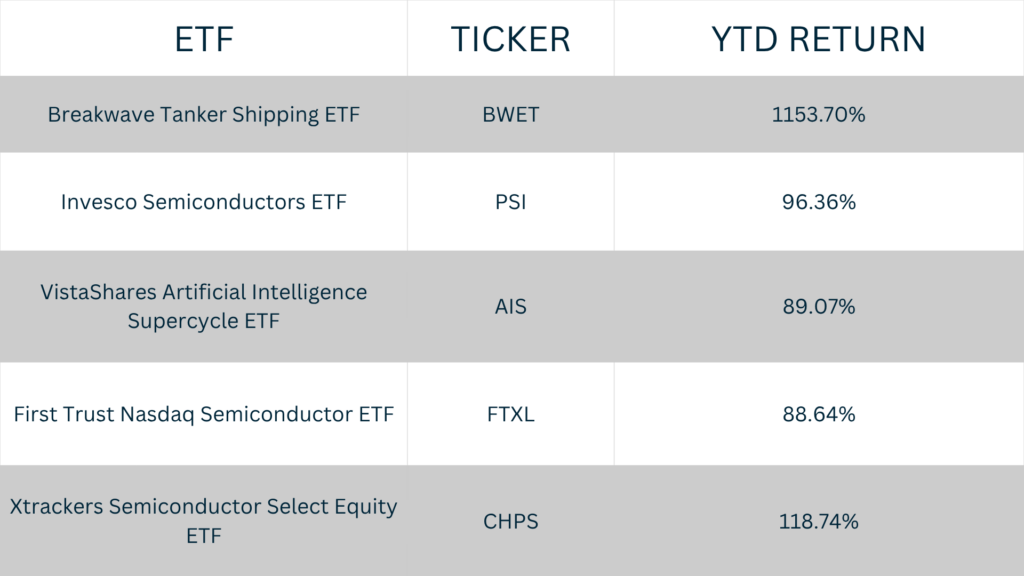
The reasons that these themes are leading are pretty intuitive.
($BWET), the tanker ETF, has been on a tear since the war with Iran began in late February. Strait of Hormuz closures mean tankers are taking the long way around, resulting in fewer ships available at any given time. That raises prices, which boosts the price of stocks in BWET and similar funds.
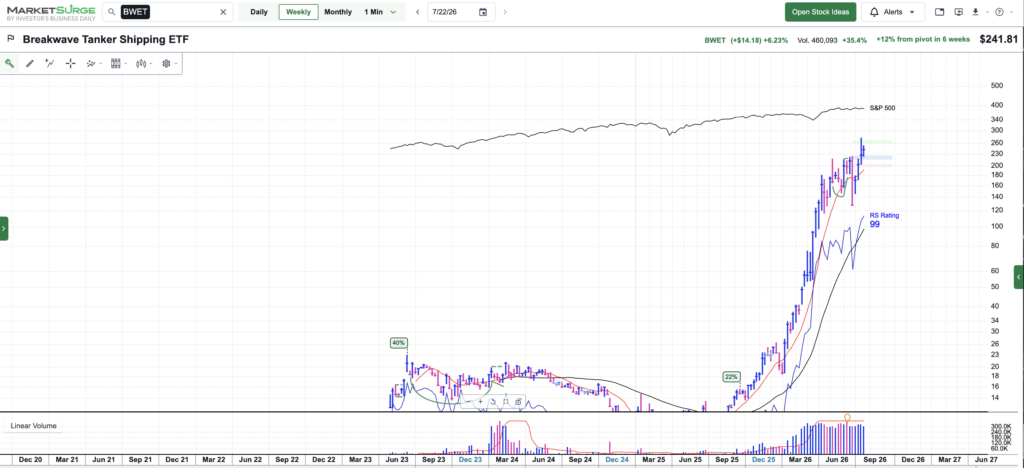
The case for the ($AIS) ETF, which tracks companies in the AI infrastructure space, is self-explanatory, although performance has tapered off in recent weeks amid some broader skepticism about AI growth.
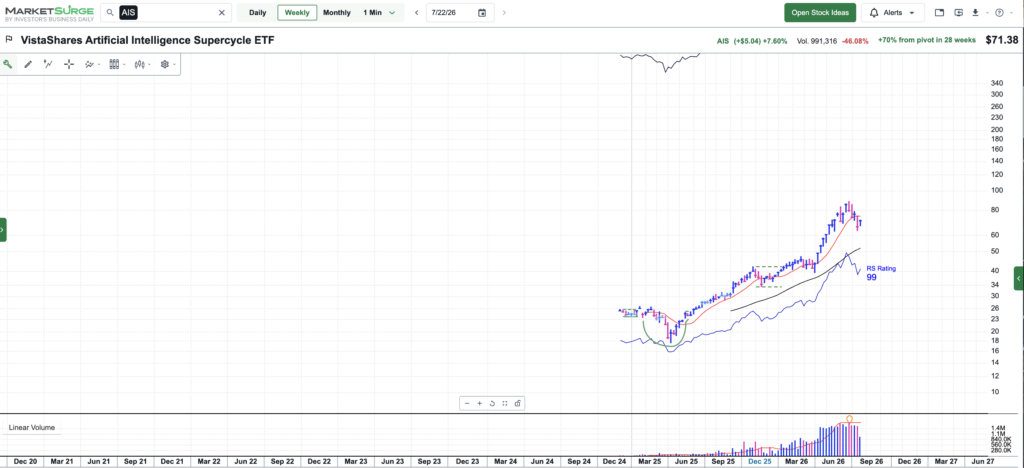
The three semiconductor ETFs, ($PSI), ($FXTL) and ($CHPS), in that table are also AI-related. AI not only needs chips; it needs memory and equipment, both of which are booming. These semiconductor funds spread money across all of it, to capture gains of sub-industries within the broader thesis.
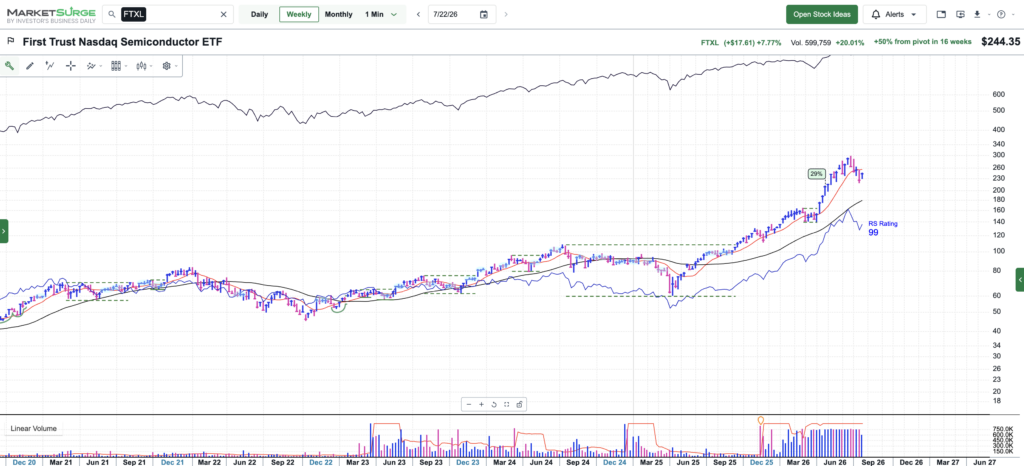
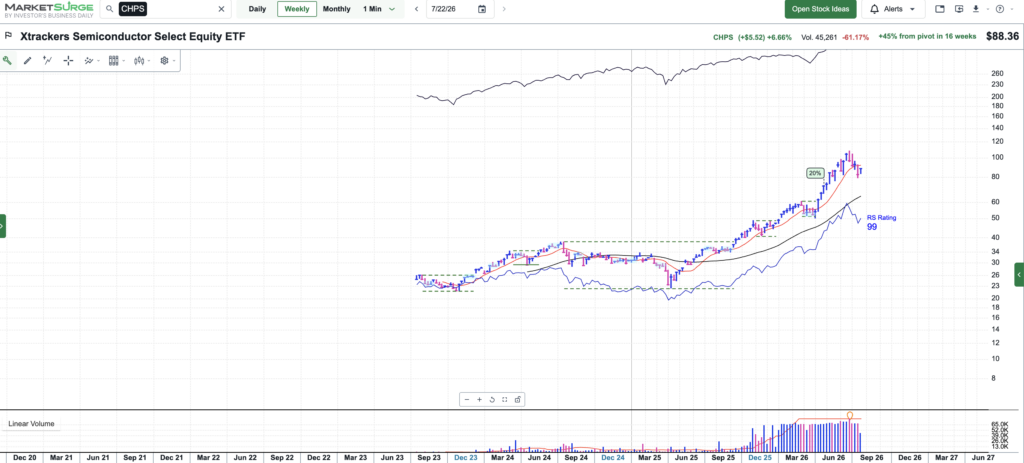
These ETFs have all done well this year. But so what?
No, really. So what?
“Doing well” is kind of meaningless without examining the details of any given investment. What’s its purpose in a portfolio? What kind of market cycles favor the particular investment?
The problem with thematic ETFs is that they demand that investors be right about two things: Not just the theme, but also the timing.
Most investors buy in after the big rally. They see eye-popping returns on a leaderboard and throw in some cash. But returns should be a warning, not just an invitation to jump in.
Strike While the Iron Is Hot
In a 2022 research paper, “Competition For Attention in the ETF Space,” authors from the National Bureau of Economic Research found that companies tend to launch new ETFs exactly when a theme is hot.
Sound like marketing to you? How is that any different from every label signing whatever grunge bands they could find in the after Nirvana’s “Nevermind” blew up in the early 1990s, just as the trend for flannel and the distorted guitar sound were peaking?
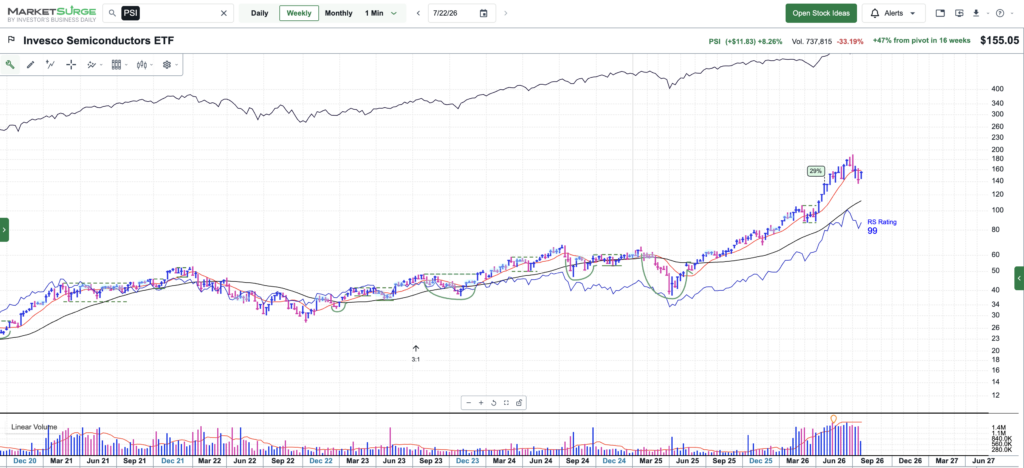
For example, tanker ETF BWET set sail in 2023 on the strength of developments such as Russian sanctions forcing oil into longer voyages, while an aging fleet meant a skimpy supply of ships. Meanwhile, the post-COVID economy was booming with demand for stuff.
But take a look at the monthly chart: After the ETF’s launch, tanker stocks ran aground for nearly two years.
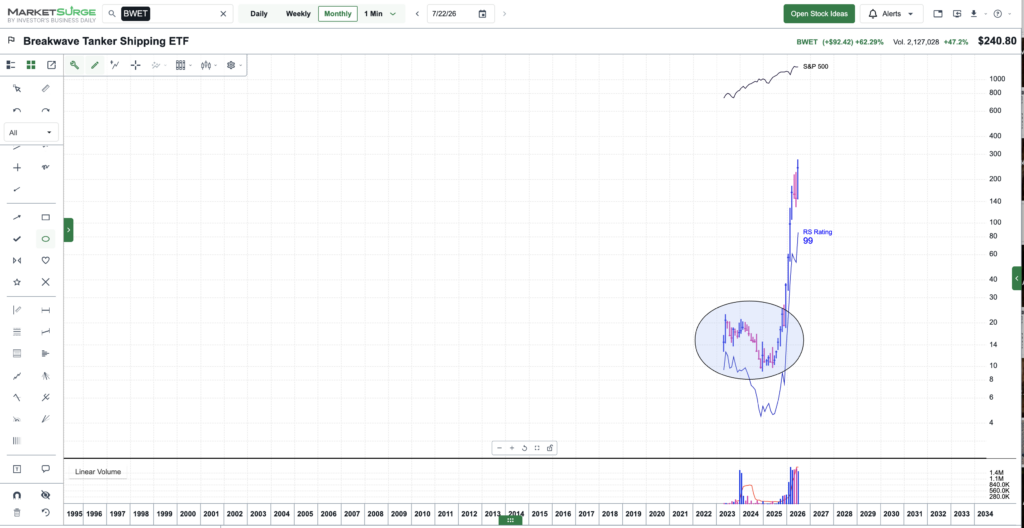
That’s a picture-perfect example of not only getting an ETF to market to capitalize on a hot trend, but also for investors to nail both the strength of the theme itself and the timing of buys and sells.
Here’s the thing advisors see all the time, but the ETF leaderboard in your favorite stock screener won’t tell you: A thematic ETF is like a mixtape of what’s hot now.
Remember those homemade cassette tapes of your favorite songs that kids would grab from the radio or their friend’s vinyl records? (I obviously do). Well, after a not-so-long wait, a new batch of songs would become popular. Some songs on that mixtape would become classics and others largely forgotten one-hit wonders.
You can look at a similar trend with thematic ETFs.
In 2025, Fidelity closed five of these products:
- Fidelity Sustainable Core Plus Bond ($FSBD)
- Fidelity Sustainable Low Duration Bond ($FSLD)
- Fidelity Sustainable U.S. Equity ($FSST)
- Fidelity Women’s Leadership ($FDWM)
- Plus Fidelity Digital Health ($FDHT)
Four of those were formed to cash in on ESG hoopla and the fifth, Fidelity’s telehealth and health-tech fund, launched in June 2021 at the peak of COVID’s telemedicine boom.
The Gap in Investor Returns
Here’s a table from Morningstar that illustrates the main problem with thematic ETFs: chasing returns in an investment that’s already peaked.
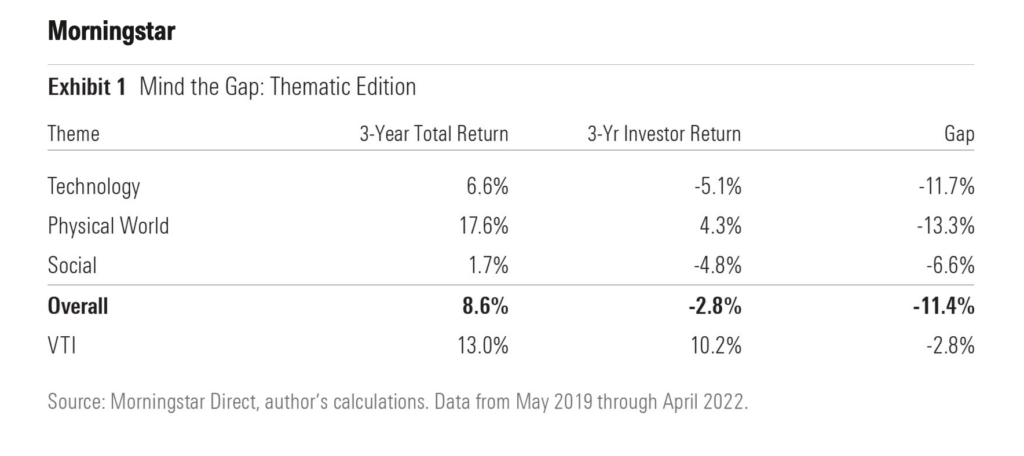
Unfortunately, between May 2019 and April 2022, the thematic funds Morningstar studied gained 8.6% a year, but the average investor lost 2.8%. The problem was buying after the run-up and selling after the drop.
Morningstar also ran the numbers for the Vanguard Total Stock Market ETF ($VTI), a plain-vanilla total U.S. market index fund. It made 13.0%, and investors kept 10.2%. That’s significantly better.
That pretty much sums up one of the main reasons why financial planners aren’t too enamored with these. It’s not that the themes are fake; AI is real, shipping is real. But these funds are designed to pop onto investors’ radar at exactly the wrong moment, and then unintentionally generate panic when the theme’s moment in the sun winds down.
