Boockvar on Rates and Whether Stocks Will Really Care

The following is from Peter Boockvar:
Are they now going to care?/Manufacturing PMIs
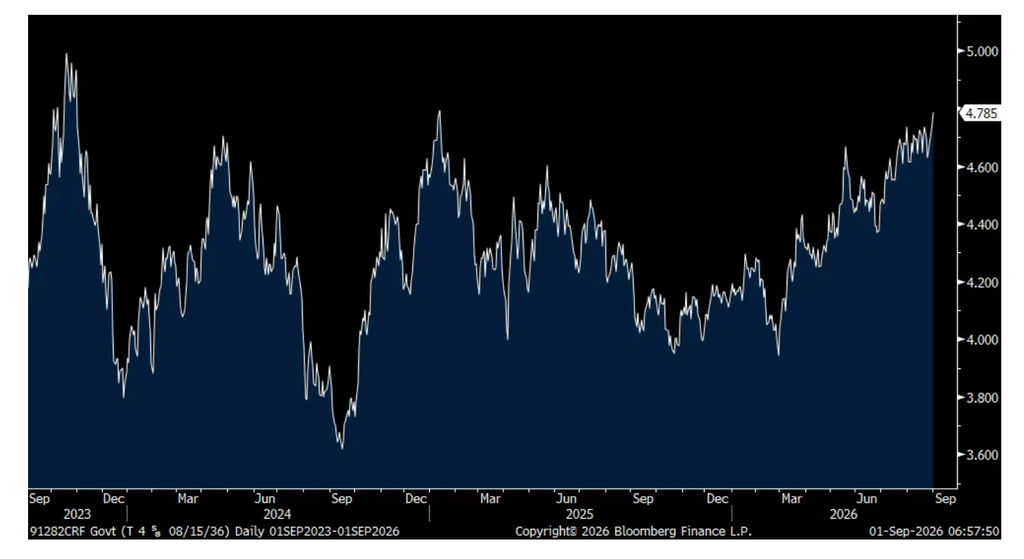
Another global rise in interest rates and do stocks now finally care? I think it’s for sure gaining more attention and 5% for the US 10 yr yield is the level I have major eyes on as we touched it for a day back in October 2023. If I had a dollar for every time I said we must be watching rates in Japan and Europe and not just what US growth and inflation are doing in trying to predict where US long rates go. We’re all in this bond boat together and I’ll say again that I believe the main catalyst, along with others, for the rise in long rates has been the sharp rise in yields in Japan over the past 3 years, ever since they effectively ended yield curve control.
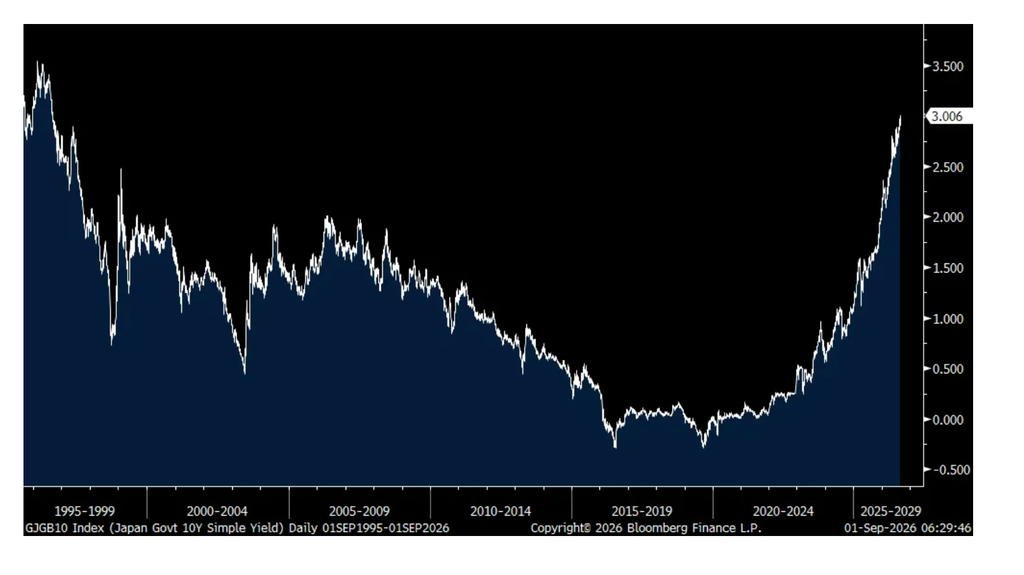
The policies of the BoJ and the multi decade interest rate suppression there had been the anchor keeping global rates low and that basically ended in 2023. Only now it seems to be garnering more focus as multi-decade highs in yields are happening seemingly daily now. I remain a bear on long duration bonds. The only longer duration bonds we own are in TIPS and emerging market local currency bonds.
Back to whether stocks are now going to care, I’ll take this line from the August 24th op-ed from Stan Druckenmiller, “The long-term Treasury yield is the most important price in the world.” Thus, the equity markets need to pay attention.
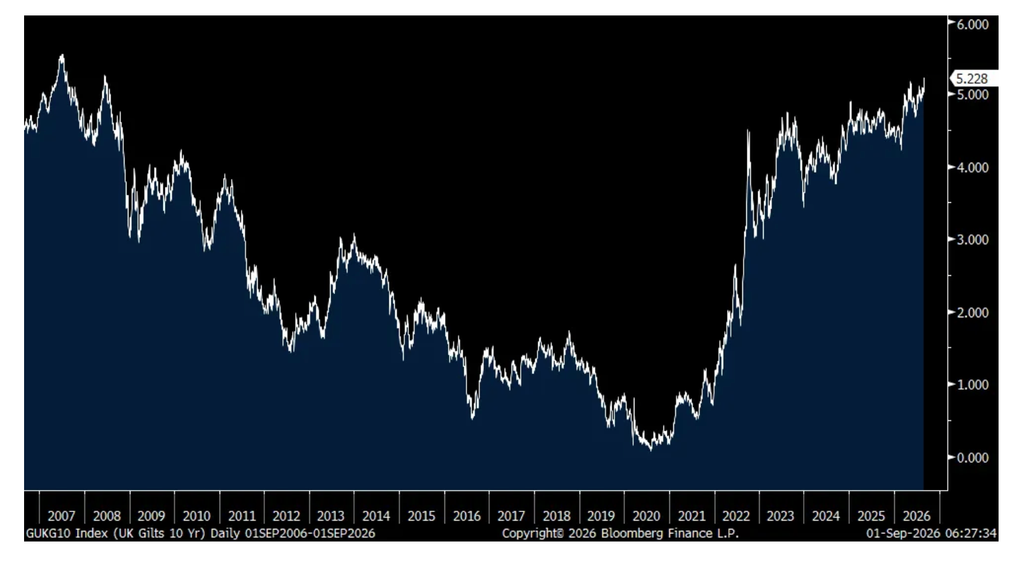
Today, the UK 10 yr yield is breaking out to the highest since June 2008 up a sharp 16.5 bps to 5.23% joining French rates at 18 yr highs too and the German 10 yr yield at a level last seen in 2011. The 10 yr JGB yield closed at 3% for the first time in 30 years.
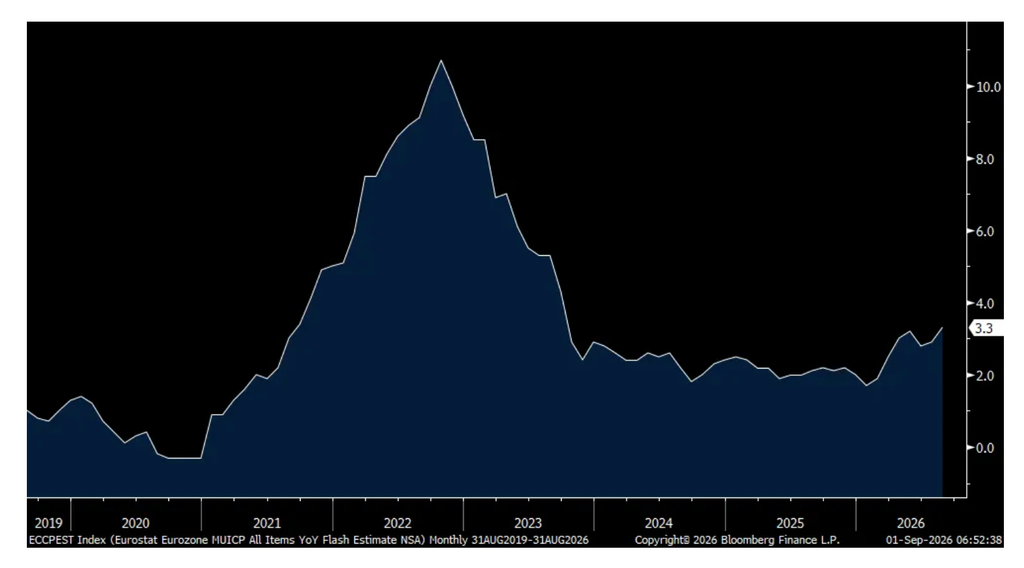
The inflation stat of note today came from the Eurozone and its August CPI which rose by 3.3% y/o/y, up from 2.9% in July but as expected and mostly energy and services driven. The core rate though dipped a touch to 2.4% from 2.5% and vs the estimate of no change. Energy prices rebounded for a 2nd month, by 2.9% m/o/m and up by 14.3% y/o/y. Services inflation jumped by 1.1% in July and was up by .1% in August. Versus last year they are up 3% vs 3.3% in July.
The 5 yr 5 yr euro inflation swap in response to the in line figures is unchanged at 2.16%. The ECB next meets on September 10th and they are about fully expected to hike rates by 25 bps to 2.50%.
US 10 yr Yield
UK 10 yr Gilt Yield
10 yr JGB Yield
Eurozone CPI y/o/y
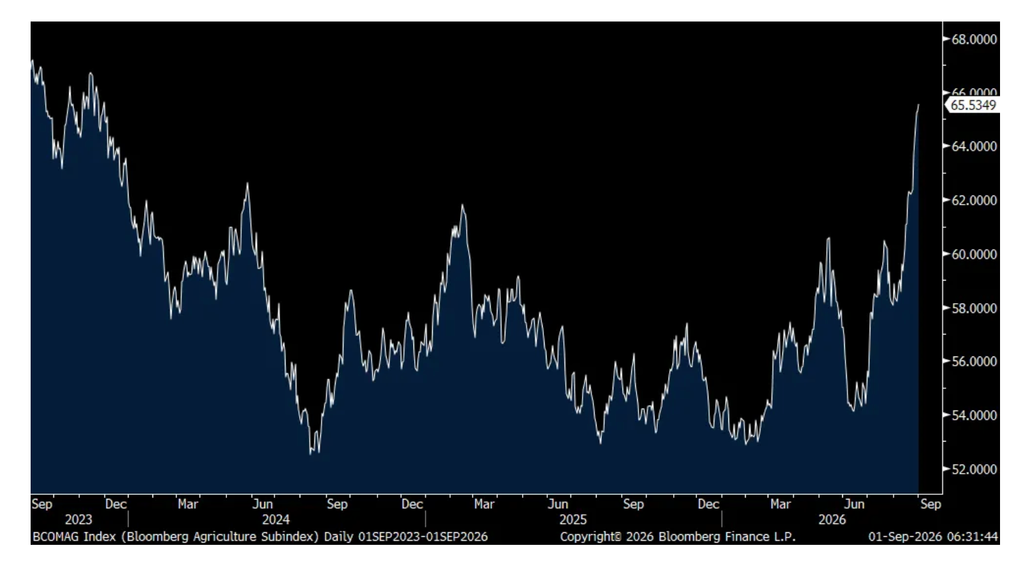
Just an update on ag prices which I’ve stated here my bullishness as I think it will be the last group to join the commodity bull market, which is now seemingly beginning to take place, the Bloomberg Agriculture Index is now at the highest level since November 2023.
Bloomberg Agriculture Index
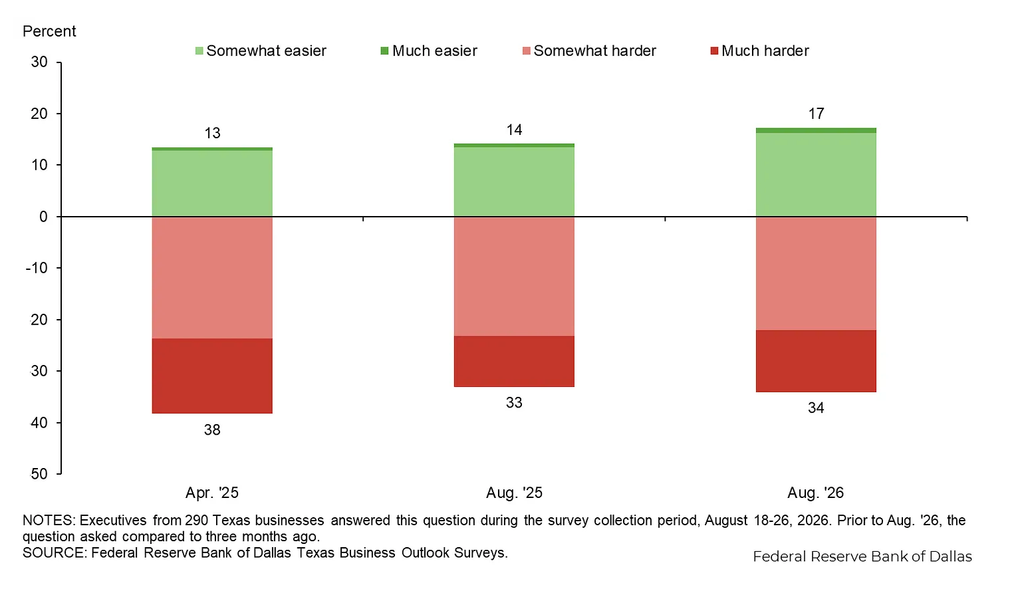
The August Dallas Fed’s manufacturing index out yesterday rose to 11.6 from 1.3 and much better than the estimate of no change and joins most other regions in seeing a continued manufacturing recovery. This chart stood out to me with the rise in ‘easier’ and was a special question, “Compared to six months ago, how has your firm’s ability to pass price increases on to customers changed?”:
What also stood was this quote from a company in the ‘Computer and Electronic Product Manufacturing’ sector in light of the rise in rates:
“Uncertainty happens in our industry when there is a risk of higher interest rates, contributing to a decrease in confidence among industrial customers and it delays projects tremendously.”
Ahead of the US national ISM manufacturing index today, we got a bunch of PMIs from overseas and some moderated from July, though most remained above 50.
Japan 54.9 vs 54.5
Taiwan 54.7 vs 55.1
South Korea 52.3 vs 53.1
China 51.5 vs 50.9
Thailand 53.8 vs 54.2
Malaysia 50.2 vs 50.7
Philippines 54.9 vs 51.8
Indonesia 49.8 vs 50.2
Australia 52 vs 52
Eurozone 52.7 vs 51.9
UK 51.7 vs 51.9
Specifically with China, RatingDog said “New export business rose at the fastest pace in six months, driven by strong growth in the consumer goods sector.”
With South Korea, S&P Global said “a robust increase in export demand – the strongest recorded since November 2020 – is an encouraging sign that firms are still benefiting from the current AI and semiconductor supercycle.”
For the Eurozone, from S&P Global, “Stronger order book growth, in part owing to a recovery in export demand, should give this expansion legs. Breaking the PMI data down by the three main industrial groupings revealed the intermediate goods sub-sector as the main contributor of manufacturing growth. This includes critical industries such as chemicals and metals, as well as electrical equipment and electronic components, suggesting the euro area can also be a beneficiary from the tech supercycle, even if it’s arriving late to the party.”
On the UK manufacturing sector, “The rate of expansion in the UK manufacturing sector cooled in August, with output and new order growth losing traction. There are still signs for continued optimism, however, as manufacturers reported a positive outlook for the year ahead. Business confidence rose to a six-month high and job creation was the strongest for two years. This suggests that the slowdown was mainly driven by a reduced focus on maintaining precautionary stocks as economic uncertainty eases, especially as domestic and overseas clients continue to show a willingness to spend albeit with a relatively high degree of caution.”
