Boockvar on Manufacturing, French & Italian Bond Yields

The following is from Peter Boockvar:
US ISM manufacturing/French and Italian bond yields at highs of day
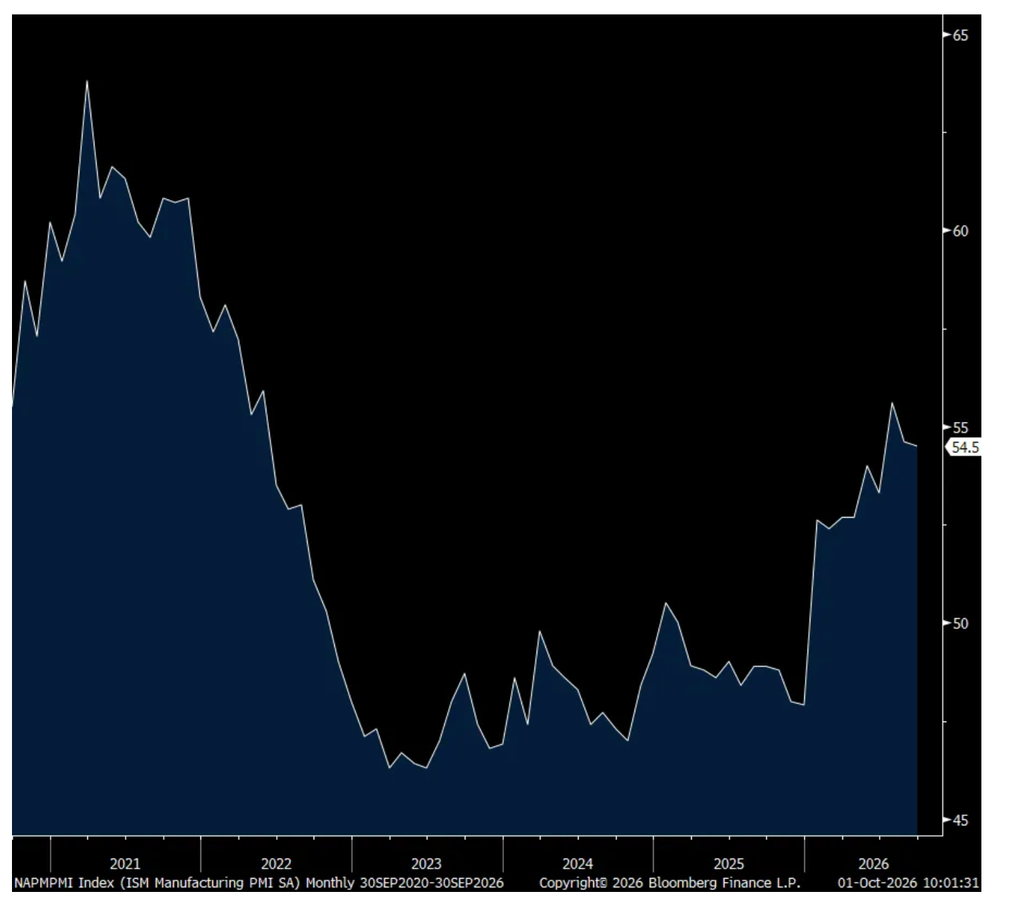
The September ISM manufacturing index was little changed at 54.5 vs 54.6 in August but holding well above 50 and reflecting the manufacturing recovery we’re witnessing after a tough previous three years.
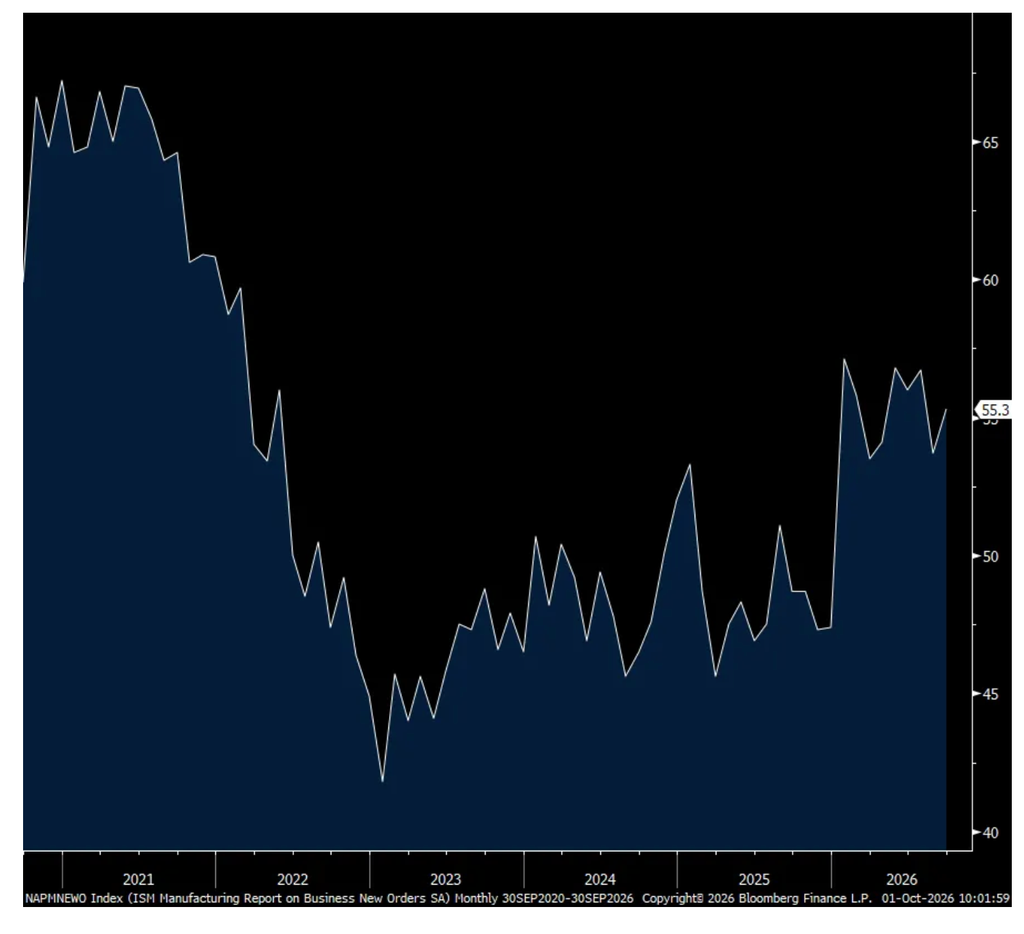
New orders rose 1.6 pts to 55.3 while backlogs were up by 4.6 pts to 56.4. Inventories dipped back below 50 at 48.6, lower by 2 pts as maybe some of the pull forward of orders we’ve seen beginning in March is beginning to moderate. Customer inventories remained lean at 41.6.
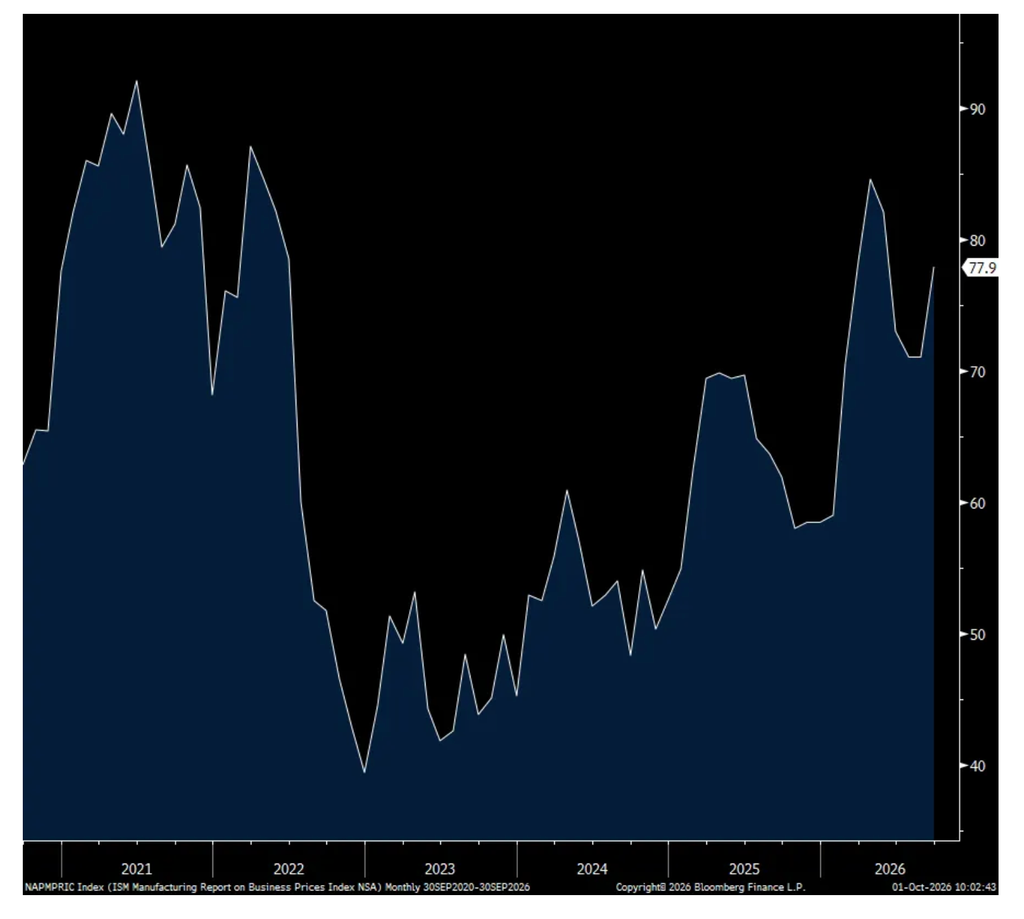
Supplier deliveries remain an issue with lengthening lead times as this figure sits at 59, well above 50. Part of this and also due to other things like higher energy prices, prices paid bounced by almost 7 pts to 77.9, a 4 month high. Of the 18 industries asked, 16 paid more.
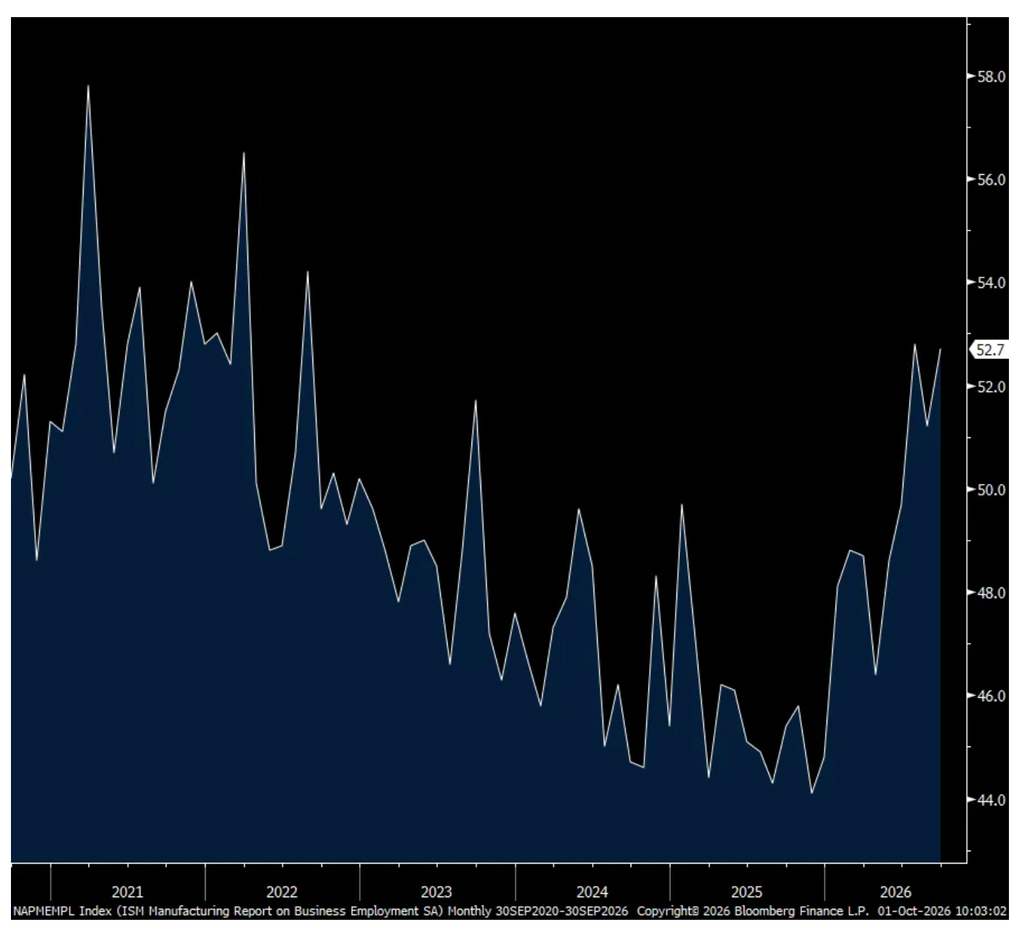
Employment was above 50 for a 3rd straight month at 52.7, 2.5 pts above the 6 month average but just 8 of the 18 industries surveyed added to payrolls with 6 seeing a decline.
Export orders slid by 2.3 pts to just above 50 at 50.9.
Notwithstanding the little change in the headline, industry breadth weakened a touch with 12 industries reporting growth vs 15 in August. Those seeing a contraction totaled two, the same last month with the balance seeing no growth.
Treasury yields are at the highs of the day, maybe in response to the prices paid component but also look at what’s going on now with 10 yr yields in France and Italy, up 7 bps and 9 bps respectively.
I’ll leave the bottom line to the respondent comments which reflect a wide range of opinions with where business is good and not so good and how some are dealing with supply chain disruptions, tariffs, and cost pressures.
· “Better performance was driven primarily by temporary market effects, including (1) geopolitical uncertainties, (2) customers bringing forward purchases, (3) delayed raw material price increases and (4) reduced competitor capacity. However, these factors do not signal sustained recovery: Structural challenges facing the chemical industry remain, including overcapacity, persistent pricing pressures and protectionist trade policies.” [Chemical Products]
· “Supply chain performance has improved compared to prior years, with lead times largely normalized. Cost pressures persist in select raw materials, transportation and labor categories, requiring continued focus on supplier management and cost control. We remain cautiously optimistic about business conditions over the next several quarters.” [Chemical Products]
· “The U.S. tariff schedule is providing challenges. Finding alternate sources of supply outside of China, local pushback on data centers in the U.S. and continuing material/component shortages are affecting business.” [Computer & Electronic Products]
· “Manufacturing activity remains stable, with a continued focus on cost optimization, supplier negotiations and supply base consolidation. We are actively evaluating alternative sources in several categories to improve supply resilience and reduce costs. While material availability has generally improved compared to prior periods, qualification requirements and supplier capacity constraints continue to influence sourcing decisions for certain critical materials and components. Capital and operational spending remain focused on productivity, efficiency and transformation initiatives.” [Computer & Electronic Products]
· “Orders have doubled yet again, and delivery times have also doubled, in the semiconductor, electronics and government sectors, with remaining sectors flat to down. Coupled with supply chain lead times and pricing pressures, the factory backlog has nearly doubled. Canada tariffs have impacted cross-border costs and left our supply chain team scrambling — those supply chains took years to develop and nurture — hurting the very lead times government buyers are concerned about.” [Machinery]
· “Order levels remain strong and elevated; we have orders through year-end at above forecast levels. Our biggest challenge continues to be a severe shortage of workers, limiting our production output to meet demand. The second challenge is general availability of steel; the market is getting worse, and more production delays are expected as we gap out of needed material.” [Fabricated Metal Products]
· “Raw metals continue to be challenging, especially with the uncertain nature of tariffs being on and off again. New tariffs against Canada have drastically increased costs for capital expenses as well as assemblies.” [Electrical Equipment, Appliances & Components]
· “Fuel costs are still affecting transportation costs and the overall cost of goods. Beef costs remain high, with no relief in sight.” [Food, Beverage & Tobacco Products]
· “Higher interest rates slow down the growth of new construction projects; we also have to face up to the higher cost of components from overseas due to tariffs and freight rates. Due to booming demand of AI and data centers, domestic steel capacity has been stretched and pushed. Higher steel costs each month increase our raw-material and finished-goods costs.” [Machinery]
· “Every month, we are faced with new headwinds created by this administration. This month, it is the trade war with Canada, which every day is getting worse — causing prices to go up and uncertainty that creates massive disruption. Buying continues to get pushed out indefinitely as customers don’t want to spend on capital expenditures until there is more certainty of costs and demand. The only thing that is predictable is the chaos that is created by these trade policies.” [Transportation Equipment]
ISM Mfr’g
New Orders
Prices Paid
Employment