Bi-Weekly Sentiment Survey: Mixed But Leaning Bearish

Introduction
The sentiment survey is something we’re just testing right now, and I’m looking at ways to streamline it. For now, we’ve decided to make it bi-weekly, instead of weekly, and try different questions and formats.
Please leave your comments for what you’d like to see below.
On to this week’s results…
Part 1: TheStreet Pro’s Sentiment Survey Results
Question 1
Direction: Over the next 2-4 weeks, how do you feel about the S&P 500?
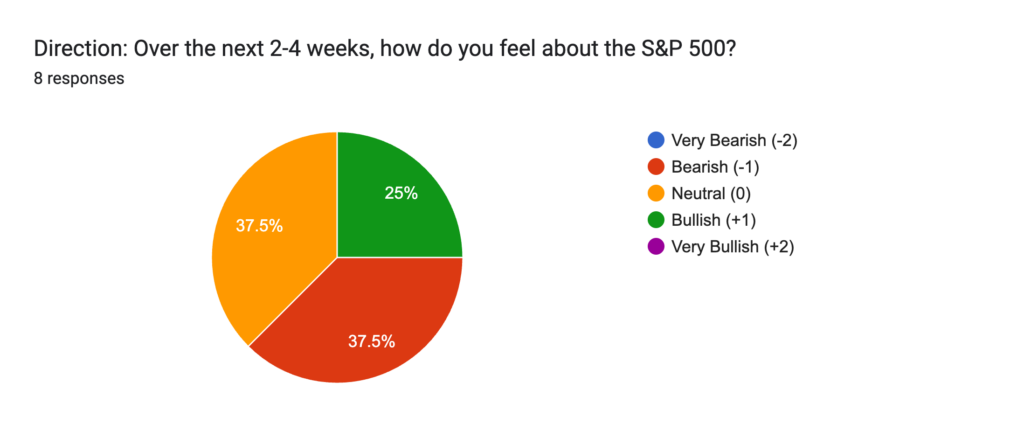
Score: -1
Commentary: Of the 8 contributors who responded, 3 are bearish, 3 are neutral, and 2 are bullish. So, this is a mixed reading that slightly favors the negative side. Our largest bear, however, moved from Very Bearish, to just regular Bearish.
Question 2
Positioning: How are you currently positioned?
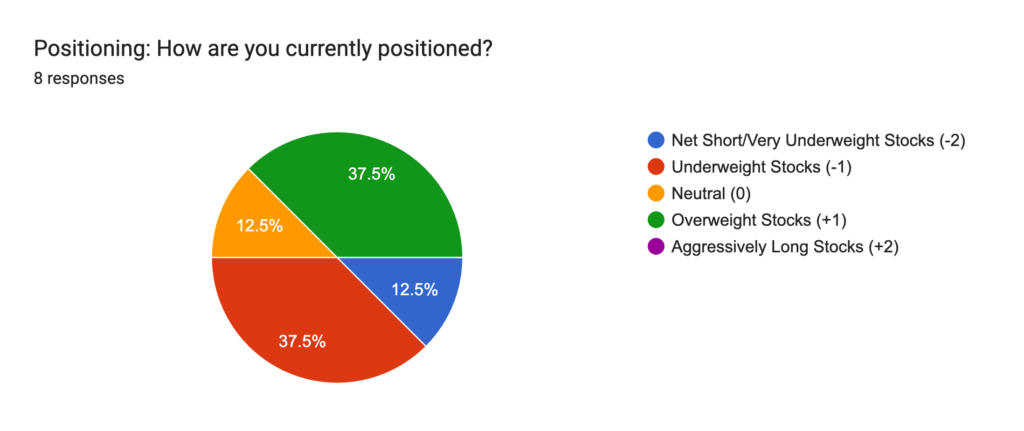
Score: -2
Commentary: Just like the overall sentiment, our team is mixed. 3 are underweight, 3 are overweight, 1 is neutral. This one gets a -2 score because of the remaining bear, which is Net Short.
Question 3
Risk: How would you rate overall market risk?
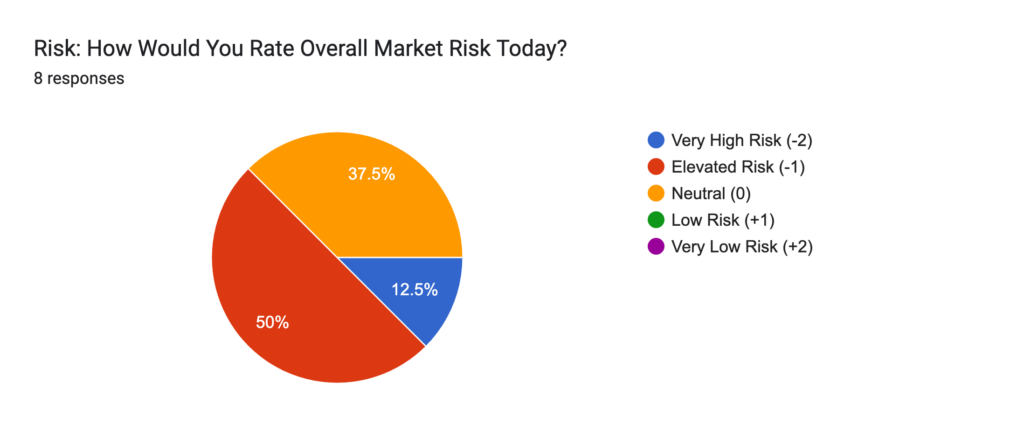
Score: -6
Commentary: There’s no doubt in our team’s collective mind. The entire market is risky. OK, 3 people are neutral, but nobody sees low risk. In fact, 4 members see Elevated Risk, and 1 sees Very High Risk.
Question 4
Opportunity: Do you anticipate an increase or decrease in risk levels?
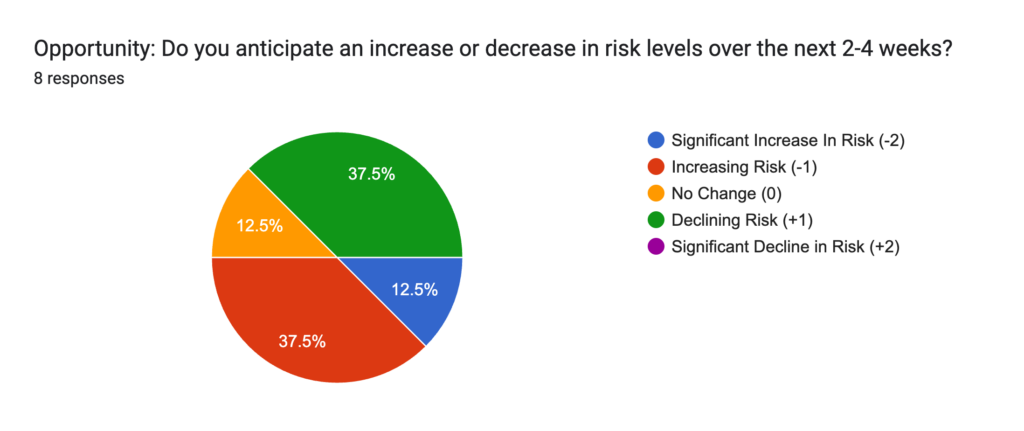
Score: -2
Commentary: Again, 4 of our contributors see increasing risk, with 1 worried about a significant increase. 3 members think risk is on the decline. What side are you on?
Question 5
Portfolio Activity
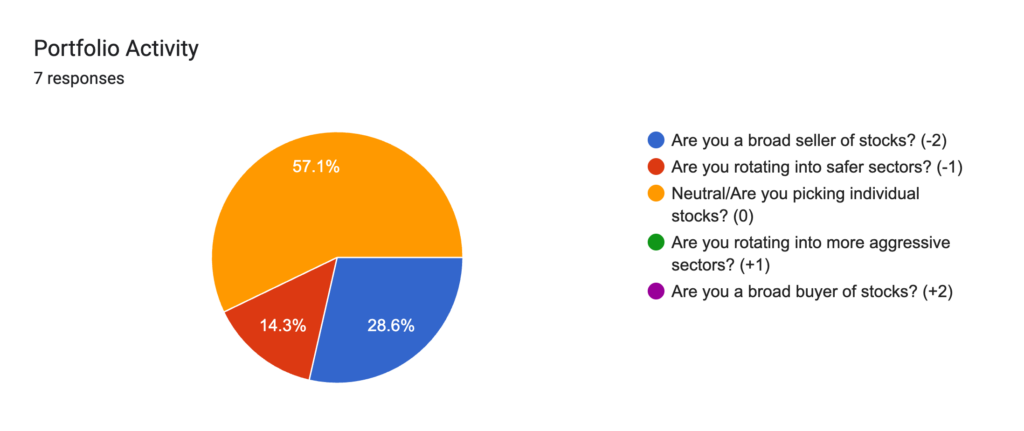
Score: -5
Commentary: This one’s the most interesting to me. Despite the overall mixed tone of our contributors, none of the bulls are adding risk to their portfolios. Instead, we’ve picked up another broad seller to make 2 sellers, while 1 person is rotating into safer sectors.
Part 2: Qualitative Questions
It’s earnings season. What are you most worried about? Alternatively, what’s the biggest risk to the market?
- Geopolitics is the biggest risk cited by one contributor. He specifically calls out high oil prices and rising interest rates, compounded by repercussions from the ongoing military conflicts.
- Earnings quality. Specifically free cash flow growth that is negative or failing to keep up with non-GAAP earnings growth. Amazon ($AMZN) and Oracle ($ORCL) are victims here, due to surging CAPEX budgets.
- AI! The risk that AI spend is slowing. Similarly, will AI names be able to maintain their price momentum, even with positive earnings (in other words, they’re overpriced).
What companies will have the biggest impact next week? Why?
- Banks as earnings season kicks off. (Note: as I write this on Tuesday, the banks beat estimates and are trading above their opening prices, although WFC and C remain lower on the day)
- Rotational action between AI, chips, biotech, and oil.
What stock are you most bullish on? Why?
- Neostellar Capital ($NSLR), Marvell ($MRVL), Paccar ($PCAR)
- Apple ($AAPL) because it shook off so-called bad news last week.
- Biotech sector. It’s benefitted from rotational action.
- European stocks and, “weirdly” solar. Trump mentioned the need to build out electricity in all forms except wind. Is he warming up to solar?
- Cannabis, due to rescheduling
What stock are you most bearish on? Why?
- Housing: Affordability and homebuilder usage of incentives that weigh on margins.
- Energy, which is making lower highs and shorter duration rallies.
- The broad indices, which will stagnate as rotation continues across the sectors.
- Technology: Much of the rally since 2022 was based on OpenAI and Anthropic being able to raise tens of billions and moving toward profitability. That is looking less likely now.
- Semis because of high valuations. The AI trade has crept into so many factors and sectors that large funds are worried they are overexposed.
- Financials based on valuation relative to history
