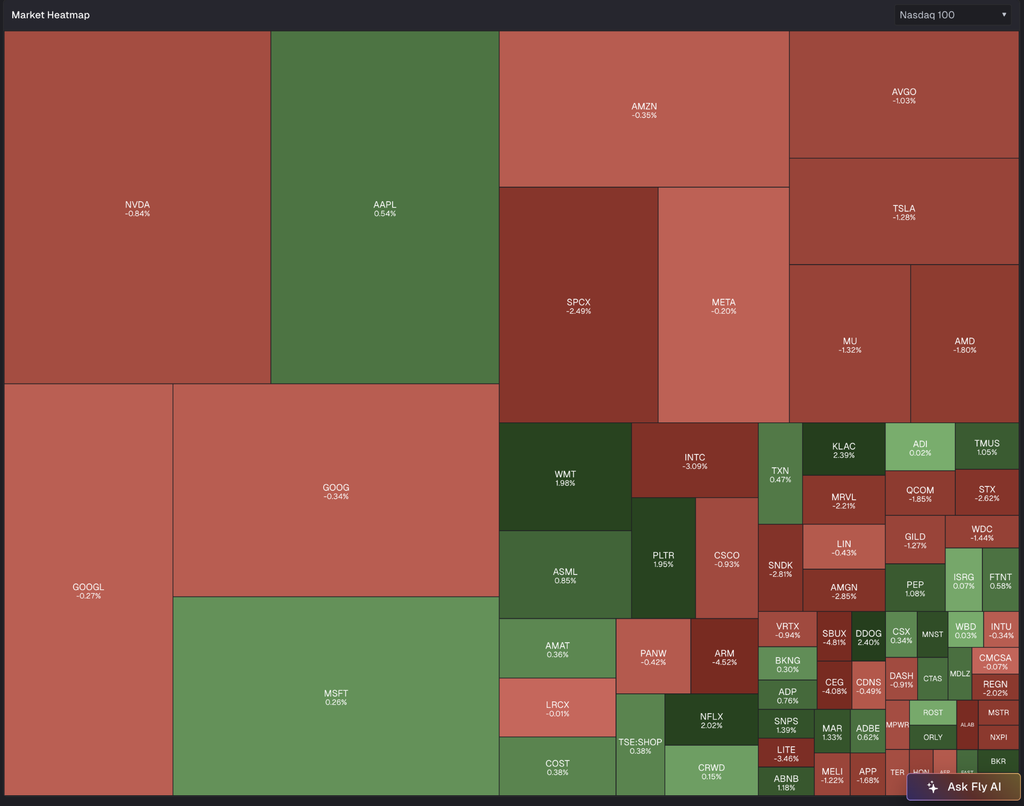
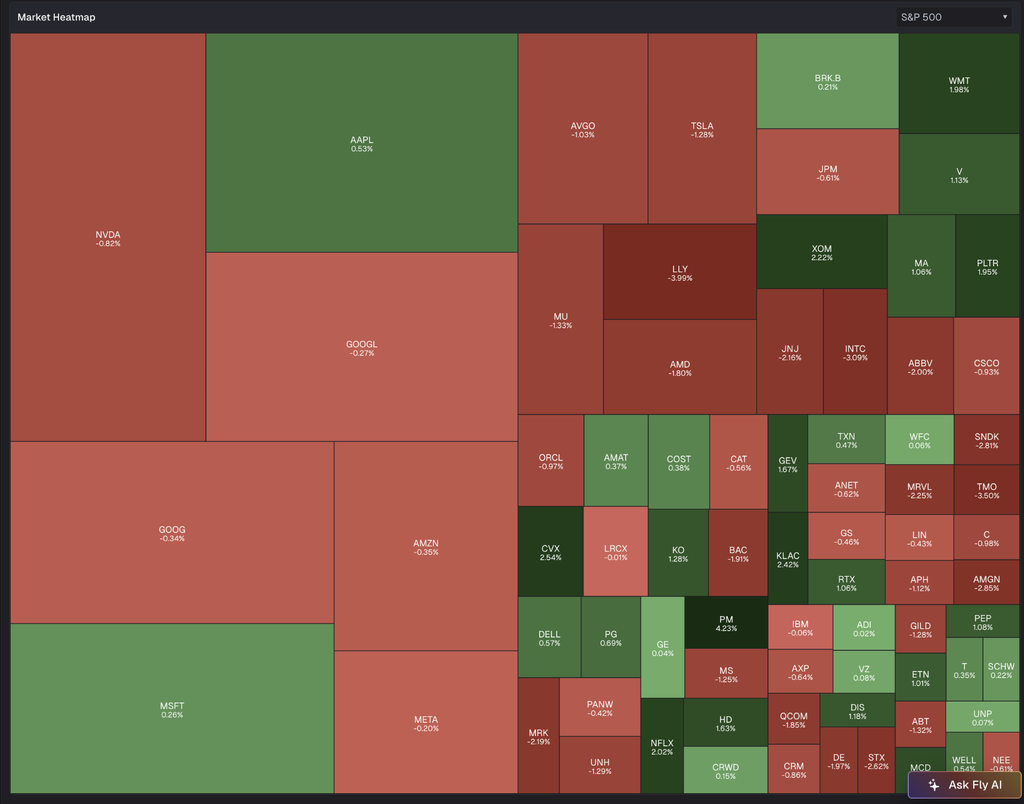
Upside, Downside Movers in the Morning

Upside

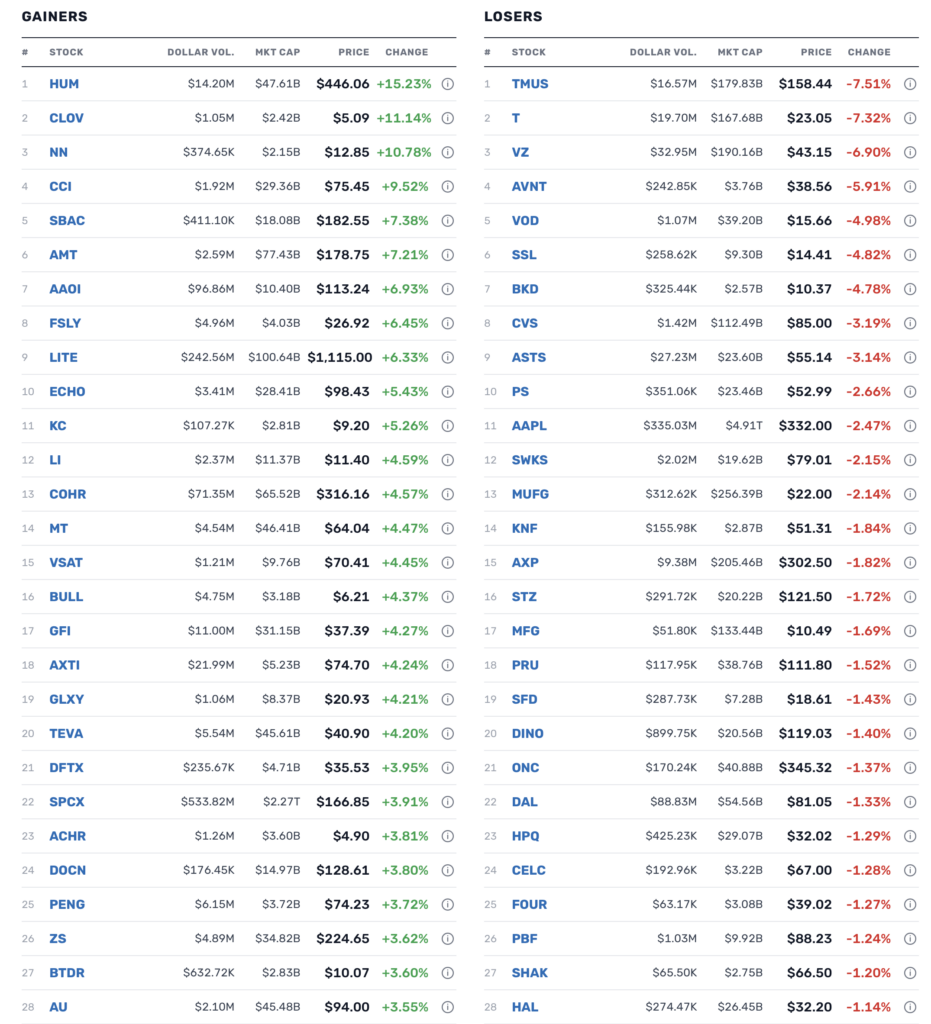
– $VEEA +45.0% (regained full Nasdaq listing compliance following its reverse stock split)

– $XRTX +21.0% (outlined planned FDA IND and Health Canada clinical-trial filings for XRx-026 in gout)

– $SAIQ +19.5% (confirmed an October satellite launch advancing its post-quantum secure-communications roadmap)

– $HUM +14.5% (2027 CMS Star Ratings exceeded its top-quartile revenue goal, with its largest contract returning above the bonus-payment threshold)

– $CLOV +11.5% (PPO plans earned 5 stars and the HMO plan earned 4.5 stars for 2027, strengthening 2028 payment and enrollment economics)

– $CCI +9.5%, SBAC +7.0%, AMT +7.0% (tower operators rally as SPCX’s low-band spectrum deal implies a terrestrial buildout and potential new-tenant demand)

– $FSLY +7.0% (Oppenheimer upgrades to Outperform with a $35 target on AI-traffic growth)

– $AAOI +6.0%, LITE +6.0%, COHR +4.5%, GLW +3.5% (optical names rise after LITE said AI-data-center demand has booked component capacity through early 2029)

– $ECHO +5.0% (SPCX’s additional spectrum purchase reinforces the value of ECHO’s existing spectrum and equity partnership)

– $SPCX +4.0% (agrees to acquire a nationwide 800 MHz spectrum portfolio for about $8B, strengthening its direct-to-device mobile push)

Downside

– $ALHC -23.0% (key California HMO contract fell to 3.5 stars, below the CMS quality-bonus threshold)

– $TMUS -7.5%, T -6.5%, VZ -6.0% (wireless carriers slide as SPCX’s nationwide low-band spectrum acquisition raises the threat of direct mobile competition)

– ASTS -3.0% (falls after SPCX acquired spectrum ASTS had pursued, increasing competitive and spectrum-access concerns)

– $CVS -3.0% (only about 69% of Medicare Advantage members are in 4-star-plus plans for 2027, down from 81% for 2026)

– $AAPL -2.5% (no clear fresh catalyst identified; unusually large mega-cap decline despite higher Nasdaq futures)

– $DAL -1.5%, LUV -2.0%, $UAL -1.5% ($DAL missed Q3 profit expectations and sharply cut its FY outlook as surging fuel costs overwhelmed strong demand)
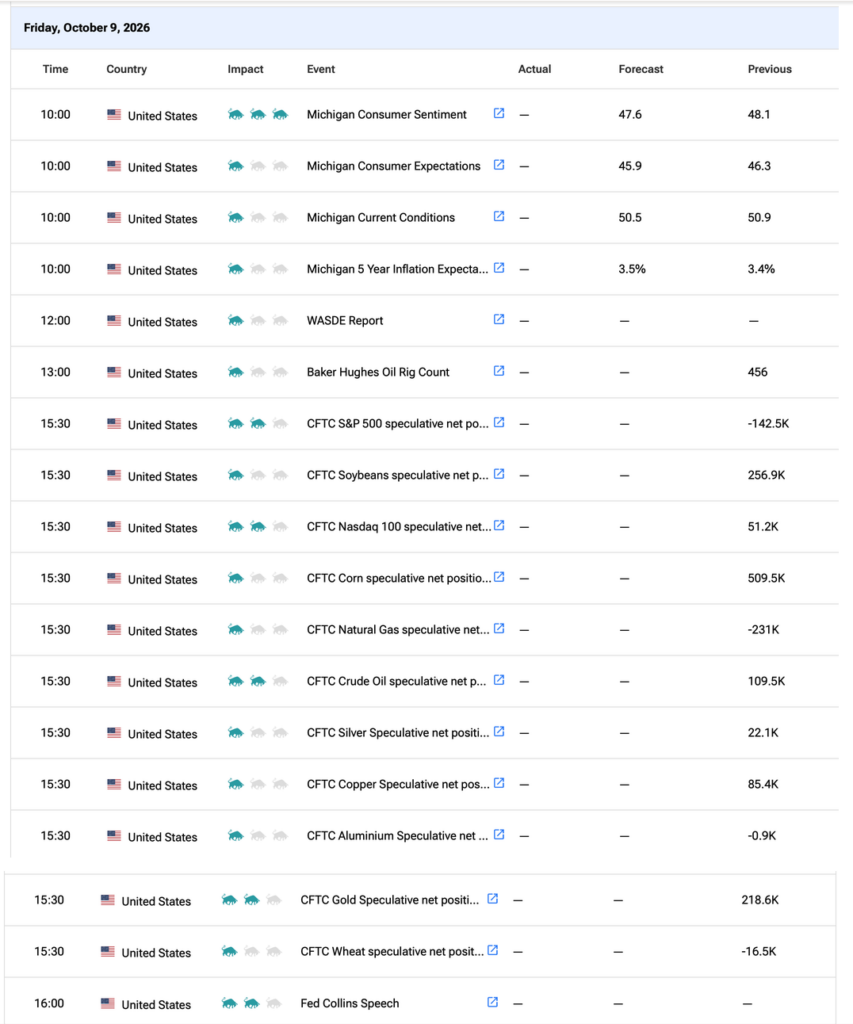
Fed Speakers, Economic Calendar

4:00 p.m.: Federal Reserve Bank of Boston releases text of President Susan Collins’s (Non-Voter) remarks at a closed conference in Memory of John Leahy, sponsored by the Department of Economics and Ford School of Public Policy at the University of Michigan and the Department of Economics at New York University, in Ann Arbor, MI (Speaking time approx. NOTE: remarks will not include discussion of monetary policy)

Economic Calendar

SOURCE: TipRanks

My Positioning

* I have no index shorts on as we start Friday’s session…

I am quite bearish but also – though many may still not realize – practical.

I currently have no Index shorts on.

For months I have utilized my $SPY/$QQQ Index shorts as trading sardines – selling strength and covering weakness.

This has proved profitable (as we seemed to have been in a trading range over the last two months).  At some point I am hopeful that will change, with the primary trend turning lower – for many of the reasons I have discussed in my Diary.

But my adoption of shorting the ETFs will continue to be from the prism of “trading sardines” until I see a momentum change in the markets.

So,  for now, they remain trading vehicles. As posted in my Diary:

* I covered a medium sized position of $SPY/$QQQ shorts on the Wednesday  whoosh lower for a profit.

* I shorted a small sized position of SPY/QQQ Wednesday evening as the markets recovered.

* I covered the small-sized position on Thursday morning as the markets suffered (again for a profit). 

Also, yesterday, while I was at meetings I covered most of my medium-sized $GRNY short, which I plan to reshort on strength as soon as today.

The same could apply to shorting the senior indices if the early strength continues….

Positions: Short GRNY VS

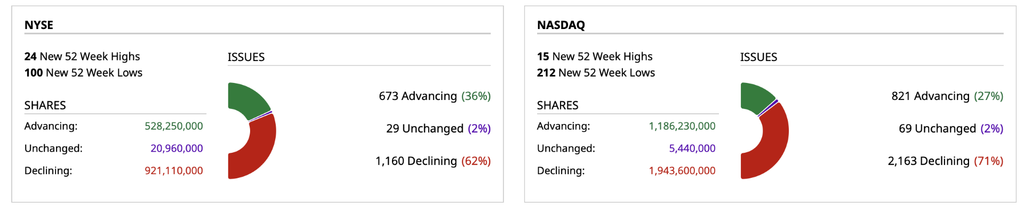
Thursday’s Closing Market Stats

Closing Volume

– NYSE volume 8% above its one-month average 

– NASDAQ volume 6% above its one-month average 

– VIX index: up 2.65% to 15.48

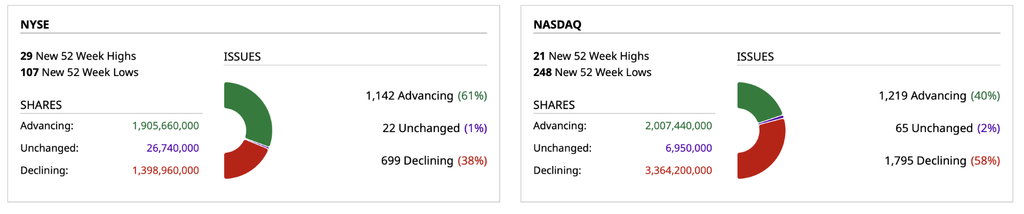
Breadth

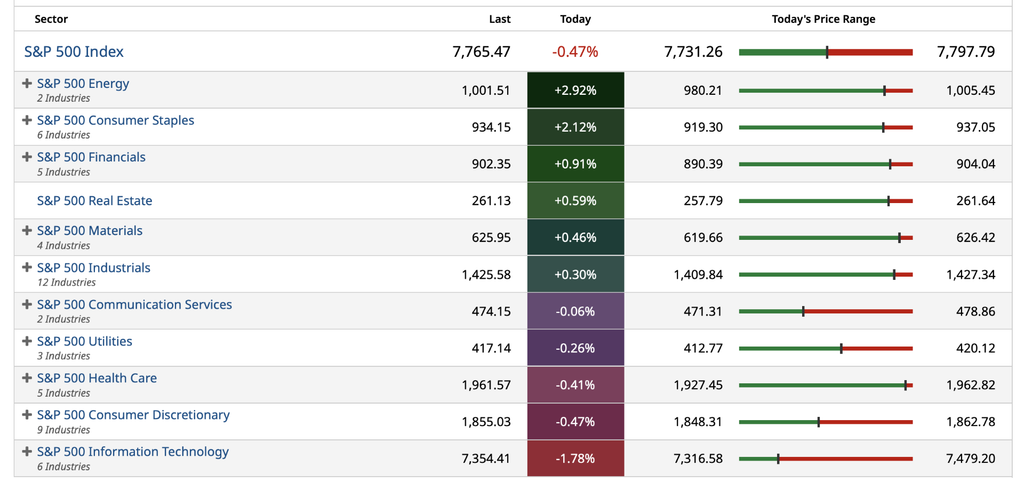
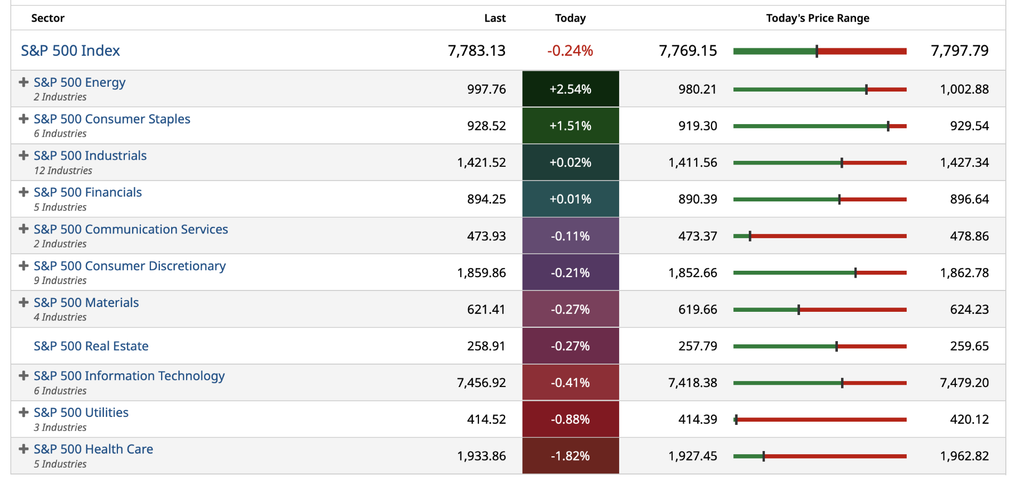
S&P 500 Sectors

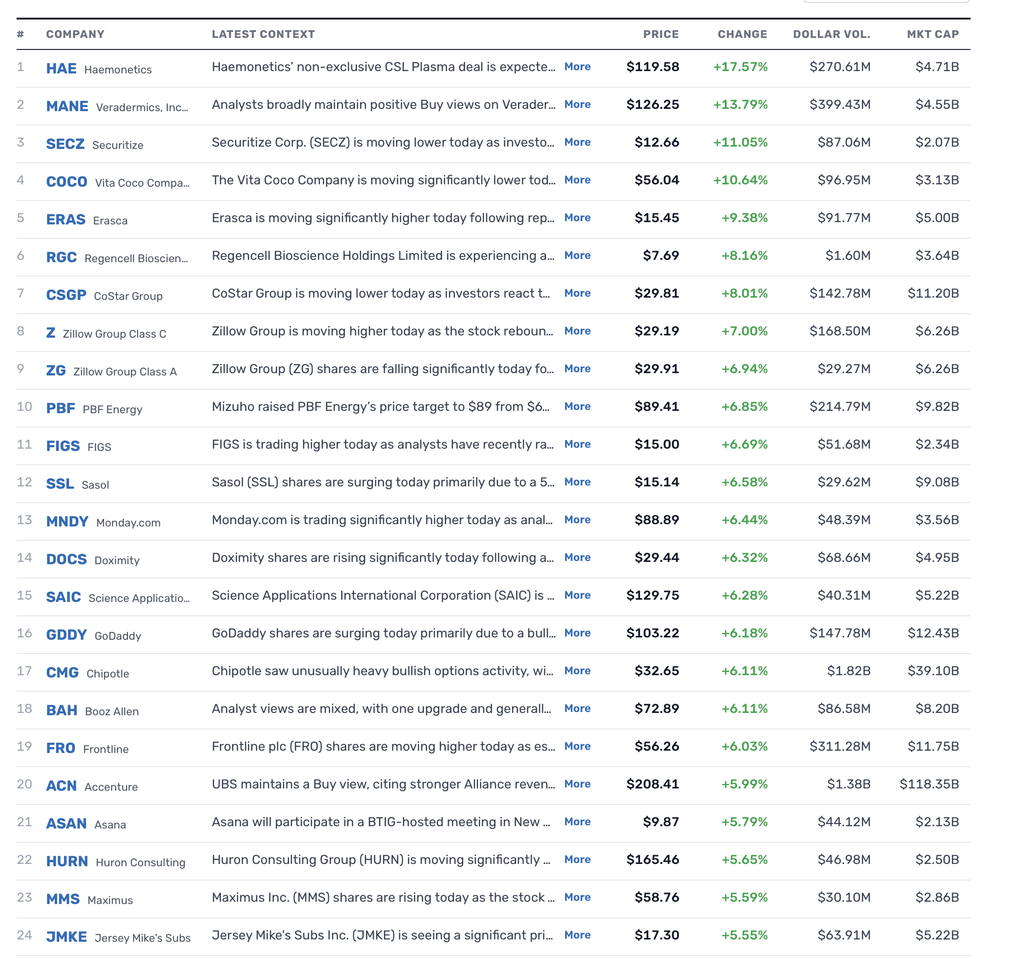
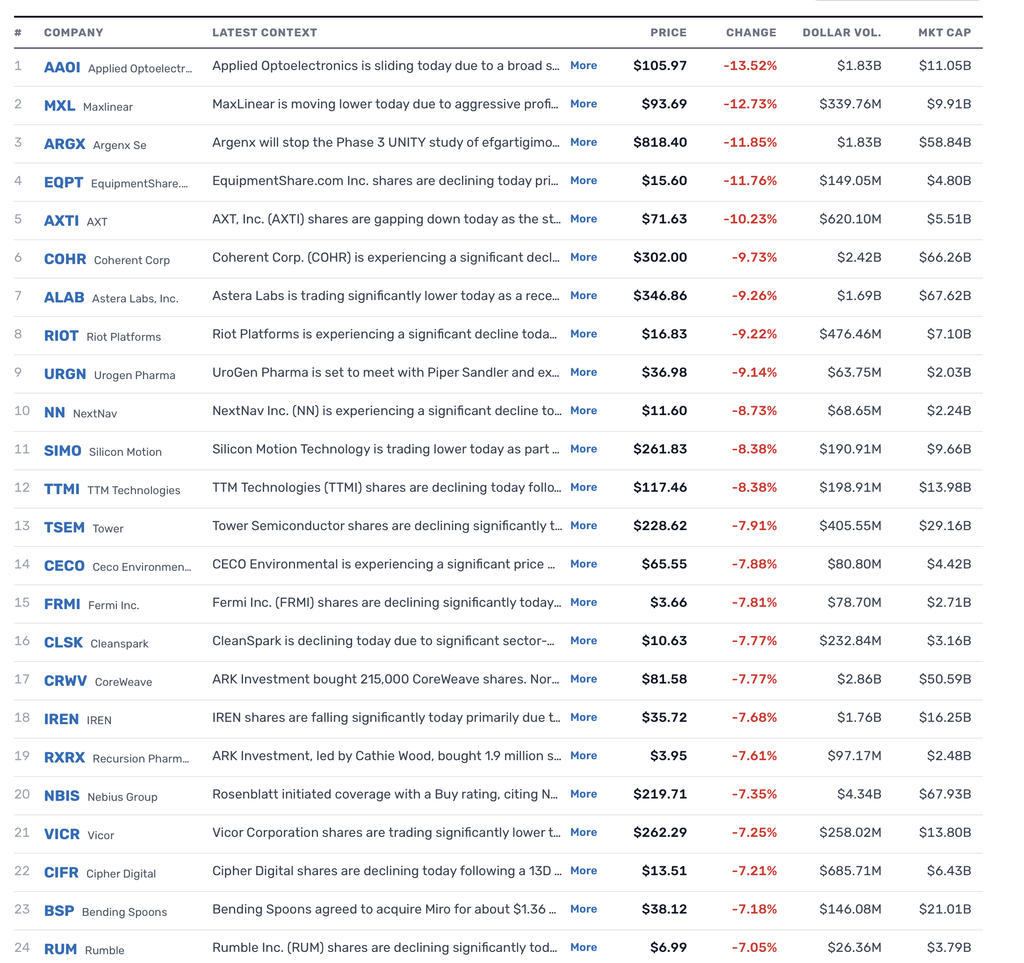
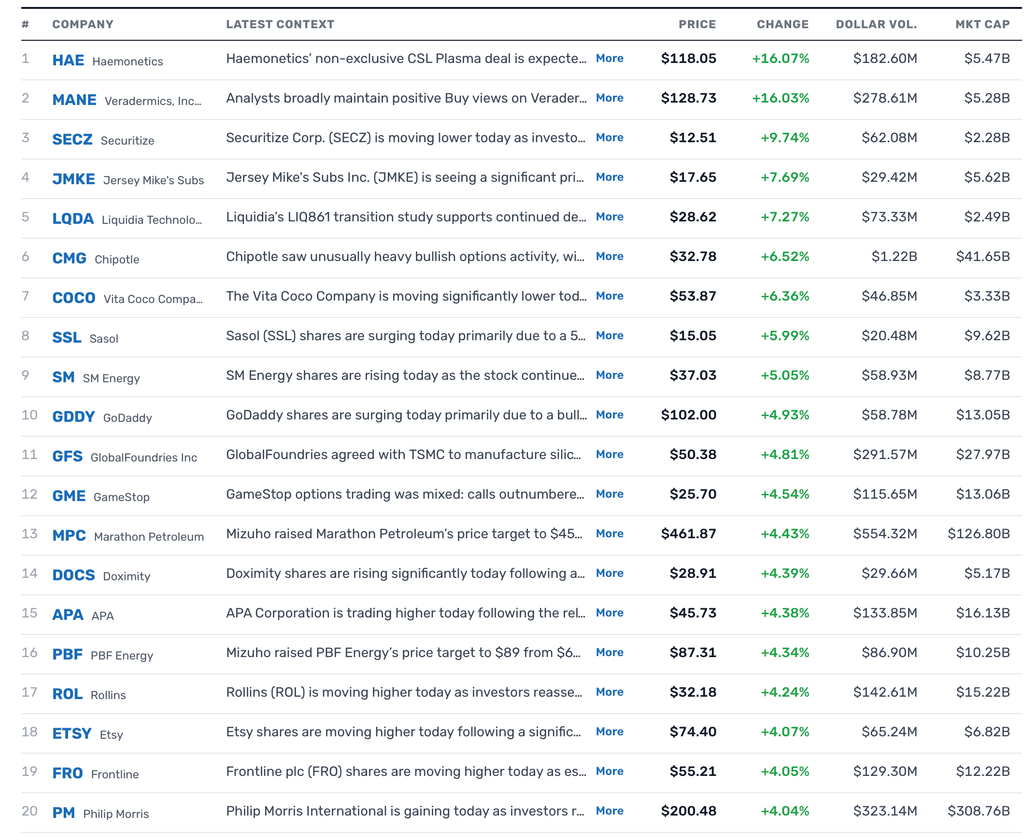
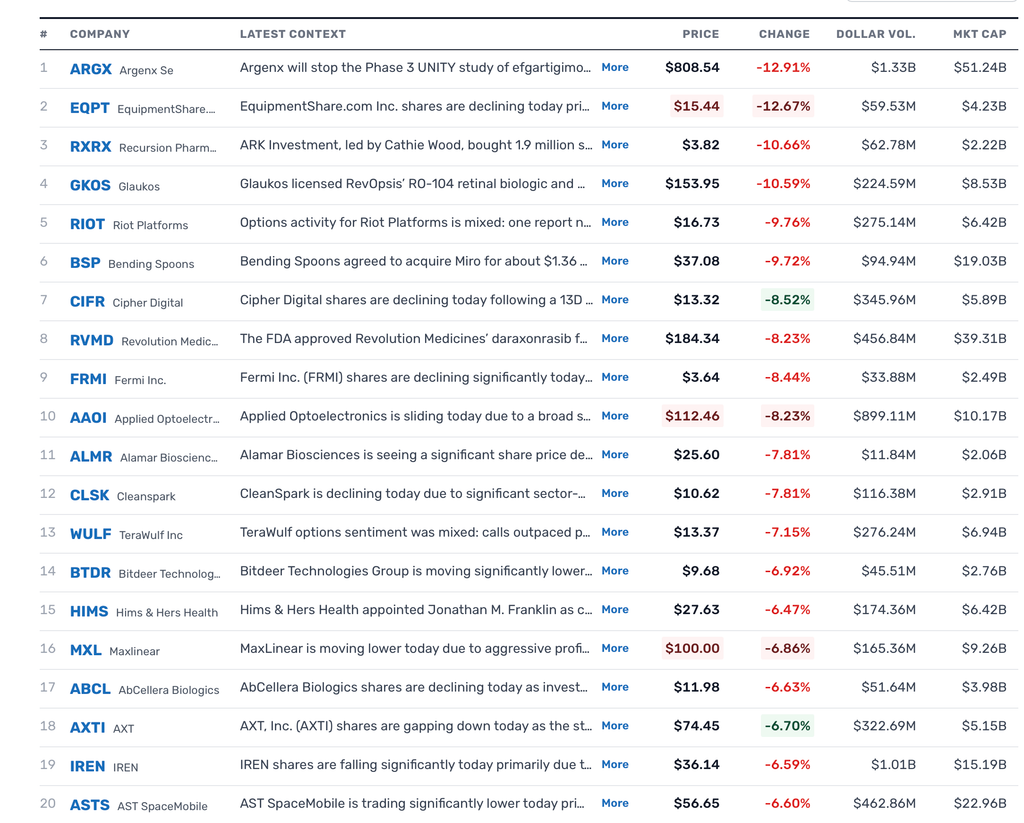
% Movers

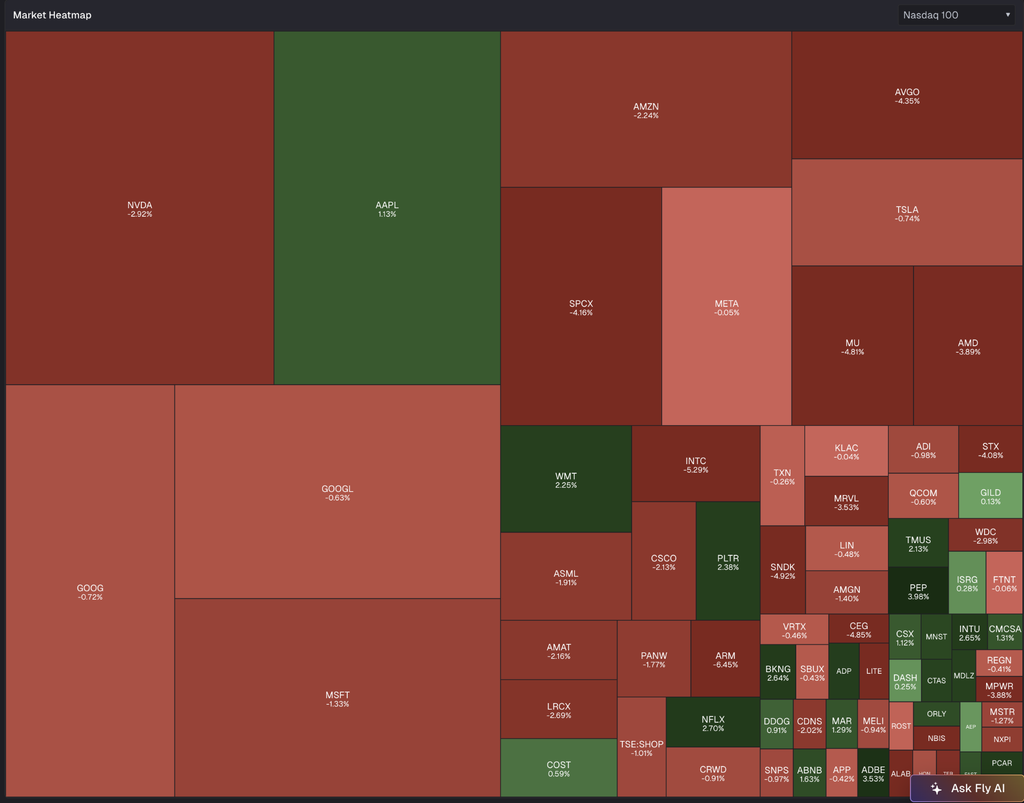
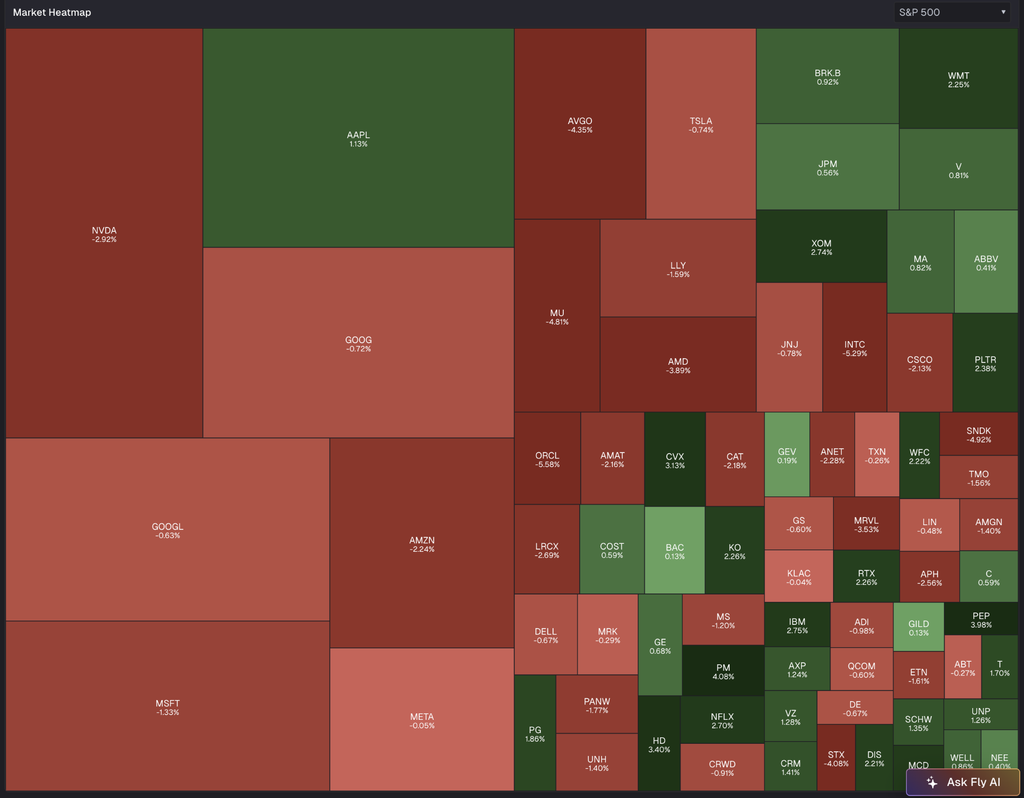
Heat Maps

Position: None

Subscriber Comment of the Day

Jim F

18m ago

CNBC interviewed Tristen Buckmaster who is one of the mathmaticians working on the Navier-Stokes problem that ChatGPT solved. basically he says he had been working on this problem for years with another mathmatician. the other guy currently works at anthropic. the other guy was using Claude and Tristen was using ChatGPT. so the two of them solved the problem with oil which apperently is one step easier then solving the Navier-Stokes problem. then OpenAI approched Tristen and said lets work together to solve this. we will give you millions of tolkens to complete the solution on one condition. you cut out the guy that works for Anthopic. you can have full credit and the $1m reward. as long as you did it on ChatGPT. well he wasn’t going to screw over his long time partner so he said no. then from starting from nowhere they solved it without him. he can’t prove they stole his IP to solve it but it sounds compelling that they did.

if this is true, that means open Chinese models aren’t only way cheaper but also more secure because you keep your data. why use OpenAI or Anthropic again?

here’s the link to the interview for those interested. apperantly no links, sorry. for those interested got to youtube and search Tristan Buckmaster CNBC interview

Reply

Share

Positions: None.