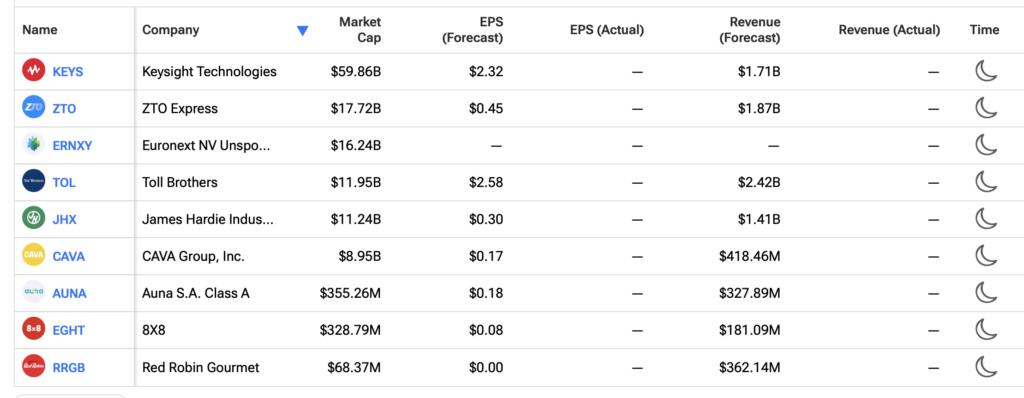
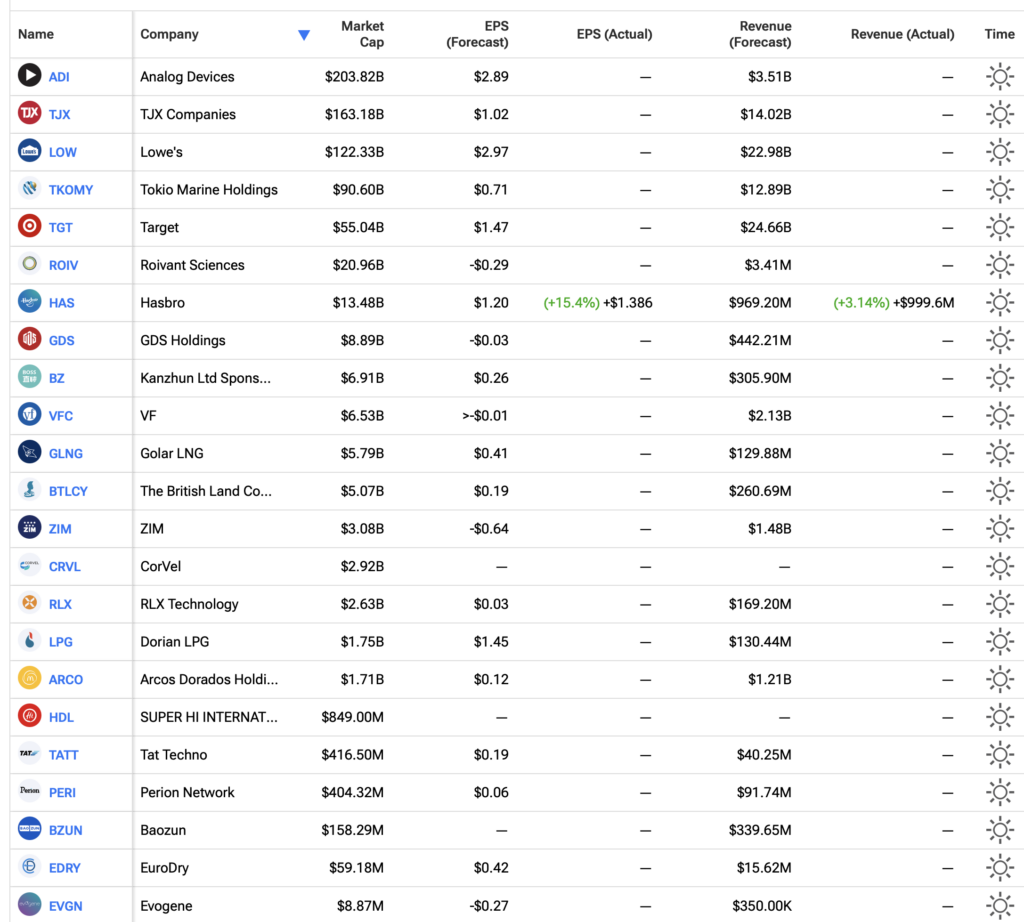
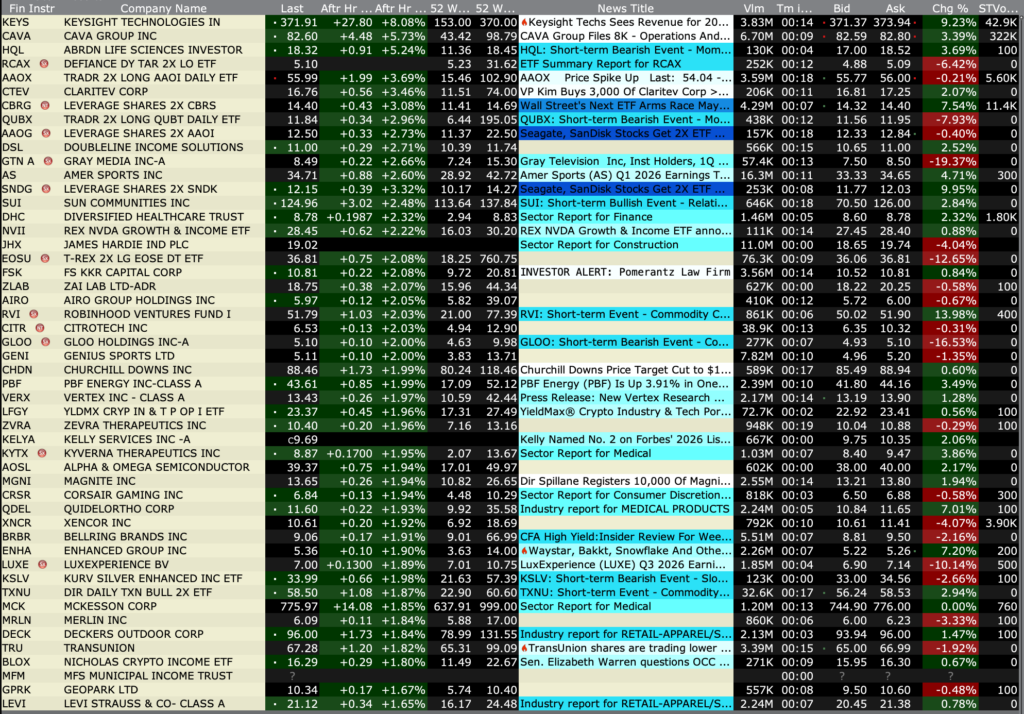
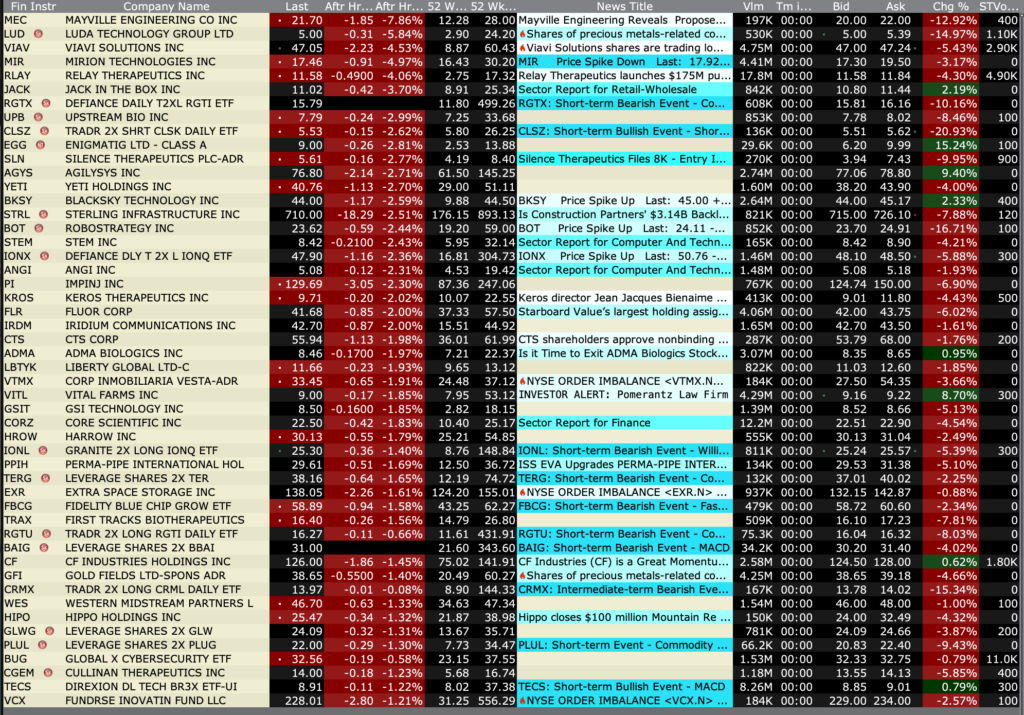
Tuesday’s After-Hours Advancers and Decliners

After-Hours % Advancers
After-Hours % Decliners
Position: None
After-Hours % Advancers
After-Hours % Decliners
Position: None
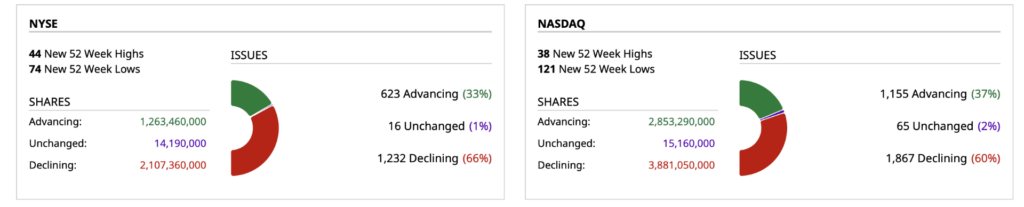
Closing Volume
– NYSE volume 1% above its one-month average
– NASDAQ volume 12% above its one-month average
– VIX index: up 1.68% to 18.12
Breadth
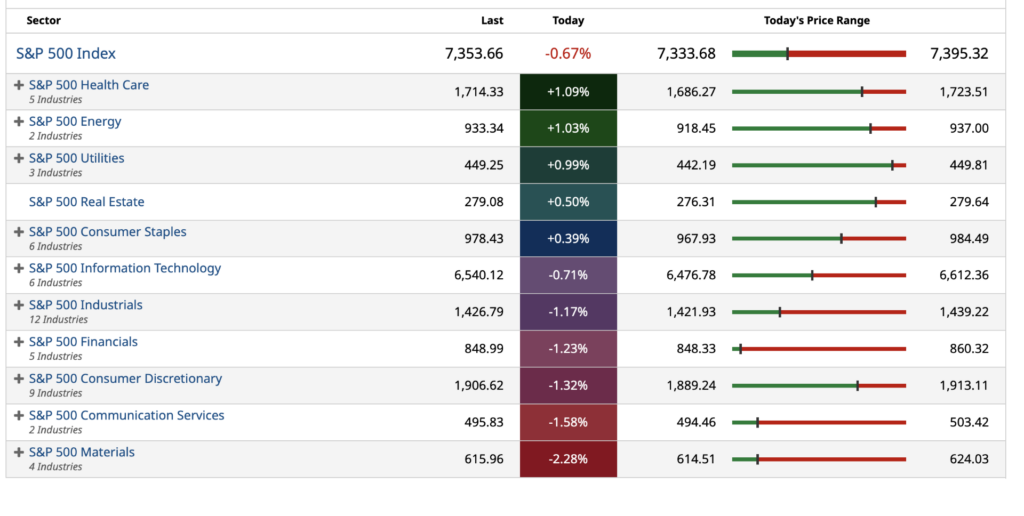
S&P 500 Sectors
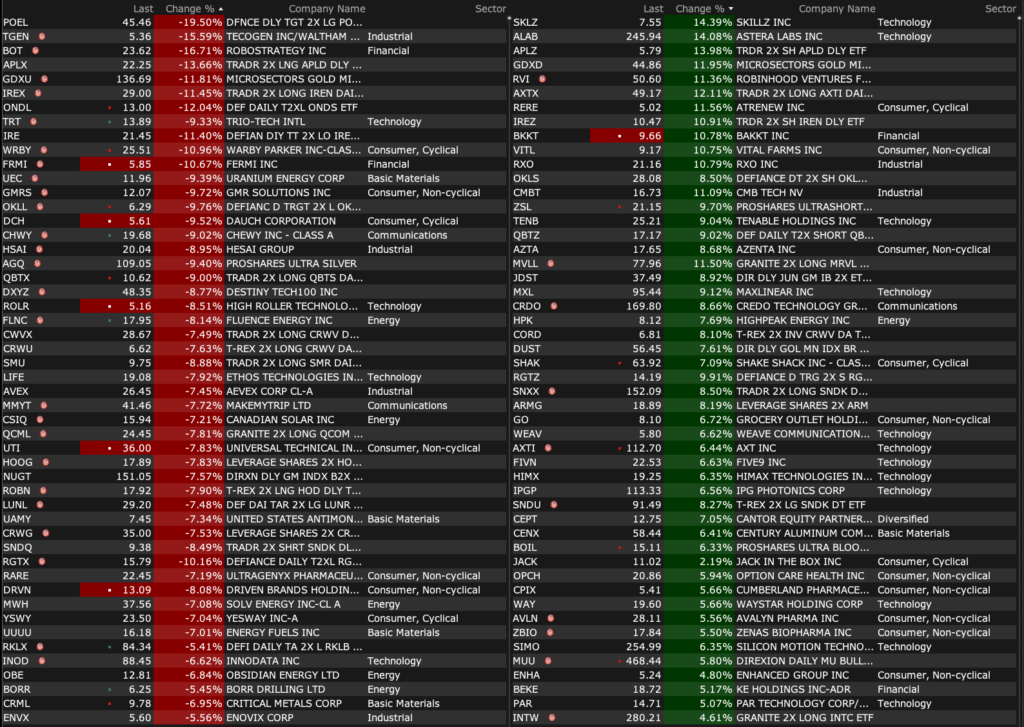
% Movers
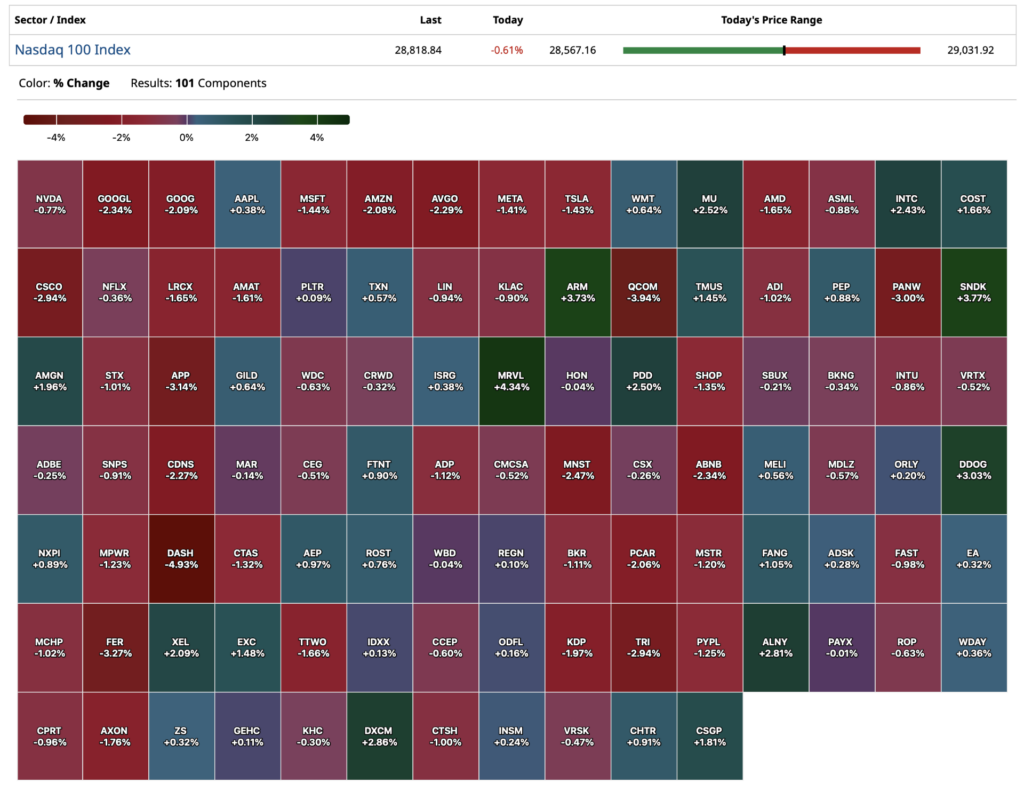
Nasdaq 100 Heat Map
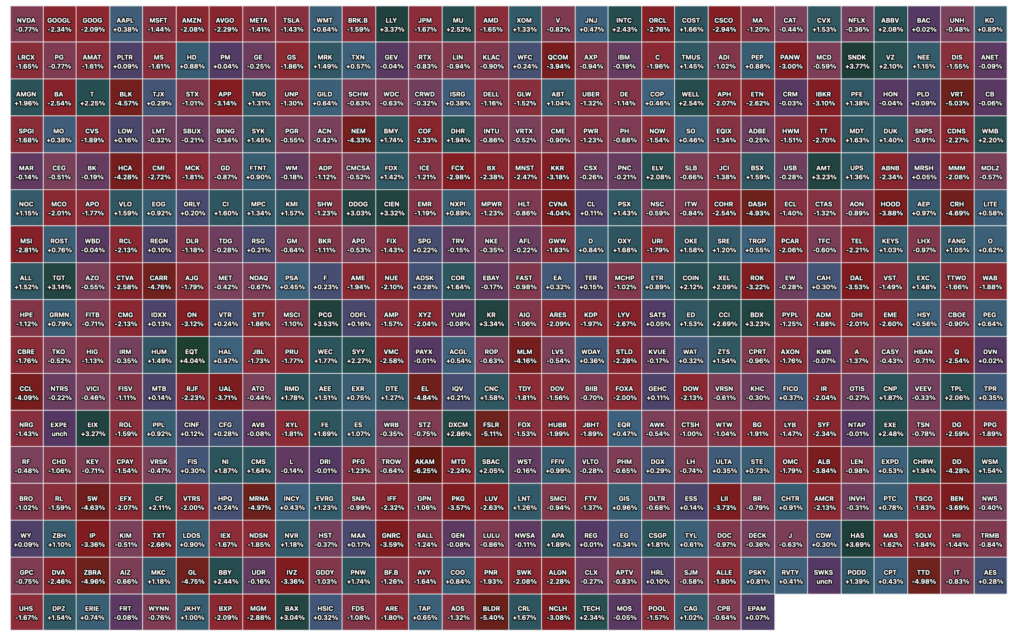
Closing S&P 500 Heat Map
Position: None
Financials rolling over.
Never a good sign.
Position: None
Position: None
Good covers on $NVDA, $MU, $AMD, $INTC and $SNDK yesterday:
I covered the balance of my individual technology shorts for some good profits:
* AMD $416.30 (-$6)
* NVDA $221.08
* MU $$680.95 (-$42)
* SNDK $1,291.61 (-$115)
* INTC $106.42 (-$2)
Position: None
BY Doug Kass · May 18, 2026, 1:37 PM EDT
I plan to re-short on strength but I am giving these volatile stocks a wide berth before I do so.
However, after the big rally off of the morning lows (and Nasdaq futures back in the green), I am back shorting the indices:
* $SPY $737.44
* $QQQ $706.28
Position: Short SPY (VS), QQQ (VS)
From Peter Boockvar:
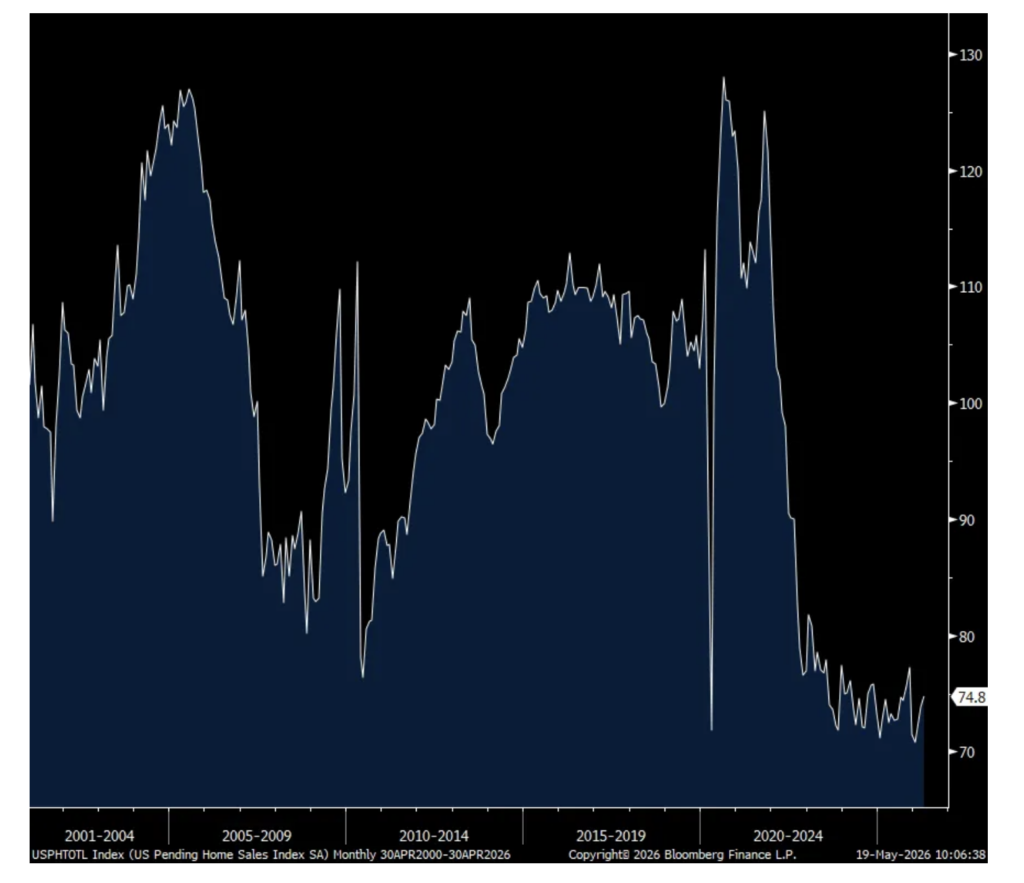
Pending home sales lift for 3rd month but what happens next?
Pending home sales in April, when mortgage rates averaged 6.44% vs 6.26% in March, rose by 1.4% m/o/m, just above the estimate of up 1% and after a 1.7% increase in March and a 2.5% rise in February after a few months of declines. About all of the gain was seen in the Northeast and Midwest while there was little change in the South and West.
The NAR said “Buyers are coming out with cautious optimism despite increasing economic uncertainty and a slight rise in mortgage rates.”
Still limited inventory in some markets remains an issue in keeping prices elevated. The NAR added, “Unless supply meaningfully increases, home price growth could outpace wage growth and further erode the homeownership rate. All efforts need to be focused on boosting housing supply.”
Bottom line, as seen in the chart below, the pace of transactions continues to bounce along the multi decade bottom for reasons we all know and now we have higher mortgage rates again coincident with the rise in the 10 yr Treasury yield.
Pending Home Sales index
AI is, as it stands, not economically viable for anybody involved other than the construction firms, NVIDIA, and the surrounding hardware companies benefitting from the irrational exuberance of a data center buildout that doesn’t appear to be happening at the speed we believed.
Every AI startup loses millions or billions of dollars a year, and nobody appears to have worked out a way to stop hemorrhaging cash. Hyperscalers have invested over $800 billion in the last three years, with plans to add another $700 billion or so in 2026 and another $1 trillion in 2027, meaning that they need to make at least three trillion dollars in AI specific revenue just to break even, and $6 trillion or more for AI to be anything other than a wash. I went into detail about this (albeit at a lower, pre-2026/2027 capex number) in a premium piece last year.
– Ed Zitron
Position: None
Position: None