As AI-Infrastructure Charts Break Down, It’s Time to Dramatically Reduce Exposure


Wednesday’s tech selloff has caused serious technical damage.
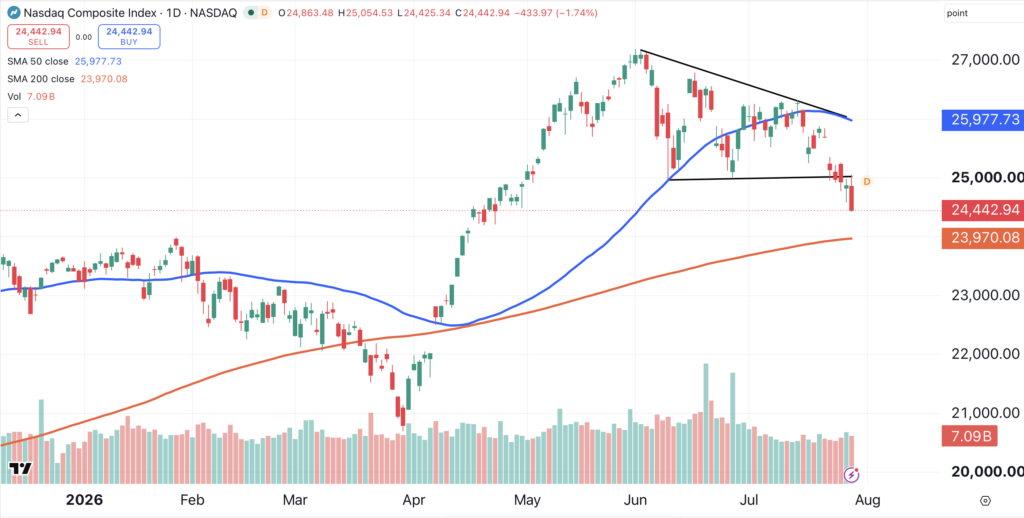
The Nasdaq Composite fell 1.74% to reach a three-month low, as the tech-heavy index broke down from a descending triangle pattern (black lines). The next major test for the Nasdaq is its 200-day moving average (red), which currently sits just below 24,000.
The worst damage is occurring in the AI-infrastructure names. These were the hottest stocks in the first half of the year, and now many of these names are suffering sharp reversals.
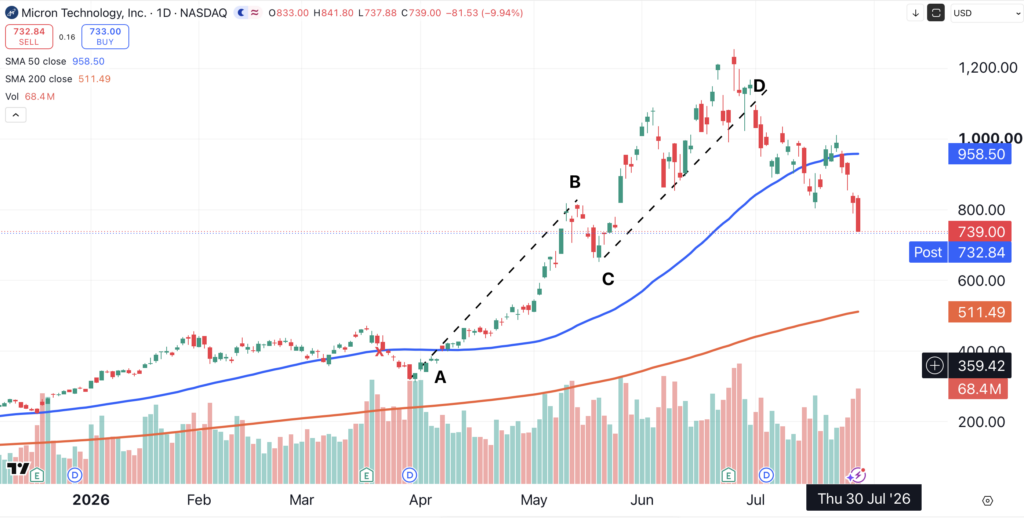
For example, Micron ($MU) fell nearly 10% Wednesday. After a huge run, and after the stock reached our price target thanks to an A-B-C-D pattern, we sold enough Micron shares to prevent any possibility of a loss, as documented here.
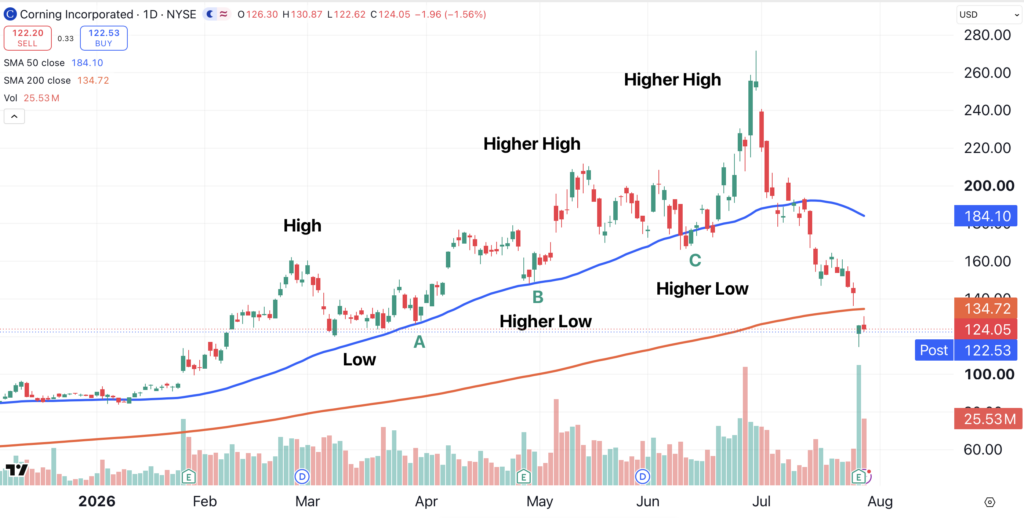
Meanwhile, Corning ($GLW) has fallen below its 200-day moving average. We closed one-third of our Corning position one month ago when it was trading near $250, as documented here.
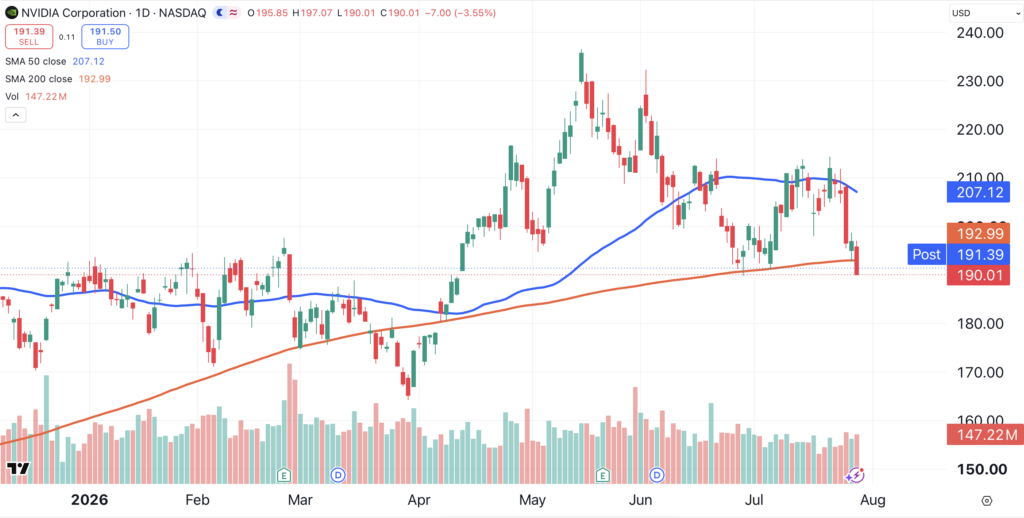
On Wednesday, Nvidia ($NVDA) closed beneath its 200-day moving average (red) for the first time in three months. We sold half our shares in November, when Nvidia was trading at $177, slightly lower than Wednesday’s closing price of $190.
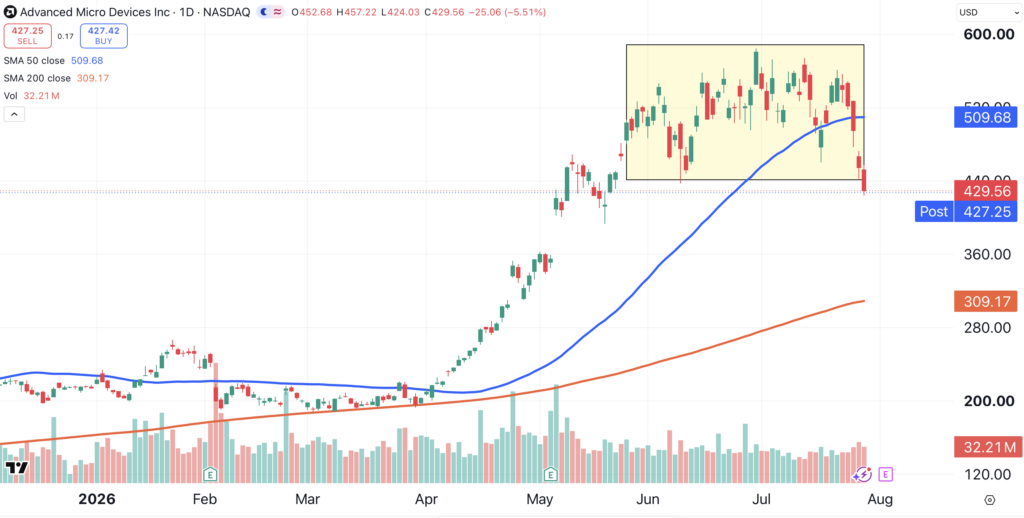
Shares of Advanced Micro Devices ($AMD) were holding up well until Wednesday, when the stock lost 5.5%. AMD has broken down from a rectangle pattern (shaded yellow).
Despite the selloff, AMD shares have gained 206% year-to-date. We closed half of our position in AMD late last year, as indicated here.
A Common Theme
You may have noticed a common theme to this article. We closed a portion of our position in each of the above-named AI-infrastructure stocks before this selloff began. Each of those sales was documented on this website.
The fact that we locked in gains early makes it easier to do what we have to do next — dramatically reduce our positions in any remaining stocks related to AI infrastructure.
Completely Gone
Corning is gone. We can’t keep a stock that rapidly falls from its all-time high to below its 200-day moving average. We were fortunate to close one-third of our position near its highs, now it’s time to close the remainder.
Micron is gone. Our cost basis for this stock was $127, as documented here.
Halved, Again
As noted earlier, we reduced our Nvidia and AMD positions by half late last year. Now, we’re halving them again. Our Nvidia and AMD positions are now 25% of their initial size. We are also halving our position in Broadcom ($AVGO).
In addition to the stocks listed above, we’re reducing or closing any and all names that have exposure to AI infrastructure. This sector was very good to us, and now it’s time to go.
Bottom Line
My November 26 article ended with the following statement: “It’s not a question of belief in a stock, it’s a question of believing what I see on a chart.”
What I’m seeing on my charts right now tells me to dramatically reduce my exposure to stocks in the AI infrastructure sector.
At the time of publication, Ponsi was long NVDA, AMD and AVGO.
