A Big Warning to Buyers of the Anthropic IPO

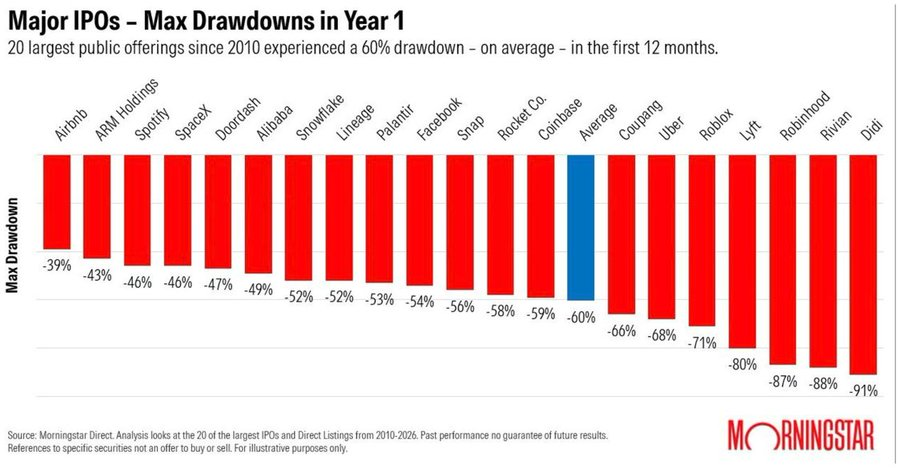
Since 2010, the average drawdown in the first 12 months of the 20 largest IPOs is -60%!
Position: None
Since 2010, the average drawdown in the first 12 months of the 20 largest IPOs is -60%!
Position: None
Ed Yardeni is bullish:
Position: None
No one has an edge in guessing how a stock will react to earnings. The edge comes from having a plan for every outcome.
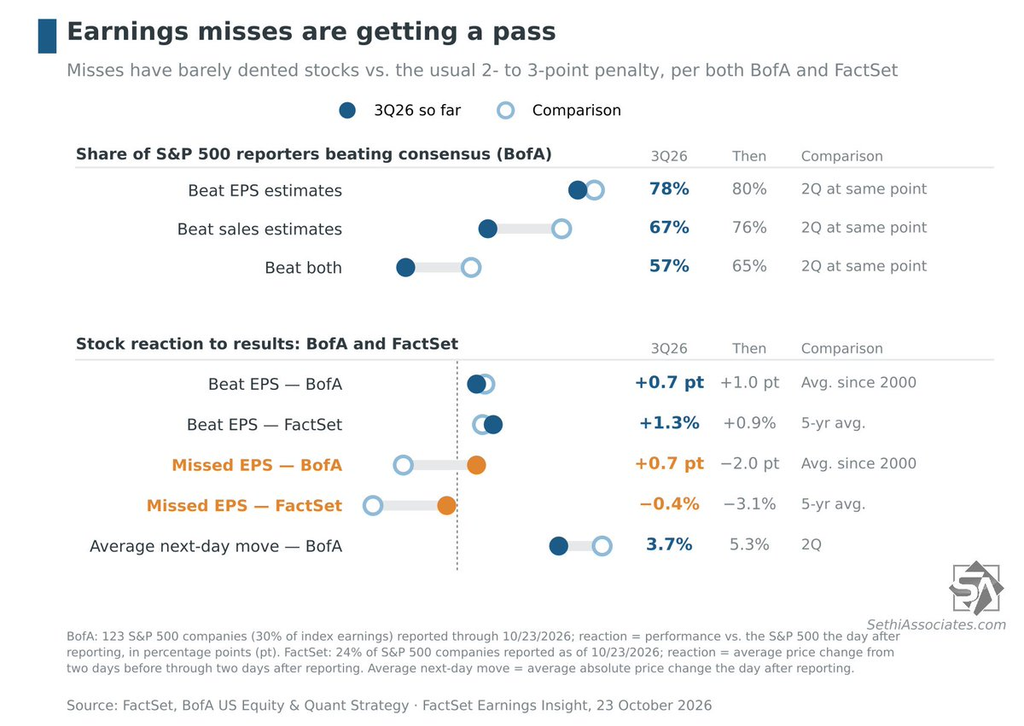
Ahead of this week’s batch of earnings, a little surprisingly, misses have been getting a relative pass.
Per BofA, companies missing EPS estimates have outperformed the S&P 500 by 0.7 percentage points the day after reporting, vs. a typical 2-point lag since 2000.
FactSet finds the same: misses have fallen just 0.4% from two days before their reports through two days after, vs. a 3.1% five-year average.
Beats, in contrast, are being rewarded at roughly normal levels (BofA +0.7 pt vs. +1.0 average; FactSet +1.3% vs. +0.9%)
Overall, the average next-day move is 3.7% vs. 5.3% in 2Q.
Are there opportunities in the neocloud sub-sector? Let’s look at three of the best-known names.
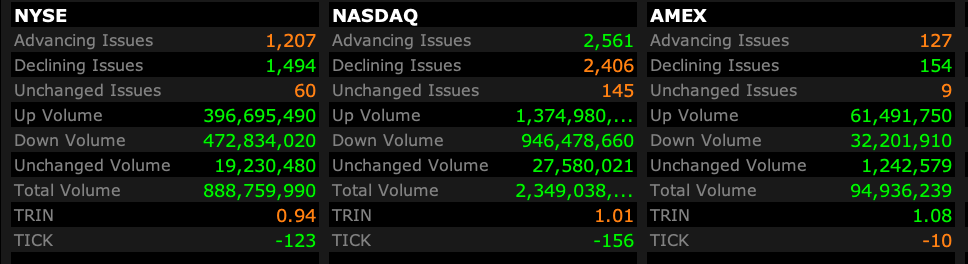
– NYSE volume 13% below its one-month average;
– Nasdaq volume 9% below its one-month average;
– VIX index: down 1.14% to 17.32
SOURCE: Interactive Brokers
SOURCE: Barchart
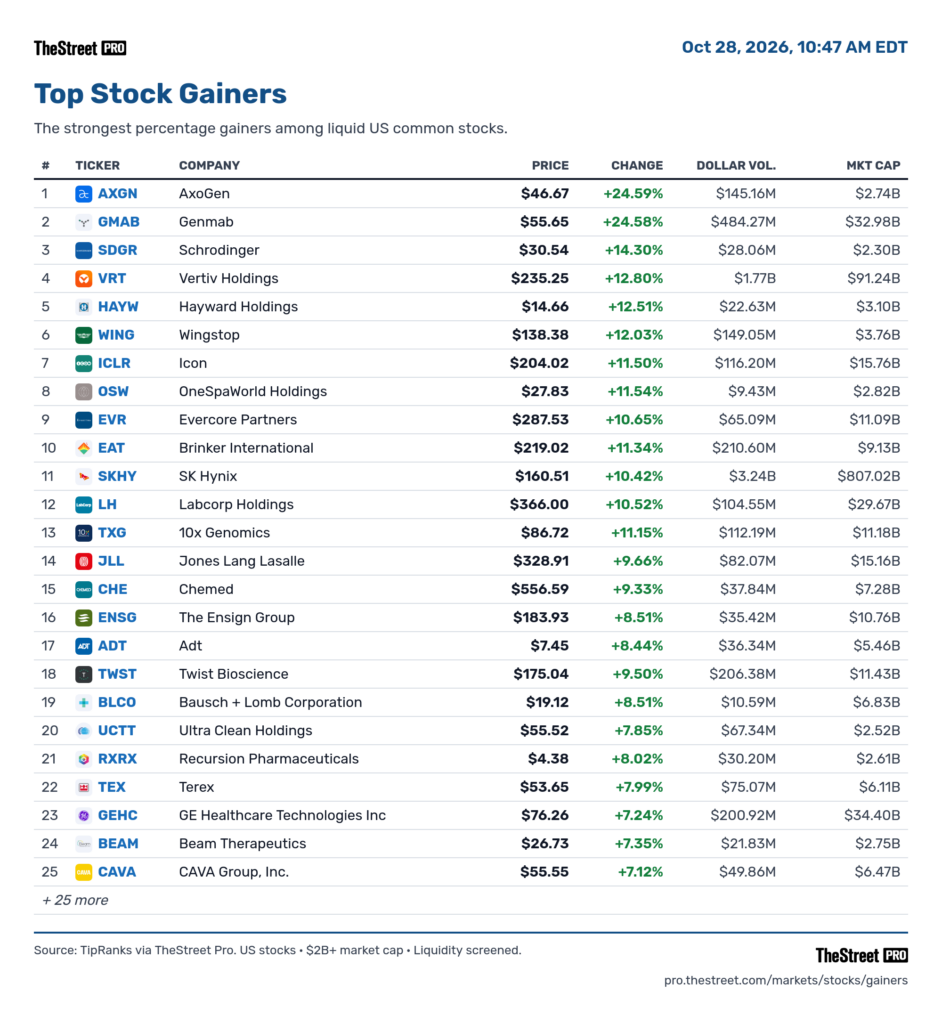
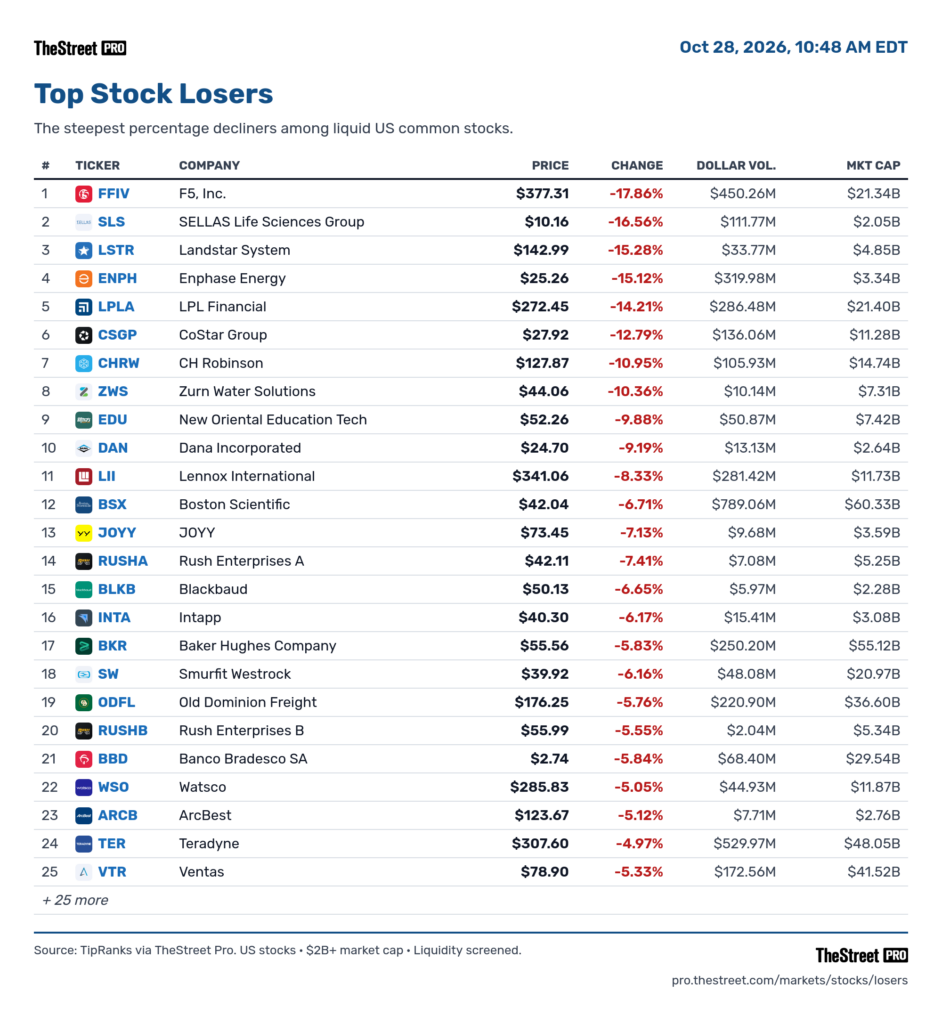
SOURCE: TheStreet Pro
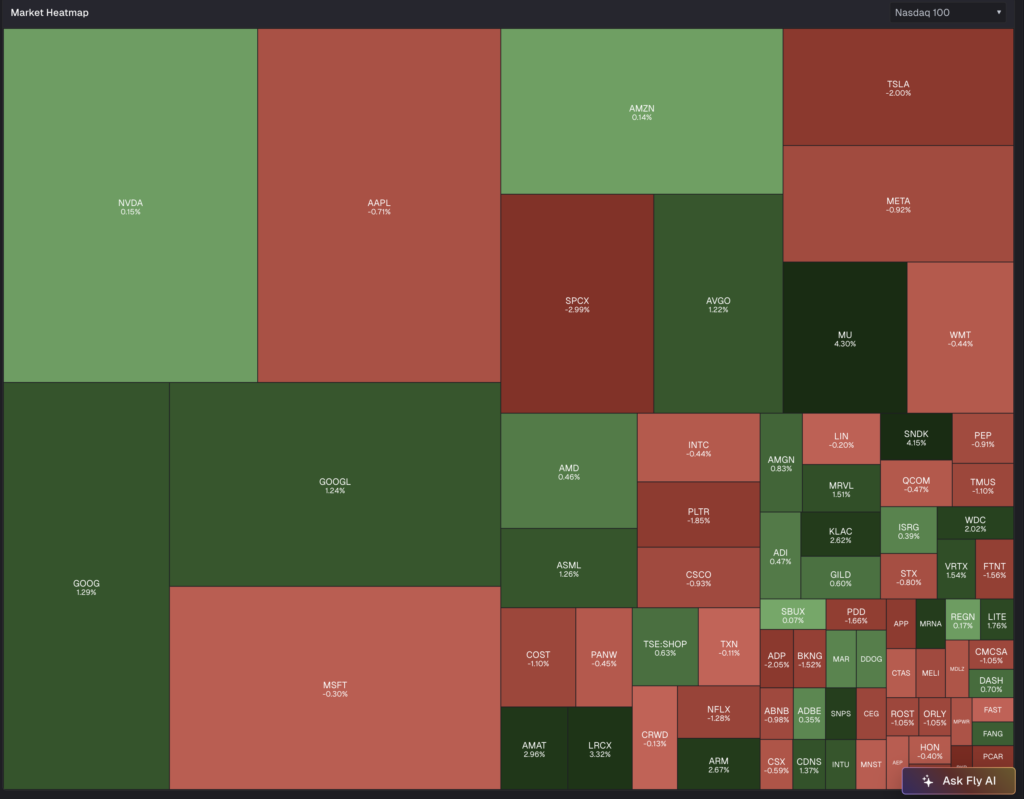
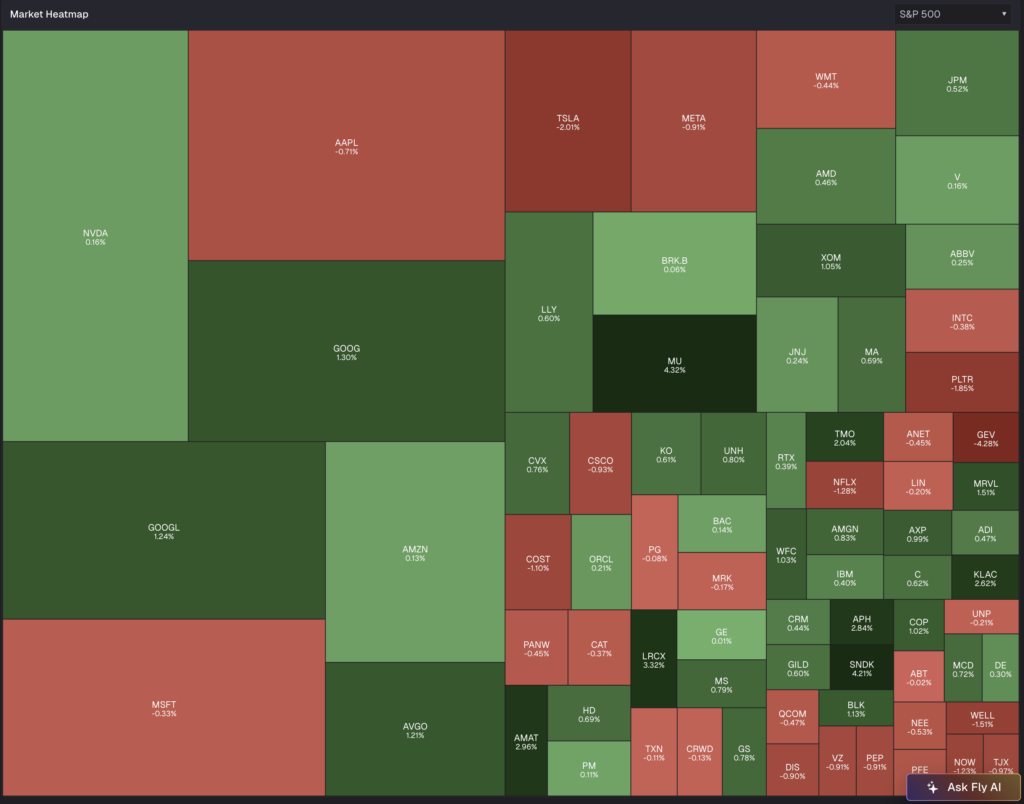
SOURCE TheFly
In today’s 8 Key Items alert, we mentioned expected 2027 pricing action from several companies as they look to cover rising costs. Now we can add the U.S. Postal Service (USPS) to that list.
In 2027, USPS will adopt a FedEx ($FDX) and UPS ($UPS) pricing tactic as it contends with high fuel prices.
In January, the agency will start levying a fuel surcharge on domestic shipments under Ground Advantage, Priority Mail, Priority Mail Express and Parcel Select. The surcharge will update weekly based on diesel and jet fuel prices.
Positions: None.
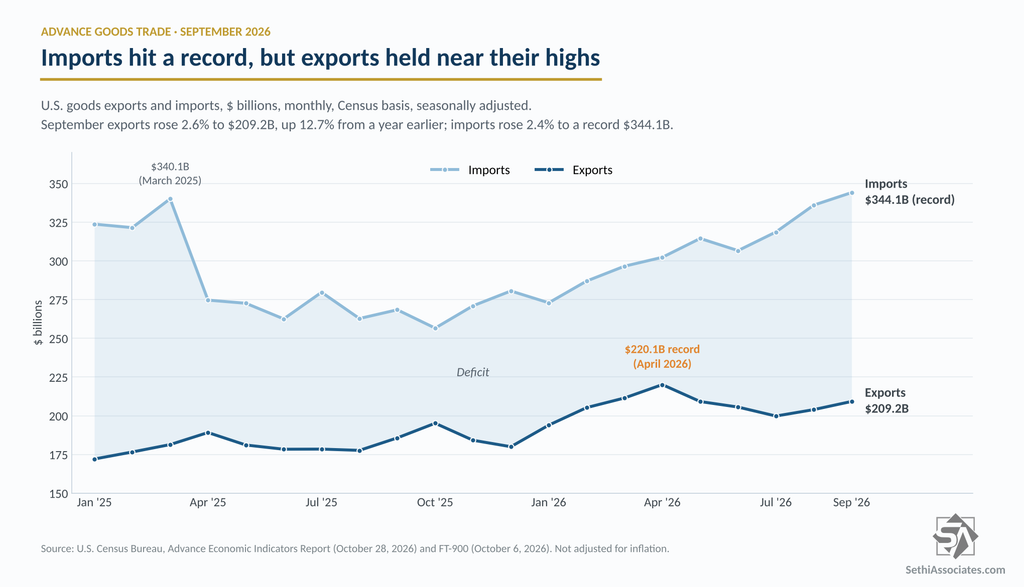
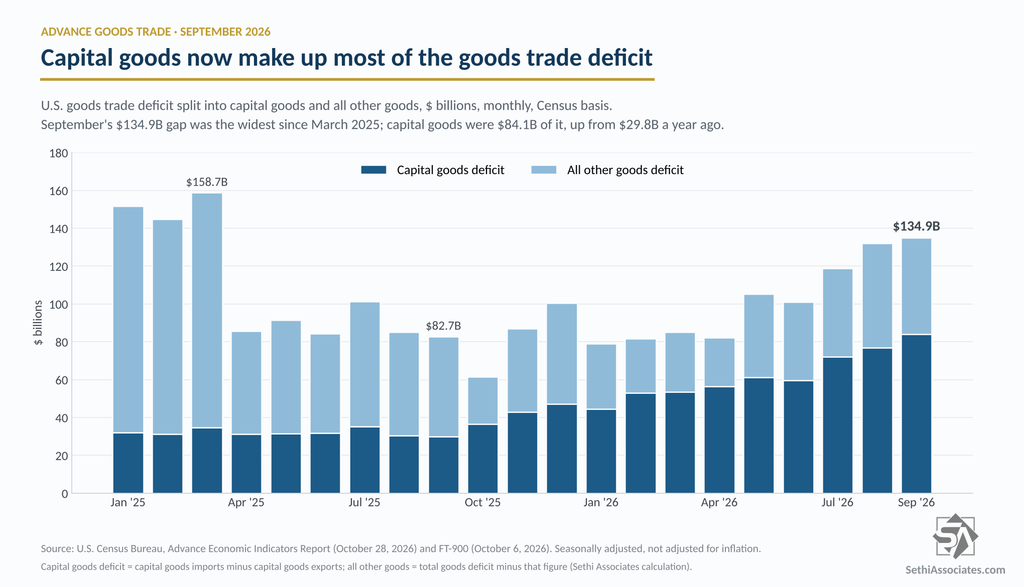
The U.S. goods trade deficit (goods are approximately three-quarters of U.S. trade) widened 2.1%, or $2.8 billion, to $134.9 billion in September, the largest since March 2025 and a third straight monthly increase, according to the Census Bureau’s advance report. Economists surveyed by Bloomberg had expected the gap to narrow to $130.2 billion. August’s deficit was revised to $132.1 billion from $132.6 billion.
Positively, goods exports rose 2.6% to $209.2 billion, but because exports are about 40% smaller than imports, the 2.4% rise in imports to $344.1 billion still widened the gap. That was the third-highest on record for goods exports, up 12.7% from a year earlier, while imports hit a record.
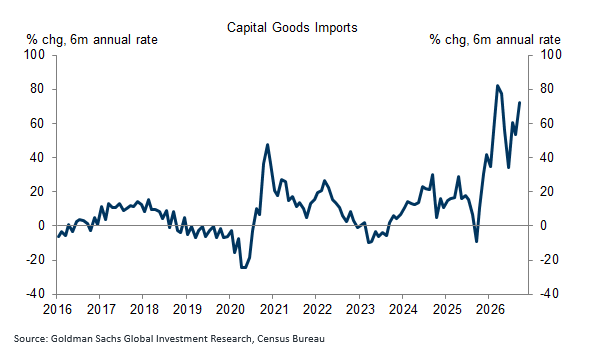
Notably, capital goods imports jumped 7.5%, or $10.9 billion, to a record $157.4 billion, up 77.2% from a year earlier. The category includes the computers, semiconductors and telecommunications equipment going into the AI buildout. The capital goods deficit is now $54.3 billion larger than a year ago, more than the $52.2 billion widening in the overall goods deficit over that period. Goldman noted: “The capital goods category has been a primary contributor to the widening trade deficit this year and has partially offset the impact of rapidly rising AI business investment on GDP growth.”
Consumer goods imports rose 3.1%, the most in four months, but were still 12.0% lower than a year earlier. Industrial supplies imports, which include petroleum and nonmonetary gold, fell 6.0% after jumping 17.1% in August, and auto imports fell 4.0%.
On the export side, foods, feeds and beverages jumped 12.8% to $16.0 billion, consumer goods rose 6.5% and capital goods rose 5.4%. Industrial supplies exports fell 1.6% and autos fell 5.6%.
Before the release, the Atlanta Fed’s GDPNow model had net exports subtracting 2.86 percentage points from third-quarter GDP, after they subtracted 1.10 percentage points in the second quarter.
The full trade balance report, with services and inflation-adjusted figures, is due November 4.
I just got off the phone with my pal Lee Cooperman.
Lee is fearful of market structure (as I am!) and believes the market has become a casino (as I do!).
He expects a very hard fall in the S&P and Nasdaq indexes, but he has little in the way of a sense of timing of this event.
I asked him what indications he would look to in order to be fully prepared and/or better time a market drawdown – Lee said watch for a large rise in the price of gold (he is long a small position in $GLD).
Positions: None