Visa’s Outlook

Visa’s September 2026 Economic Outlook.
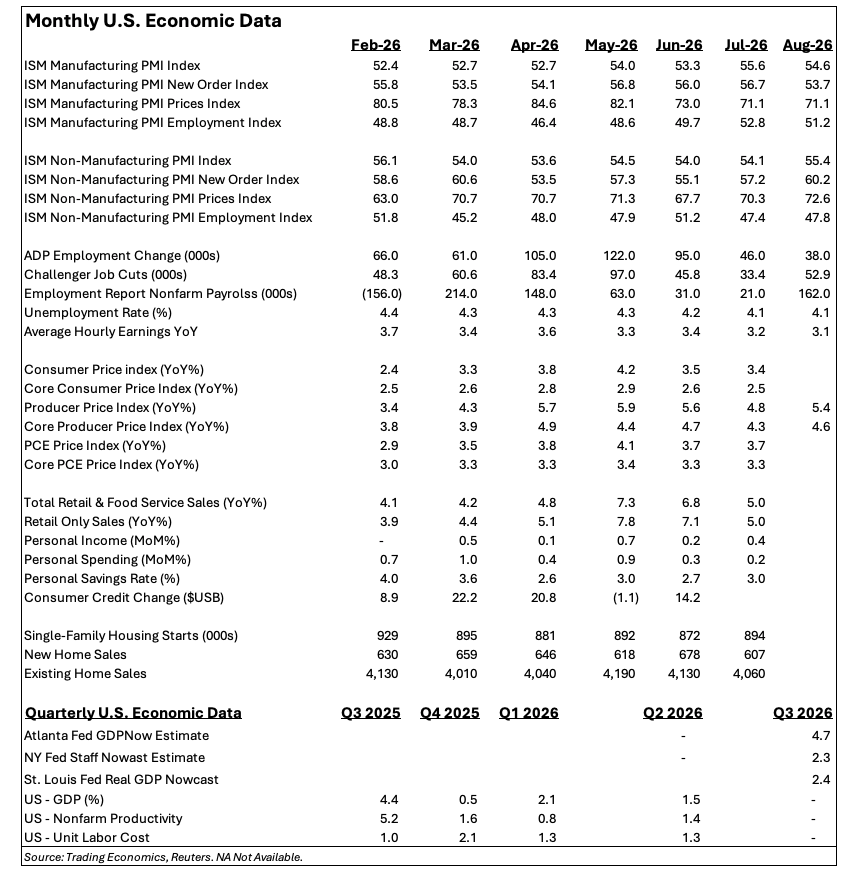
The nutshell take is Visa ($V) now sees 2026 GDP for the U.S. coming in at 2.2%, with the same figure for next year. While that isn’t too far off the forecasts for this year from the New York Fed’s Nowcast Model and the St. Louis Fed’s Read GDP Nowcast one, it suggests the Atlanta’s Fed’s GDPNow model figure of 4.7% GDP for the current quarter is more than a bit aggressive. We’re not quite half way through all the economic data for Q3 2026, but the further oil, diesel and gas prices head, the more downside risk to the Atlanta Fed’s forecast we see.
Now here’s what Visa had to say and we’ll follow that with our update macro data table, the one we publish each week in the Pro Portfolio’s Weekly Roundup:
The economic data over the last month continues to reflect an economy weathering higher inflation pressures. The August employment report showed the U.S. labor market was still on a strong footing, with employers adding 162,000 jobs for the month and wage growth holding firm. Even with solid wage gains, real (inflation-adjusted) income growth is contracting, but continued stock market gains have helped to prop up spending for some consumers, at least for now. As a result, we foresee consumer spending continuing but at a more modest pace this quarter at 2.1 percent on a year-over-year (YoY) basis. Continued robust AI investment should also help support business investment growth this quarter.
Headwinds are emerging, however, that could limit growth over the next few quarters. Inflation is likely to reaccelerate through the end of this year as the Middle East conflict pushes diesel and fertilizer prices higher, while the effects of El Niño weigh on global crop supplies and food prices more broadly. The addition of tariffs on key U.S. trading partners could also push prices higher.
As a result of these dynamics, it is looking more like a bumpy path forward for interest rates over the coming months. For starters, long-term interest rates have risen in recent weeks due to several factors, including investors seeking higher yielding alternatives, expectations that inflation will remain elevated for longer, and ongoing debt issuance due to higher budget deficits. The upward movement in long-term rates has delayed the need for the Federal Reserve to step in and contain inflation, but there are signs from recent speeches and meeting minutes that their patience may be wearing thin. We now think a rate hike before year-end is the base case (see more details in the full report).
With these changes to our outlook this month, we have downwardly revised our outlook for GDP growth for this year to 2.2 percent YoY while leaving our forecast for 2027 unchanged at 2.2 percent. GDP growth will likely begin to moderate in Q4 with more modest inflation-adjusted consumer spending. Inflation and interest rates should ease enough to support 2.1 percent GDP growth in 2028.
Positions: None.
