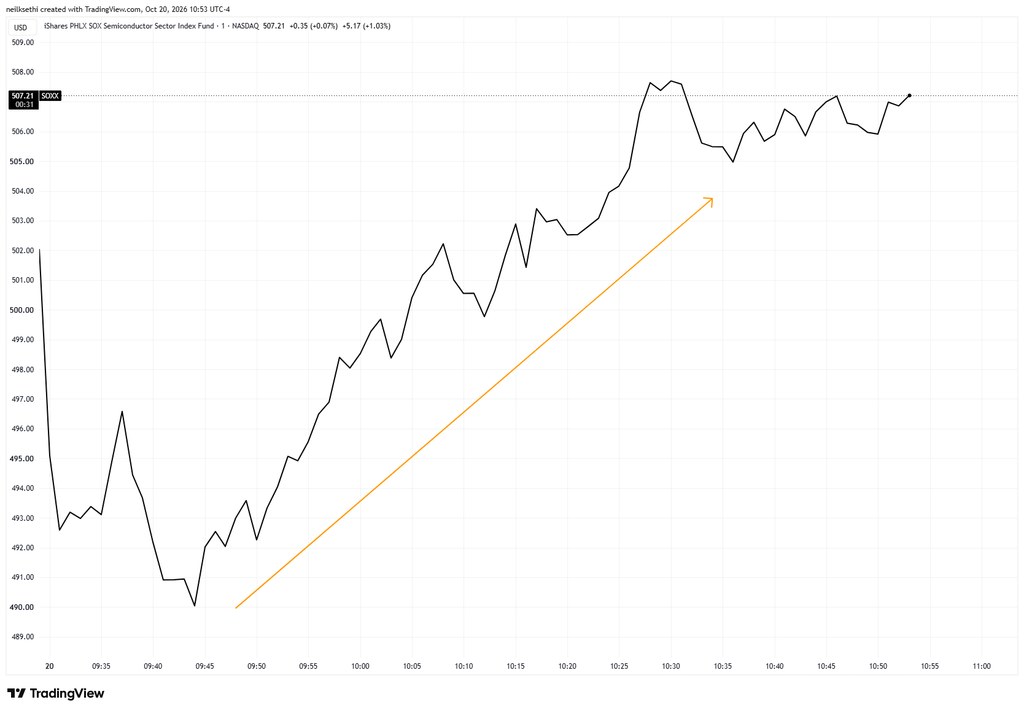
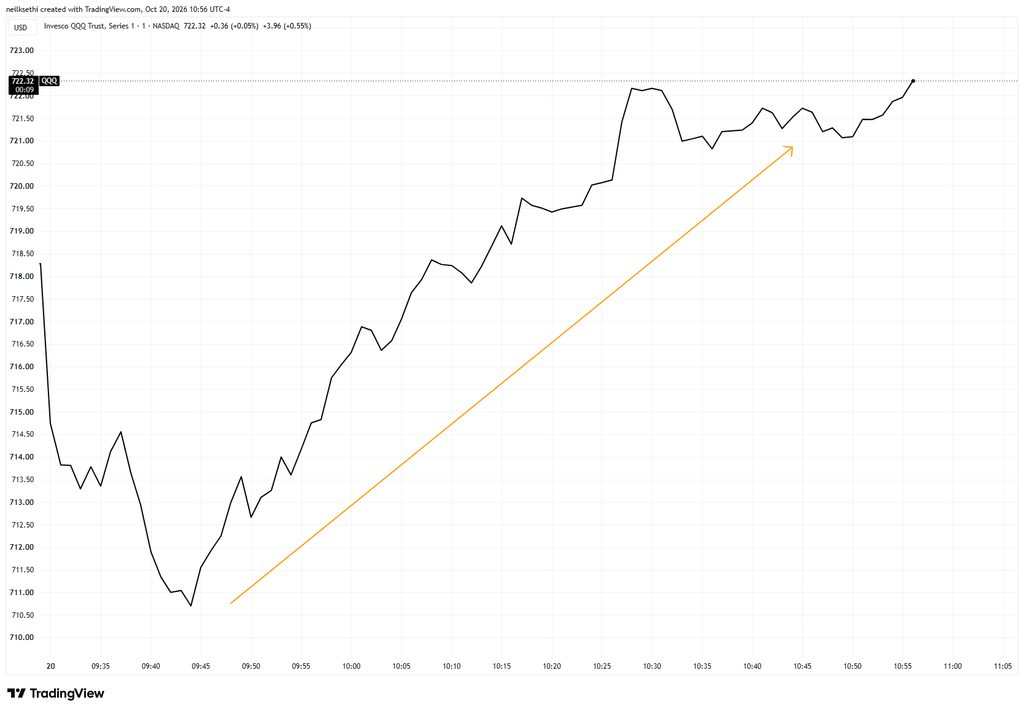
A wave of AI-related deals sent semiconductor shares soaring, helping the Nasdaq rally while investors prepared for the Fed and crucial earnings from Microsoft and Google parent Alphabet.
Brent topped $116 and stocks pulled back on fears of renewed U.S.-Iran hostilities after the midterm elections. For the week, small caps led with the Russell 2000 up 2% while the S&P 500 and Nasdaq slipped.
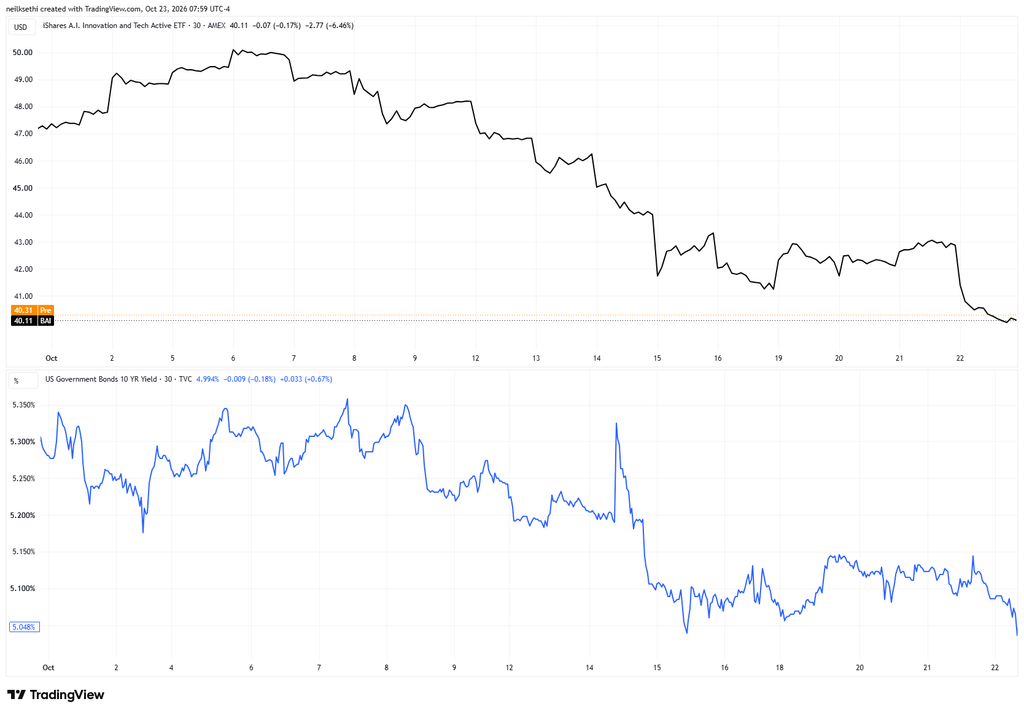
In addition to the negative correlation between AI stocks and yields this month (below chart is Philadelphia Semiconductor Index ($SOX) and 10-year yields)…
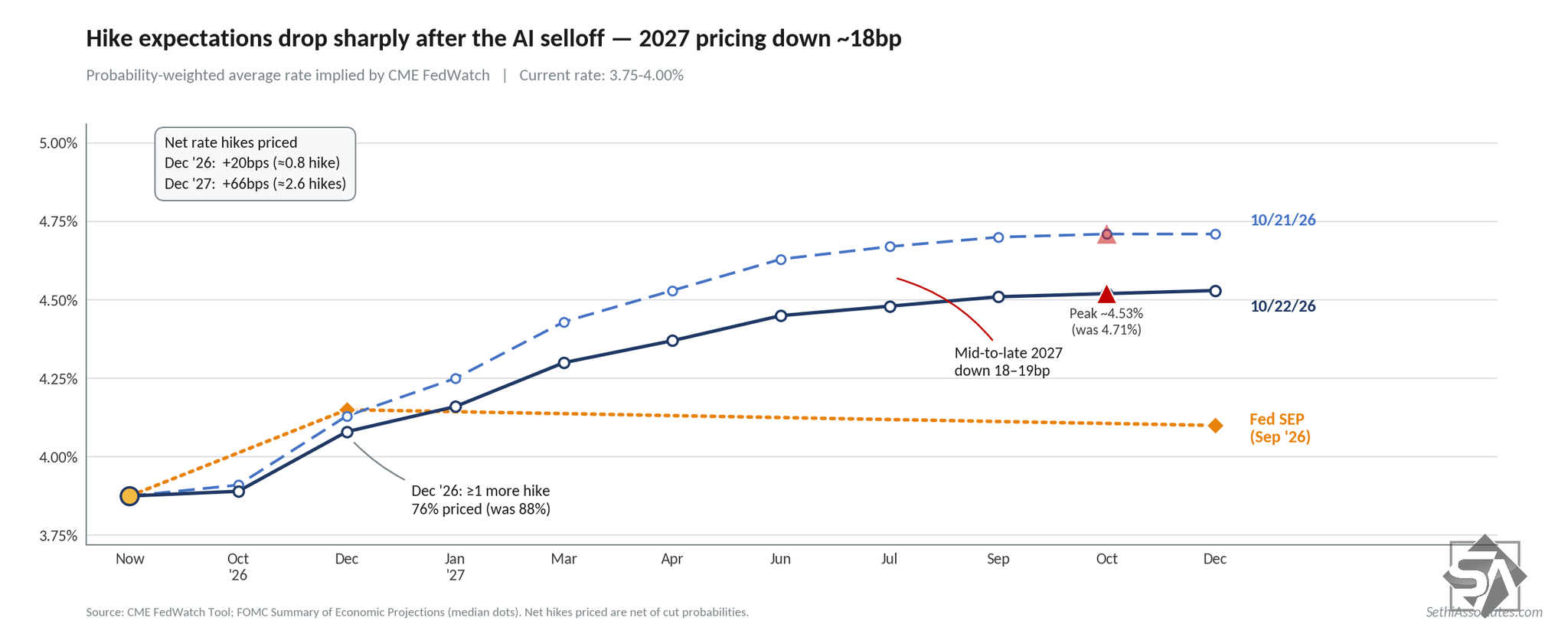
… we’ve seen weakness in the AI trade weigh on Fed rate hike expectations, on the idea that a softer AI complex means slower growth through both the buildout and equity channels, and so less need for hikes.
As noted in last night’s update, October is now a 93% chance of a hold, and December is less sure of a hike at 76% (from 88%). 2027 expectations dropped as well with now just 66 basis points of total hikes priced through December next year, down from 83 basis points Wednesday.
Worries about the sustainability of the AI trade surfaced once again, driving down a swath of related stocks, but other stocks rallied as Treasury yields dropped the most since August 2025, seeing equal-weight vs cap-weight the most extreme since 2024.
Easing long-term yields and oil prices lifted the Russell 2000 to its best day since early August and saw 9 of 11 S&P 500 sectors higher, even as weakness in Tech dragged on the cap-weighted index.
The megacap growth sectors went from worst (Friday) to first (Monday) as chipmakers snapped an eight-session losing streak, but rising Treasury yields left seven sectors, the Dow Jones Industrial Average, and the equal-weight S&P 500 lower.
Another selloff in AI names broadened to encompass most of Tech, sending the Nasdaq-100 to its worst week since April 2025. Five sectors though would finish the week up 2% or more, as 30-year Treasury yields fell the most since April 2025.
A hotter-than-expected September CPI report and a deepening selloff in AI names sent the S&P 500 down more than 1% for the first time in 54 sessions, with the Nasdaq and small caps falling nearly 2%.