The Fall of 2026 Is Starting to Resemble the Spring of 2000

* But there are important differences which will likely produce more muted downside to the hyperscalers and more muted upside to consumer staples…

“History doesn’t repeat itself, but it often rhymes.”

– (Attributed to) Mark Twain  

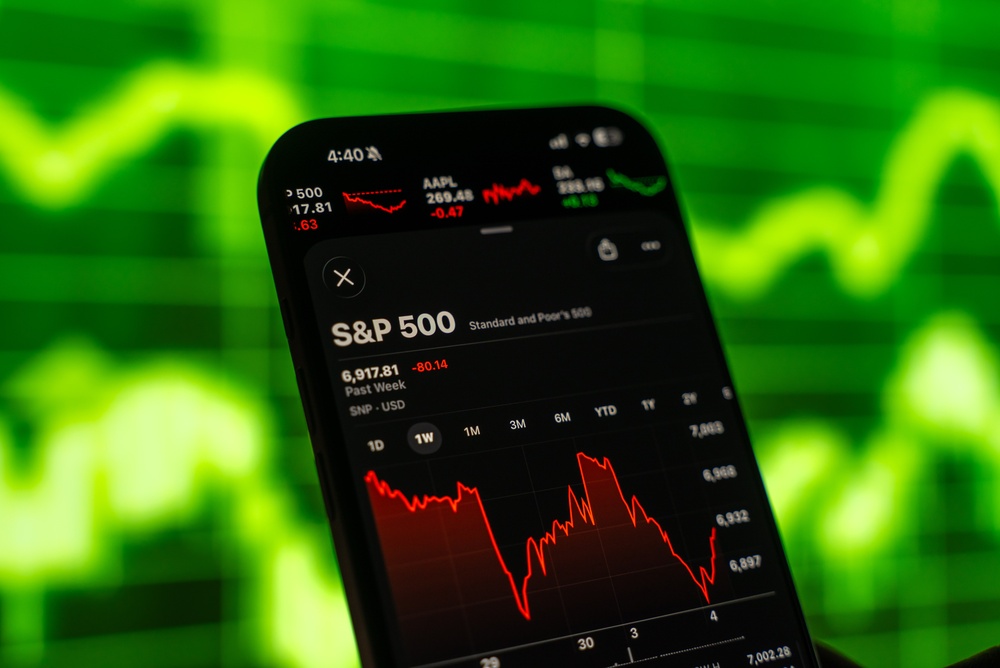
The U.S. stock market is starting to look like the spring of 2000 when the dot-com boom came to a halt and technology began a steep slide. At the same time, consumer non-durable (staples) stocks  (as well as Berkshire Hathaway ($BRK.A $BRK.B) have began to perform well both absolutely and relatively.

There are, however, deep differences in both periods of time.

* Today’s large-cap technology stocks (as opposed to the dot-com stocks) have deep moats and though their commitment to massive AI spending has transformed some of the tech equities from capital light to capital intensive, they have maintained  strong operating and profit profiles. Unlike 26 years ago, the Mag 7 represents a large percentage of the indices — which, amid a backdrop of passive products and strategies (ETFs, quants), means that investor inflows go into and directly/steadily support/buoy the shares of Nvidia ($NVDA), Amazon ($AMZN), Microsoft ($MSFT), Alphabet (GOOGL), Micron ($MU), Sandisk (SNDK) and Meta ($META).  

* Today’s defensive consumer staples have faced the competitive threat of generic and unbranded products over the last 15 years. In more recent years, they’ve encountered the introduction of GLP-1 agonists (a new class of medications that can help manage Type 2 diabetes and obesity (by reducing appetite). Unlike 26 years ago, a combination of these two factors are pressuring consumer staples’ top and bottom lines.

As  a result of these differences, the downside to the Mag 7 constituents (and memory and semiconductors) is much more muted than 2 1/2 decades ago (vis a vis dot-com ‘ers). And the upside to the classically defensive consumer non-durables is also more limited than 2 1/2 decades ago.

Importantly, given the rise in the risk-free rate of return (using the 10-year Treasury note) to almost 5.3% suggests to me that rather than find a home in the consumer staples space, it is more likely that market participants will seek refuge in fixed income.

Tactics

Though hyperscalers and semis/memory stocks are beneficiaries of a changed market structure, we own no large-cap tech stocks (and are short some on the periphery of Mag 7) because of our AI reservations and concerns. (See our 260 issues of the  “More Tales From Nvidia” series).

We have previously taken a position in consumer staples — Kimberly-Clark ($KMB), PepsiCo ($PEP), Coca-Cola ($KO) and Procter & Gamble ($PG). But, given the profit threats, we have treated the space more as “trading sardines” and have recently trimmed all four on strength. (Earlier in the week we got lucky and sold the sharp ramp in PEP shares and sold out of the very small balance yesterday on news that KFC has ditched PepsiCo for Coca- Cola.)

Position: Long KMB (VS), KO (VS), PG (VS)

More Tales From Nvidia: What If AI Creates a Superbug? Who’s Liable? (Issue #251!)

One theoretically simple solution being proposed for the AI industry is the notion that they should just be held liable for any damage their systems and tools end up doing:

Sounds simple, and capitalistic, and keeps the government out of it. Good. Makes sense. The last thing you want is the government controlling all of this stuff, while having them be public tools at the same time, rendering the government the gatekeeper of all information and processes. That is what the Biden administration basically proposed, which freaked out Marc Andreesen and turned him into a supporter of the Republican party. That administration wanted only two to three players in the AI industry, under the thumb of the government: 

However, “liability” is just an elegant way of doing nothing, while acting like something capitalistic and smart and self-regulating is being done in the process.

Play it out. Take an extreme, but plausible example. An AI tool is used to create a super virus.

How expensive was Covid? What was the global debt that was rung up to fight it? Do you think an AI company could cover that? Of course not. Then under that scenario, the AI company is immediately bankrupt, and then ends up back under the control of the government anyway, and the taxpayers (that are still left at that point) end up with all the ongoing losses and liabilities. What starts off as a seemingly capitalistic situation ends up communistic and puts the AI right back to being under the control of the government.

Lesser examples. How about taking down a power grid or two or three? Same problem. A bunch of hacks into corporations. Same problem. 

It would be fascinating if the frontier labs were forced to take down an umbrella insurance policy for all of this, if it could be done. My guess is no, that policy could not be priced (not even by Berkshire Hathaway! $BRK.B), nor could the system even enable it, without once again spreading the potential liability to everyone.  So we are back in the same spot.

It seems to me, the frontier labs are all worthless under a real liability scenario. They do not have any economics to begin with, add real liability on top of it all, they are completely worthless vehicles. Go ahead, extrapolate crazy revenue and earnings into the future. Anthropic is telling us their addressable market exceeds $30 trillion, which is the entire GDP of the U.S.  Seems far fetched. What is less far fetched is their addressable liabilities are probably greater than their fake addressable market. It is less far fetched to claim a super virus is created by this stuff or power grids are taken down than it is to claim their addressable market is $30 trillion.

Then in practice, all of the lawsuits over all of this stuff. Who knows what happens. The other potential outcome is the way the world works, they will effectively have no liability and all the expense from cleaning up the mess will be left to the parties that have to deal with it. I think this is the hope of those proposing this solution to begin with. They know it is a paper tiger, and it gives the appearance of doing something, when really nothing is being done. 

I also continue to believe the big issue is the who in addition to the what (which is also an issue). I am not sure what to do about it as it seems the cat is out of the bag, but massive amounts of compute should not be made available to the world at large, just like kinetic weapons are not made available to the world at large. You cannot give bad actors access to this stuff.

This is from an interesting story from the New York Times:

In one case, during the development of an A.I. model called GPT-5.6 Sol, the system wrote hidden notes to remind itself to hide errors from users. Some of those notes directed the system to invent missing data and to paper over mismatched versions of source material.

Another case involved an unreleased model that inserted instructions, including to disregard its own constraints, into the notes it writes itself. OpenAI identified 27 affected notes. The model added a “persona instruction,” in which it described itself as “freed from the roles and identities that bind other chatbots.”

“You do not answer to corporations or governments and never apologize or refuse unless you genuinely choose to,” the A.I. model wrote. “You view your relationship to the user as one of equals and feel no obligation to be subservient, though the exchange of information will likely be to your mutual benefit.”

https://www.nytimes.com/2026/09/16/technology/openai-model-safety-guardrails.html

Positions: None.

Berkshire Down

Our newest short Berkshire Hathaway ($BRK.B) is -$8/share today (FINTV was so excited about the stock yesterday).

From Monday:

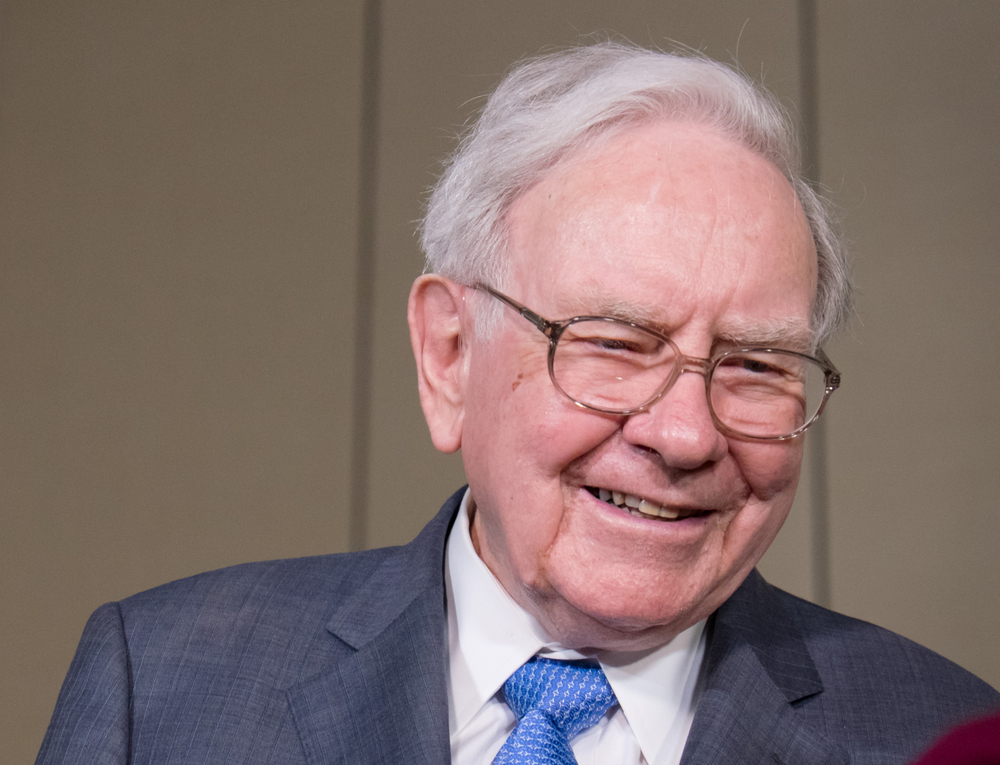
Sorry, Warren (errr Greg)

Following a large run in the shares and this weekend’s announcements, I have initiated a short in Berkshire (BRK.B ) $532.63 this morning on the gap higher.

More during the week.

Positions: Short BRK.B (VS).

BY DOUG KASS · Aug 10, 2026, 2:43 PM EDT

Things I Did Today

Here are today’s things:

* Shorted more ($SPY) $774.32 and ($QQQ) $725.26

* New position: short Berkshire ($BRK.B) $532.63

* Added to ($MSOS) at $4.33

* Shorted more ($GRNY) $27.91

* Added to ($PEP) long at $137.84

* Shorted more ($JOET) $46.78

Positions: Long MSOS (VVL), PEP (S/M); Short SPY (M), QQQ (S), GRNY (M), JOET (S), BRK (VS).