Several Signs Point to a Potential Blowout Earnings Season

A purchasing manager keeps his finger on the pulse of a company. Purchasing managers need to know how many desks, computers, printers, etc. are needed to keep the company running smoothly.
Economists determined that a survey of purchasing managers would be a good way to gauge the strength of an economy. Thus, the purchasing managers index, or PMI, became a staple among economic indicators.
PMI indicators are often overlooked, but that wasn’t the case on Wednesday.
Smoking Hot
On Wednesday morning, the S&P Global Flash Services PMI soared to 58.7, crushing expectations of 55.8. It was the highest PMI services reading in over five years. Wednesday’s reading doesn’t appear to be a fluke, as there is a clear trend of strength over the past four months.
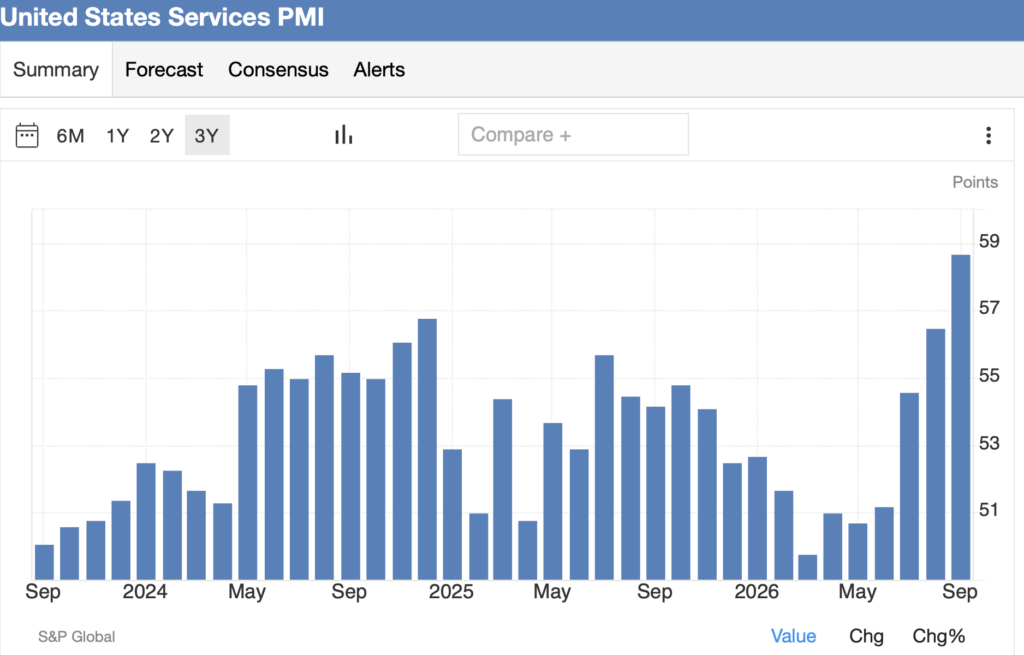
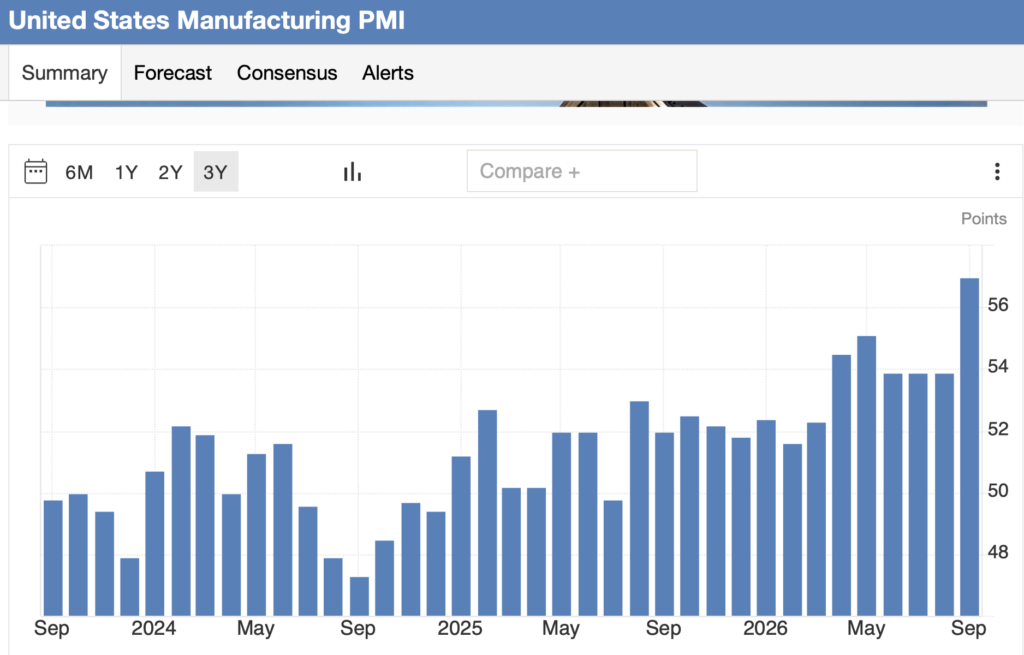
PMI images via Trading Economics
This PMI figure is significant, because services account for 75% to 80% of the U.S. GDP.
Meanwhile, manufacturing accounts for about 10% of gross domestic product. That part of the economy is also hot, with manufacturing growth accelerating at its fastest pace in at least three years.
On Wednesday morning, at about the same time as the PMI releases, Michael Barr, a member of the Federal Reserve Board of Governors and a voting member of the Federal Open Market Committee, indicated that further rate hikes would be needed to contain inflation.
Housing Holding Steady
According to Mortgage News Daily, the average 30-year fixed rate mortgage is now 7.17%, just shy of a 52-week high.
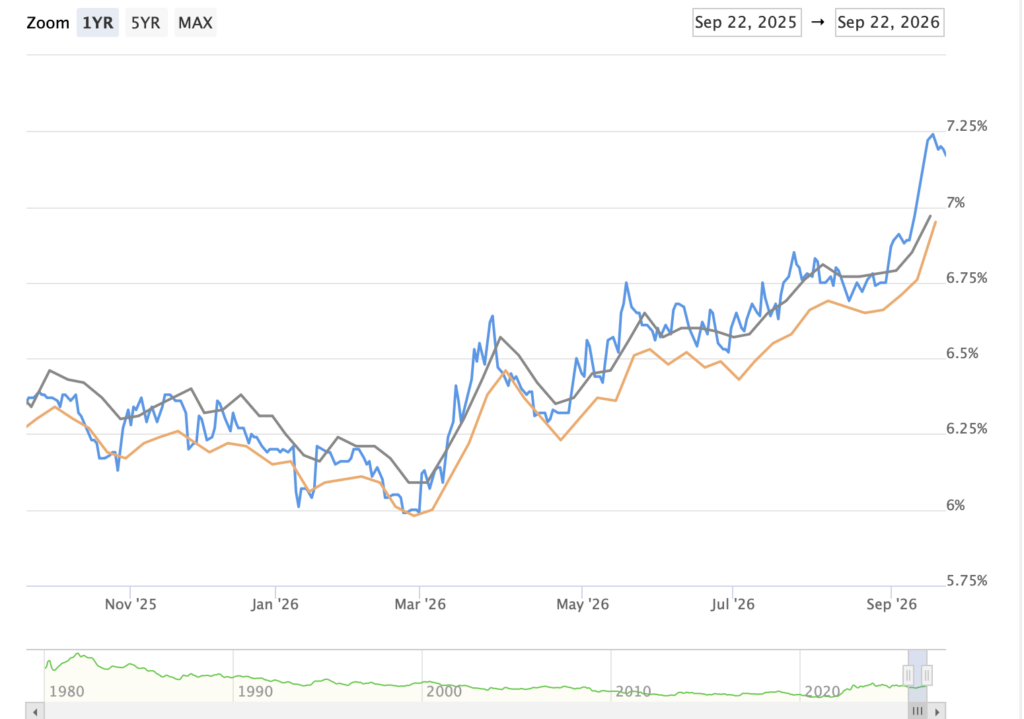
Mortgage Daily News
The housing market has been surprisingly steady. More than half of the 20 cities tracked by Case-Shiller saw housing prices reach new highs in June, as prices rose at their fastest pace in over a year.
While higher rates could eventually pull housing prices lower, there’s no sign of that happening right now.
Treasuries Soar
Thirty-year fixed rate mortgages are closely aligned with mid-to-long-term Treasury rates. The yield on the 10-year Treasury note soared after absorbing the PMI and Barr news, reaching its highest yield since July of 2007.
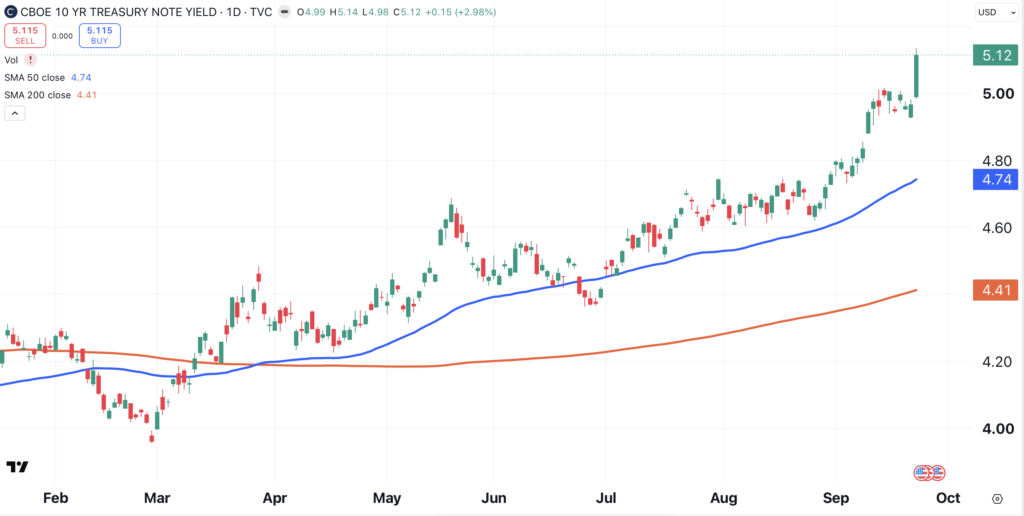
Charts via Tradingview
The 30-year Treasury bond also reached its highest yield since 2007.
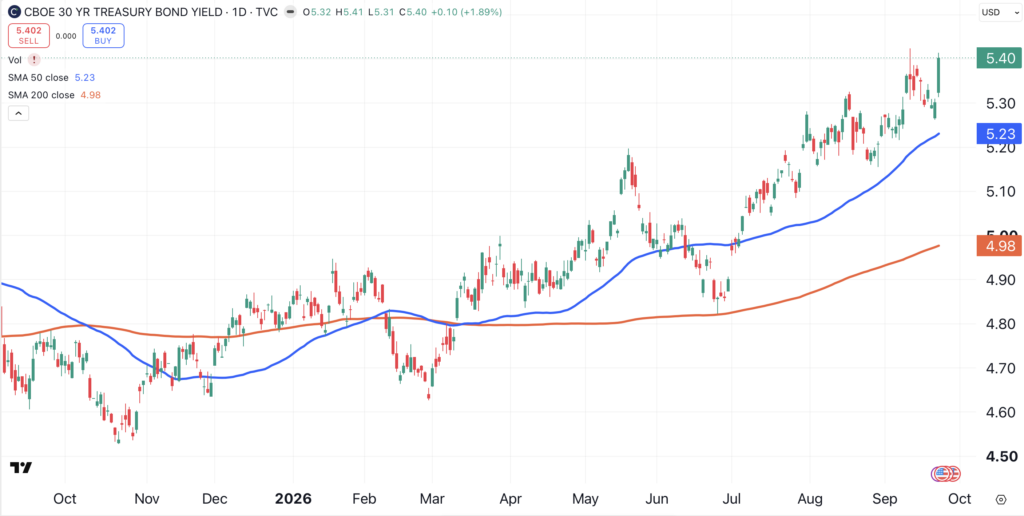
Sensitive to Rates
The high yields are putting pressure on interest rate sensitive sectors. The State Street Utilities Select SPDR (left chart, $XLU) has broken through an important trendline, while the S&P Homebuilders SPDR (right chart, $XHB) is currently testing an 18-month trend line.
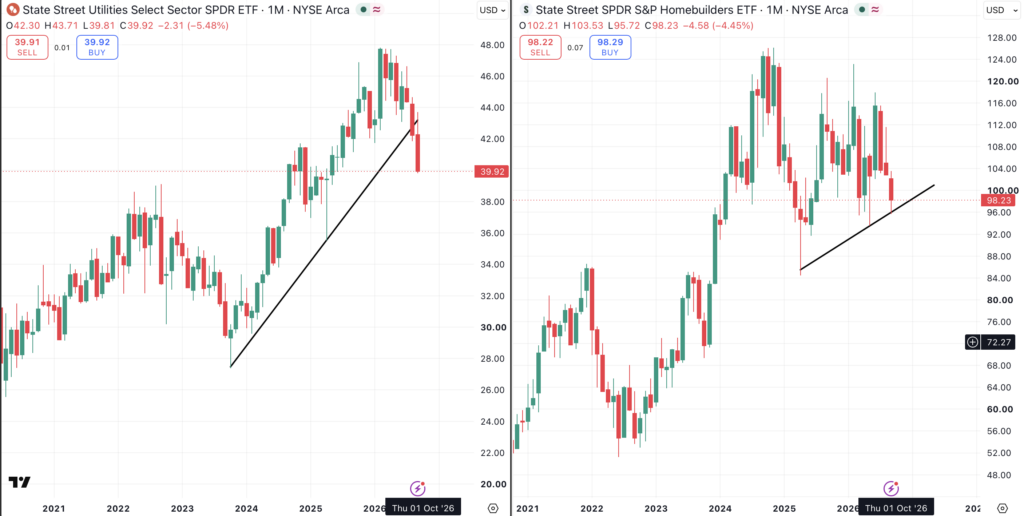
The broader market, however, appears unaffected by the rise in rates, and is still holding near all-time highs.
Not A Surprise
Rising interest rates are being felt in obvious places, like utilities and homebuilding stocks.
That’s not unexpected. High Treasury yields pull capital away from other yield-focused investments like utilities. Rising mortgage rates make it tougher to buy real estate.
None of that should come as a surprise, or be taken as a negative for the broader market.
Bottom Line
The doom and gloom crowd is very focused on Treasury yields. While it’s good to exercise caution, those yields might be hinting at something positive.
Earnings season is just around the corner, and it’s expected to be robust. The S&P 500’s third quarter earnings are expected to grow at a 24%-28% year-over-year pace.
Meanwhile, the U.S. economy is gaining momentum, as evidenced by Wednesday’s PMI reports.
What if Treasury yields are simply matching that momentum? Treasuries might be telling us that rates need to continue to rise, perhaps at a faster pace, in order to control inflation in a strengthening economic environment.
In other words, there’s no need to panic.
At the time of publication, Ponsi had no position in any security mentioned.
