Consumer Non-Durables Selling Off

As expected consumer non-durables (staples) are selling off.
We used the exaggerated strength provided by machines and algos in the last two days to reduce to tagends.
Positions: Long KO VS PG VS KMB VS
As expected consumer non-durables (staples) are selling off.
We used the exaggerated strength provided by machines and algos in the last two days to reduce to tagends.
Positions: Long KO VS PG VS KMB VS
If you’re searching for an explanation for why Tech, particularly semiconductors, has been so volatile, you can in part blame the overall negative gamma* regime in the market as Tier1Alpha indicated earlier this week.
But semis have an added pseudo-negative-gamma source in the huge amount of assets in leveraged ETFs tied to the space, which must rebalance near the close by buying or selling in the direction of each day’s move.
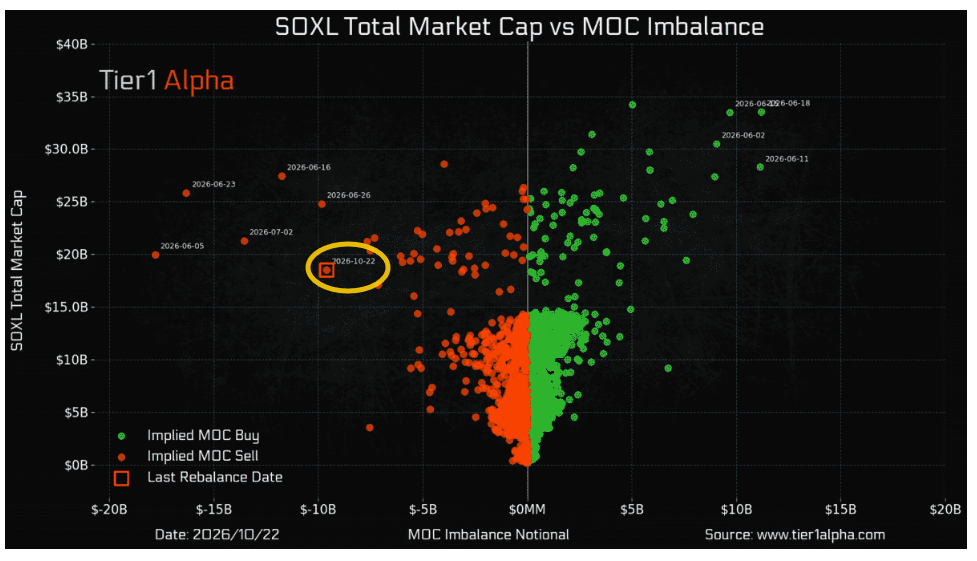
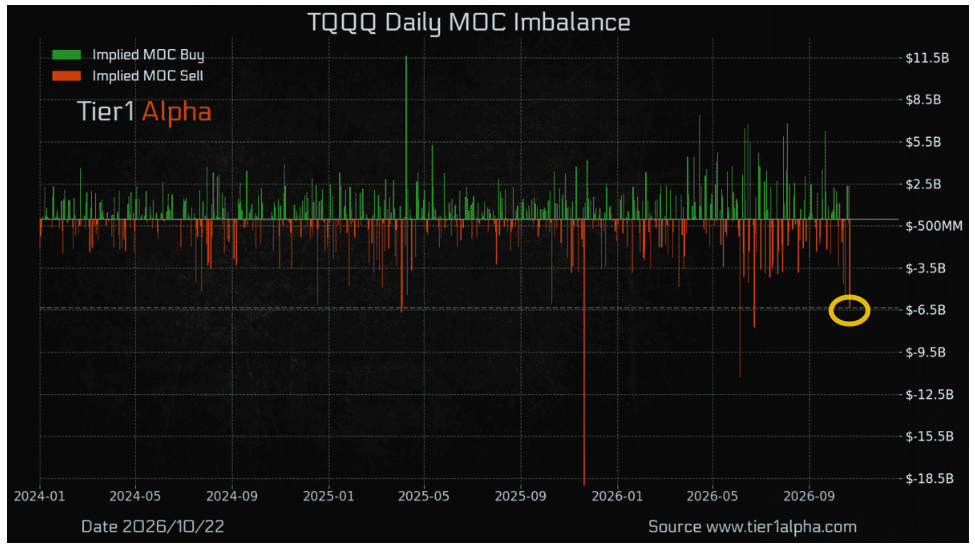
As Tier1Alpha notes: “we suspect these funds were the largest non-discretionary agents in the market yesterday.” The two biggest are the Direxion Daily Semiconductor Bull 3X ETF ($SOXL) and the ProShares UltraPro QQQ ($TQQQ) [‘the largest levered fund in the industry by market cap’], which together hold about $60 billion in assets.”
They estimate SOXL’s 20% decline forced a $9.5 billion market-on-close (MOC) sell imbalance, while TQQQ “contributed another $6.5 billion in MOC selling.”
*Gamma plays an important, if nebulous, role in market volatility. Positive gamma means options market makers buy and sell against price moves, which dampens volatility. Negative gamma means the reverse: market makers trade with the move, accelerating rallies and selloffs and adding to volatility.
Here is a great rescheduling timeline from The Dales Report:
Positions: None.
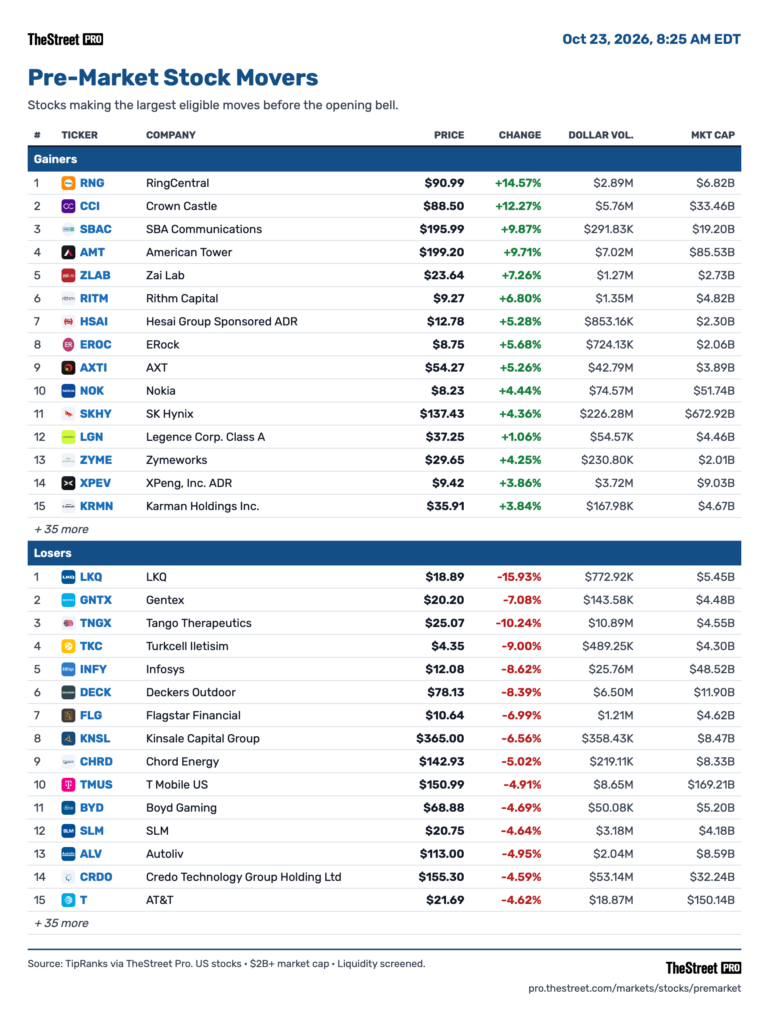
– $CCI +11%, SBAC +9.9%, AMT +8.5% (tower operators rise after a report that SpaceX is discussing infrastructure partnerships for a nationwide wireless buildout)
– $NOK +5.2% (Q3 profit beat as AI-and-cloud sales more than doubled and order intake surged)
– $LITE +3.5%, AAOI +2.3%, COHR +2.3% (optical-networking names gain on read-through from Nokia’s sharp AI-and-cloud order growth)
– $BAH +1.9% (Q2 profit beat offset a slight revenue miss)
– $TECK +1.7% (copper-linked stocks rise as copper prices advance)
– $FLG -8.3% (Q3 profit and revenue missed expectations)
– $DECK -8.2% (quarterly sales missed and the FY sales outlook was cut, while the higher EPS guide relied partly on tariff refunds)
– $INFY -8.2% (FY revenue-growth guidance was cut to 1%-2% despite strong large-deal wins)
– $ALV -5.2% (Q3 profit and sales missed as cost headwinds weighed on results)
– $CRDO -4.6% (AI-infrastructure hardware weakness continues amid concerns over the pace and returns of sector spending)
– $TMUS -4.5%, T -4.4%, VZ -3.9% (wireless carriers fall after a report that SpaceX is pursuing a nationwide cellular-infrastructure program)
– $BE -3.9% (record results and raised guidance were not enough after a major AI-power rally)
– $MRNA -3.7% (extends losses following leaked cancer-vaccine data that disappointed investors)
– $FIX -3.1% (earnings beat, but the CFO retirement and elevated expectations drive a sell-the-news reaction)
– $ACN -2.7%, $CTSH -2.0% (IT-services names fall after Infosys cut its FY growth outlook)
– $WDC -1.9%, STX -1.4% (storage names retreat despite WDC’s beat-and-raise report as elevated expectations trigger profit-taking)
Not easy these days to be an ECB policymaker.
The euro area flash PMIs showed that while the “eurozone economy starts the fourth quarter with businesses reporting further robust growth… consistent with GDP growing at a 0.3% quarterly cadence,” according to S&P, France was a key outlier.
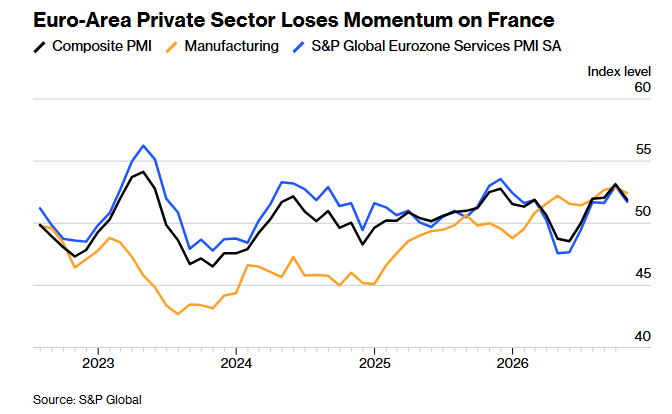
While growth cooled modestly across the region S&P said “French private sector output moved back into contraction in October, following a first rise in 10 months during September,” with business confidence “the lowest since 2012 if the pandemic is excluded.”
Slowing growth only adds fuel to budget concerns in France, putting further pressure on French bonds. Rather than pulling back this week along with other developed-market yields, French yields instead surged the joint-most since March 2025, according to Bloomberg.
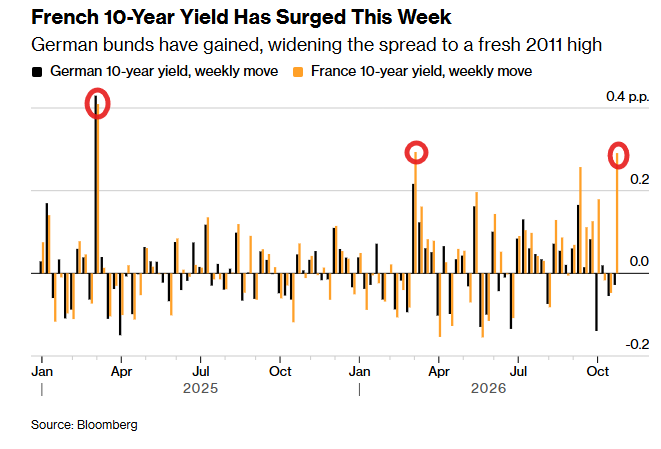
Pushing the spread between French 10-year debt and the German equivalent up 32 basis points so far this week, the most in records going back to 1990, according to data compiled by Bloomberg. “The yield gap now stands around 1.7 percentage points, more than double the level from May.”
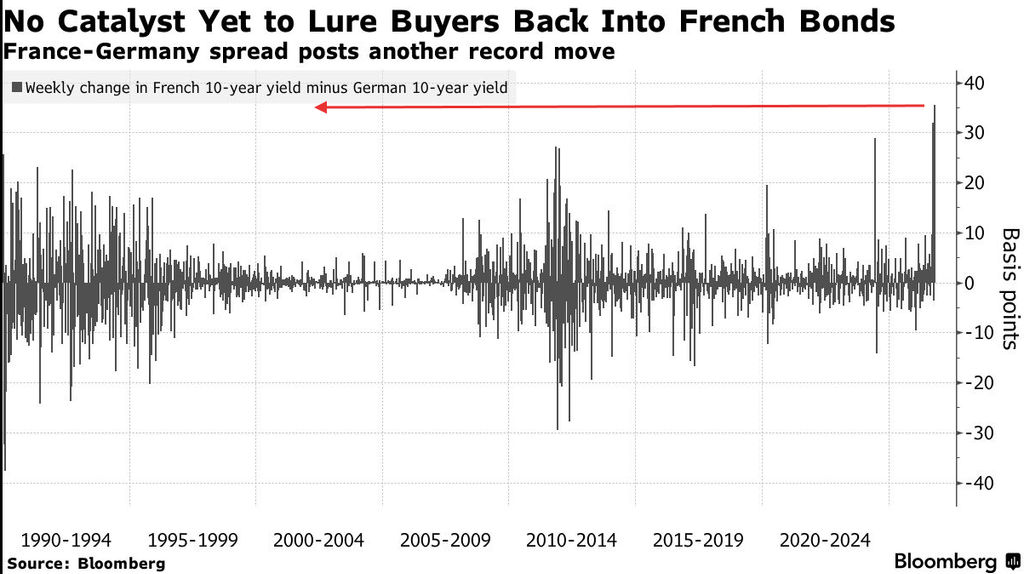
This puts the ECB in an increasingly tricky spot, weighing turmoil in the French bond market against inflationary pressures that, according to S&P, are far from extinguished:
“Key to the broader slowdown is the further escalation of inflationary pressures seen during the month. Input costs are rising sharply again, the rate of increase surging in manufacturing on the back of higher energy prices, causing firms to push selling prices higher in order to protect margins.”
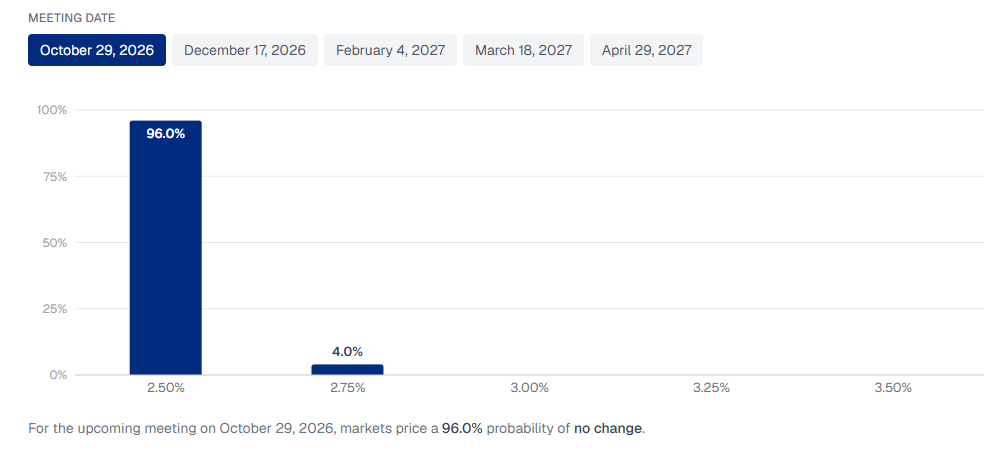
So policymakers are in an uncomfortable spot heading into next week’s meeting. A hold is widely expected, but markets are still pricing further hikes to fight inflation, just as France’s economy stalls and its bond market comes under strain.
Source: TheStreet Pro
Amex delivers, OpenAI’s capital raise and a potential one for Meta. Plus other headlines moving the market this morning.
Source: TipRanks
Bill Ackman on CNBC yesterday:
Watch CNBC’s full interview with Pershing Square CEO Bill Ackman
Here is Pershing Square’s 13F filing:
Position: None