Diesel Crisis: Stalking Amazon, Selling Hunt and Warsh’s Fresh Approach

JB Hunt Transport Services ($JBHT) hit a rough patch of road on Wednesday. Shares of the fourth-largest U.S. trucking outfit drove off a cliff, falling nearly 13% as company officials complained of sharply higher diesel costs. Diesel prices have soared by about 30% since July 1.
The Lowell, Arkansas-based trucker reached an all-time high in mid-July (point A). Now the stock is trading below its 200-day moving average (point B). From here, it’s not difficult to imagine JB Hunt falling to its March low of $195 (point C).
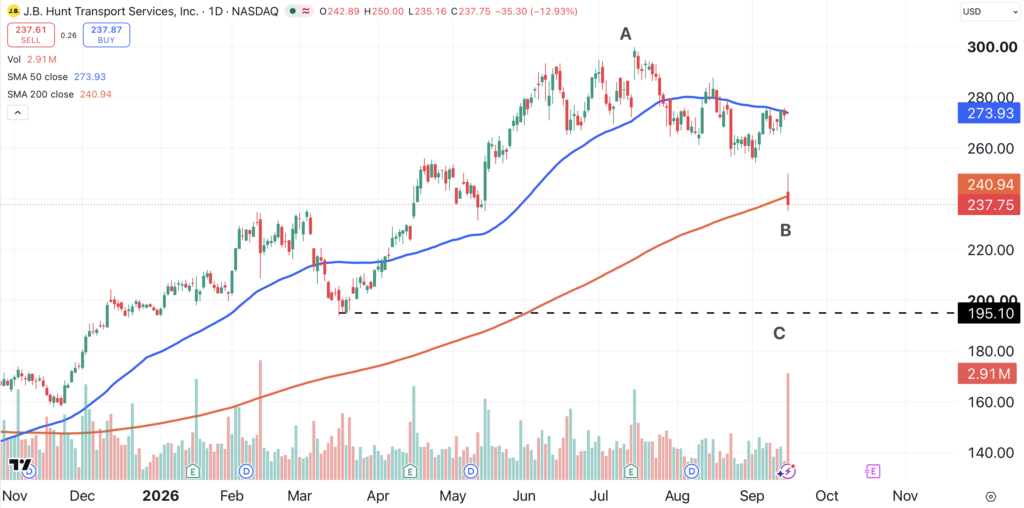
By selling now, we can lock in a 14% gain. That’s nothing to get excited about, but I believe the stock is headed lower from here. Wednesday’s selloff occurred on the stock’s highest volume this year, a negative signal going forward.
Risk management note: When a stock quickly falls from its all-time high to below its 200-day MA, it’s time to head for the exit.
Amazon in My Sights
The ramifications of rising diesel costs go far beyond JB Hunt. Amazon ($AMZN) uses significant amounts of diesel fuel for logistics and deliveries. The company also uses diesel in the backup generators for its Amazon Web Services (AWS) and data centers.
That said, I don’t see diesel costs having a significant impact on Amazon’s operations or its share price.
However, if Amazon should pull back for any reason, I’d consider buying shares on a bullish trendline that has remained intact for over three years (black line). That trend line provided excellent entry opportunities in 2025, and earlier this year (arrows).
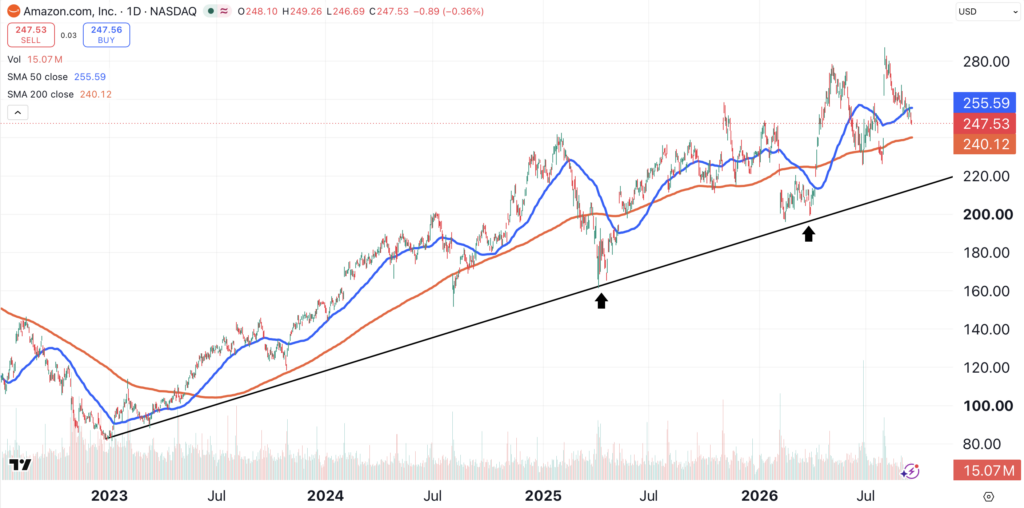
We’ll step into Amazon on any pullback to the vicinity of that trend line. We’re currently looking to buy the stock in the $220 to $225 area.
Fed Decision Notes
“We need to look outside the window and interrogate reality”
-Federal Reserve Chairman Kevin Warsh
The Fed did what it needed to do, raising the fed funds rate by 25 basis points. It needs to do more, and it will. Sixteen of 18 FOMC members see at least one more rate hike this year.
The U.S. is merely keeping pace with its G7 peers. Last week, the European Central Bank raised its key interest rate by 25 basis points. Later this week, the Bank of Japan is also expected to raise its key interest rate by 25 basis points, to a 31-year high.
Warsh’s 3 Observations
Warsh made several notable remarks at his post-FOMC press conference. His first rate hike coincided with his third FOMC meeting as Fed chairman, and he was asked what had changed over the seven weeks since the July meeting. Why raise rates now, but not in July?
Warsh made the following observations, over the past seven weeks:
- The economy has strengthened
- Inflation has continued to trend higher
- The FOMC’s judgement about the geopolitical situation has changed
New Approach
Warsh seemed almost strident while reiterating his call for lowering the inflation rate to its 2% target rate. He deflected baited questions about accommodative versus restrictive rates. Despite cajoling from the press, he refused to obsess over specific data points.
We don’t talk enough about some of the Fed’s massive failures, including Warsh’s predecessor keeping rates too low for too long. The FOMC’s poor judgement turned a supposedly transitory inflation environment into a seemingly permanent one.
Why would Warsh employ the same concepts and metrics that led to these poor decisions? By favoring trends over data points, and rejecting the concept of a so-called neutral rate, Warsh is offering a badly needed fresh approach.
Hopefully, he’ll be able to deliver better results than his predecessor.
At the time of publication, Ponsi had no positions in any securities mentioned.
