Charting the Markets: History Says Down June/July Is Warning Sign. Is It?


It was a valiant effort by the bulls, but unfortunately the S&P 500 finished down for a second straight month. It was only 10 points lower than the close on June 30, some might say it was negligible. But following a down month of June, history says the rest of the year is likely to stumble. Past years have shown that a down June/July says markets will be lower the next five months.
Now, each of those scenarios had some unique circumstances, and today’s market is totally different. The S&P is within earshot of a new all-time high, while the Nasdaq has been choking (so have small caps for that matter).
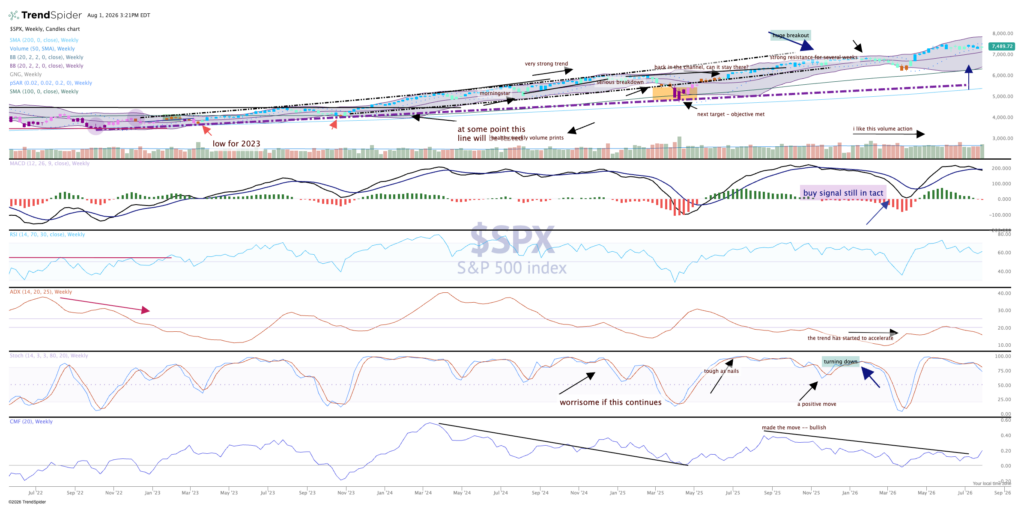
The biggest names of the market have been rising to the occasion, and that may just continue through the summer and fall. We have noticed a shift in capital flows, that is mostly due to some rotation out of tech into other sectors. That sort of switch is a healthy situation, but when money flows back into growth we can expect tech stocks to get the call.
The new month starts this week, as indicators are still rolling over. The bulls need a couple of back-to- back strong weeks to move those indicators back into the bullish column.
At the time of publication, Lang had no position in any security mentioned.
