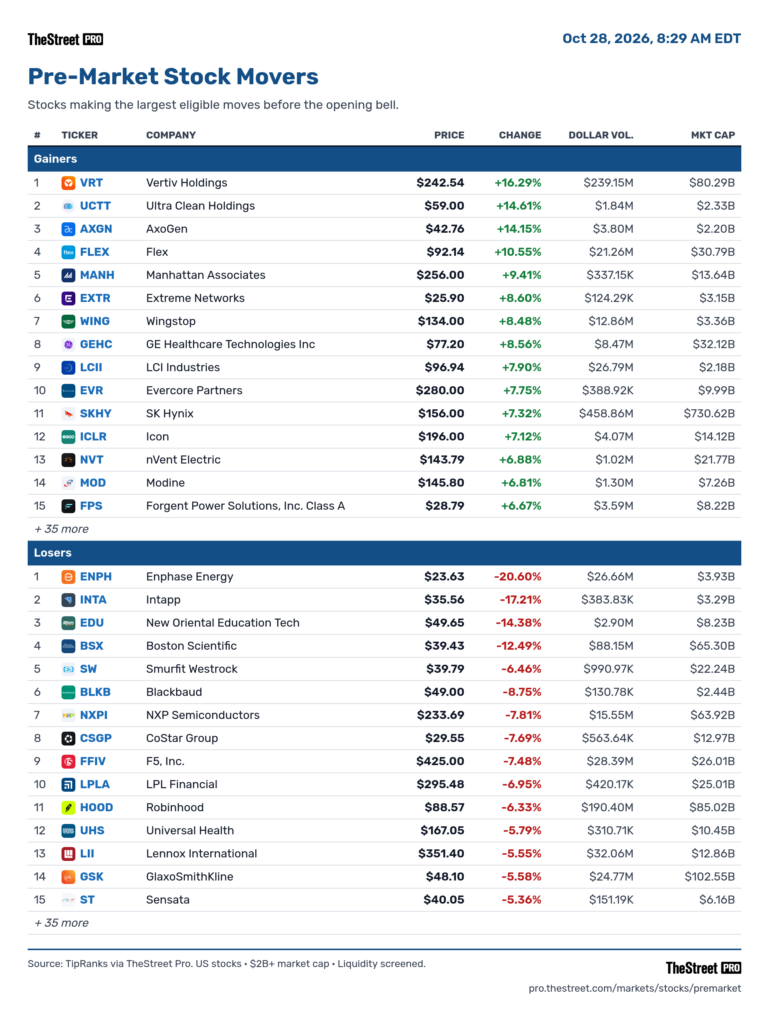
Economic Calendar for Today

Source: TipRanks
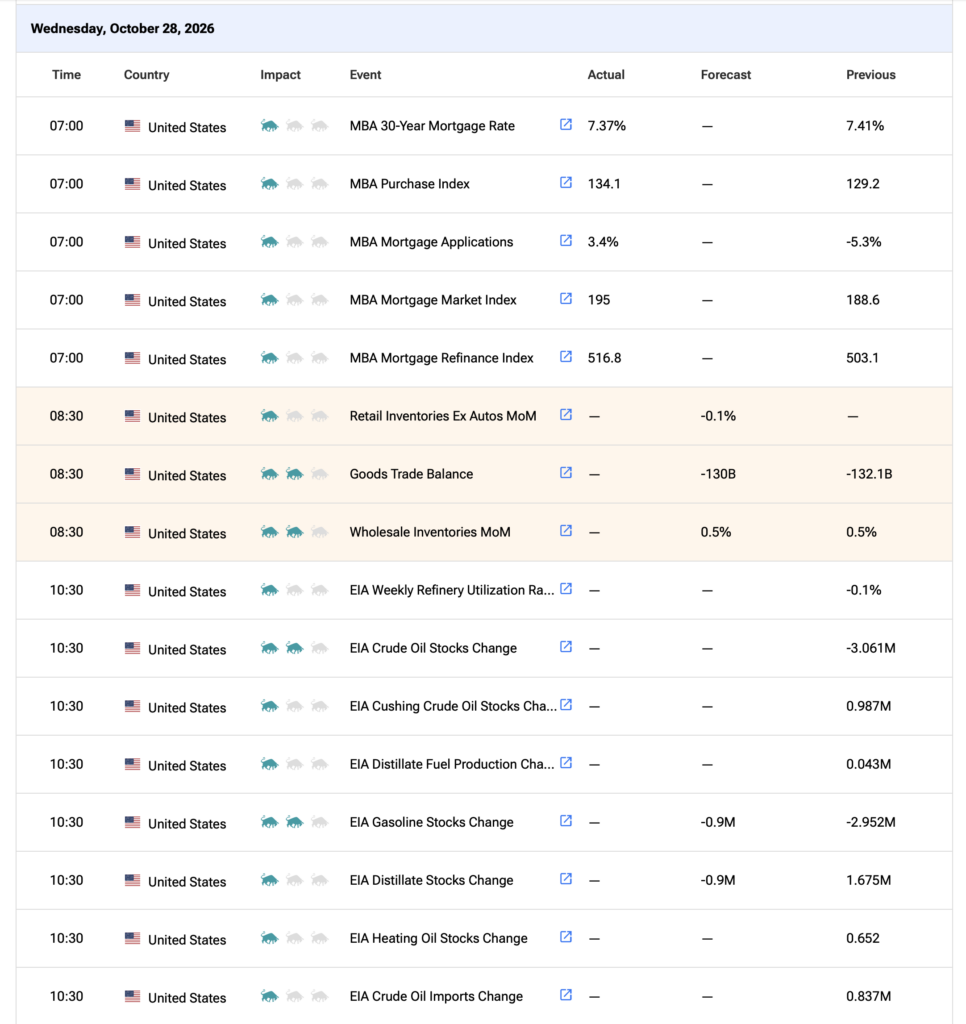
Source: TipRanks
– $ULBI +145% (agrees to be acquired for $16.00 a share in cash)
– $BOOM +21% (Q3 sales and adjusted EBITDA exceeded the high end of guidance as backlog and cash flow strengthened)
– $AXGN +16% (Q3 beat and full-year revenue guidance was raised)
– $VRT +16% (Q3 organic orders more than doubled and full-year sales guidance was raised by $650 million)
– $UCTT +15% (Q3 results and outlook drove a sharp upside reaction)
– $LUNG +12% (Q3 results and outlook drove a sharp upside reaction)
– $GEHC +9.7% (Q3 beat, full-year EPS and free-cash-flow guidance was raised, and a $945 million acquisition was announced)
– $FLEX +9.5% (fiscal Q2 beat and the full-year outlook was raised)
– $LCII +7.6% (confirms an unsolicited $101-a-share cash acquisition proposal)
– $SKHY +7.5% (quarterly revenue exceeded 100 trillion won for the first time)
– $STLA +6.9% (Q3 net loss narrowed about 90% and the 2026 outlook was reaffirmed)
– $ETSY +6.6% (announces a leadership transition)
– $SNDK +4.2%, MU +3.6% (memory names rise after SKHY posted record quarterly revenue)
– $GEV +2.4% (Q3 orders surged 96%, backlog reached $197 billion, cash-flow guidance was raised and the buyback authorization doubled)
– $RAPP -23% ($350 million of stock and convertible-note offerings priced alongside a $30 million private placement)
– $ENPH -19% (Q3 revenue missed and the Q4 sales guide was roughly 20% below consensus amid weak US residential-solar demand)
– $INTA -17% (quarter beat, but the fiscal-year outlook failed to clear elevated expectations)
– $EDU -13% (fiscal Q1 results disappointed investors)
– $BSX -12% (Q3 EPS missed and Q4 and full-year profit guidance came in below consensus)
– $LOGI -12% (holiday-quarter sales guidance called for a decline and included a $70 million–$80 million supplier-incident hit)
– $SEDG -8.7% (solar-equipment sympathy decline following ENPH’s weak demand commentary and Q4 guide)
– $NXPI -8.1% (Q3 beat, but the Q4 guide was only roughly in line and fell short of elevated expectations)
– $FFIV -7.6% (Q4 beat, but fiscal 2027 growth guidance disappointed and operating margins contracted)
– $HOOD -6.4% (revenue missed as crypto revenue fell 55%, outweighing an EPS beat and record total revenue)
– $GSK -5.8% (headline Q3 beat was offset by weak vaccine sales, soft new-product performance and unchanged guidance)
– $LII -4.7% (Q3 profit fell, segment margin contracted 240 basis points and the full-year EPS outlook disappointed)
– $STX -2.5% (fiscal Q1 results prompted a modest sell-the-news reaction)
– $V -1.7% (fiscal Q4 earnings and revenue missed forecasts despite healthy payment-volume growth and a 16% dividend increase)
Knowledge@Wharton Why Narcissistic Leaders Don’t Like Remote Work.
Why Narcissistic Leaders Don’t Like Remote Work – Knowledge at Wharton
Positions: None.
Beginning at around 6 AM I shorted more indices on a scale.
Here is my cost basis today:
* $SPY $771.07
* $QQQ $724.38
Position: Short SPY (M) QQQ (VS)
Subscriber jryan (below) delivered some reasonable comments and criticism yesterday in the Comments Section.
Basically he said he is “getting sick of reading about cannabis and Fin TV commentary” — and he wants more (long) stock suggestions, etc.
I wanted to respond in the first column of the day.
* Few longs have represented value to me as I have been unduly negative for a lengthy period of time. I take ownership of that.
* The stocks that I have owned have recently been Staples ($KO, $PEP, $PG and $KMB), selected cannabis names and some others. The consumer nondurable stocks have been fine recently (and I have taken profits in them). We shall see about cannabis — a speculative sector and my focus has been intermediate-term based on the improved likelihood of rescheduling and other factors clearly delineated in my Diary.
*As to the CNBC constructive criticism. I point these out not only as an advocate of the retail viewer that should see timestamps (panelists taking ownership) and observe better company interviews, but so they can evaluate the merits and process of the panelists’ recommendations and become better-informed investors through more hard-hitting interviews (that serve more than as a marketing tool of companies).
* But the criticism directed to Fin TV also is intended to highlight investment recommendations from panelists and guests that I strongly disagree with. Choosing stocks to avoid (in that FIN TV criticism) can be as valuable or even more valuable than choosing stocks to buy. Consider my negative comments towards $BA, $BABA, $META, $UBER, $NFLX, $RDDT, $TTAN, $DIS, $CLF, $MRNA and $UNH (a few years back) etc. that were mostly confidently and strenuously recommended on CNBC.
* My “More Tales From Nvidia” series is intended to deliver the idea that the functionality, productivity and ROIC on the enormous capital spend may disappoint the many and multitude of optimists on AI. I have felt that my contrarian and non herd-like observations were valuable in a backdrop of near-universal bullishness (that is readily and frequently available from the buy/sell sides, panelists and guests). My view was that dwelling on “More Tales” had statistical value in that over 40% of the S&P is comprised of large-cap tech.
* As to specific AI beneficiaries, I have admitted (often) of missing $MSFT and $GOOGL. The valuation on $AAPL seems foolish to me — the shares have prospered and I have been wrong. But the others ($META, $AMZN and even $NVDA) have not set the world on fire this year. As to memory and chip stocks, they have been “the world’s fair” up until the summer but awful since late June. Not only do I think these companies are “overearning,” but the volatility is not for me and not consistent and doesn’t conform with my appetite for risk.
* The financial stocks were quite strong until early summer. I repeatedly cautioned not to embrace banks, brokers and private equity shares (I successfully shorted $BX, $KKR and $APOL since then). Viewed by panelists as perhaps the best “value play,” financials have been dismal over the last four months. We avoided this decline (in $C, $JPM, $BAC, $GS, $MS et al).
* The stocks that I have been short in the AI sphere have been terrific (to the downside) — $ORCL and $CRWV. (Avoiding them as longs has also been a valuable contribution.) My recent foray into shorting NVDA was profitable also.
* As to my preoccupation with CNBC I suggest taking the number of words written about FIN TV and divide it by the number of words written on other subjects daily. You will find my criticism is dwarfed by my other columns. In the scheme of things my criticism is de minimis.
* Finally, to jryan I say there are many other contributors that actively recommend longs and provide a valuable service.
All this said I am imperfect.
I take ownership of my mistakes.
The transparency of my Diary exposes my blemishes.
I believe jryan has some good points and I will purposefully look for more long ideas in the future.
I truly appreciate jryan’s comments and I have tried to respond to his concerns:
jryan
Just a thought. There used to be a lot of different investment ideas, stock suggestions etc., but all it seems to be now is cannabis and CNBC commentary, which I don’t watch anyway. Kind of getting sick of it, especially the cannabis info, is it ever going to pay off? Likely, but it will be quite a while from today, if ever. But at least it’s easier to scroll through the commentary and use less time.
Position: Long KO (VS), PG (VS), KMB (VS), MSOS common (VL) and calls (VS), VRNO (VS), GLAS (S), GTBIF (S), TRLV (VS), CURLF (VS); Short AAPL (S)
Position: None
The S&P Short Range Oscillator remains in overbought at 0.91% vs. 0.80%.
Yesterday I re-shorted the indices.
Position: Short SPY (M), QQQ (VS)
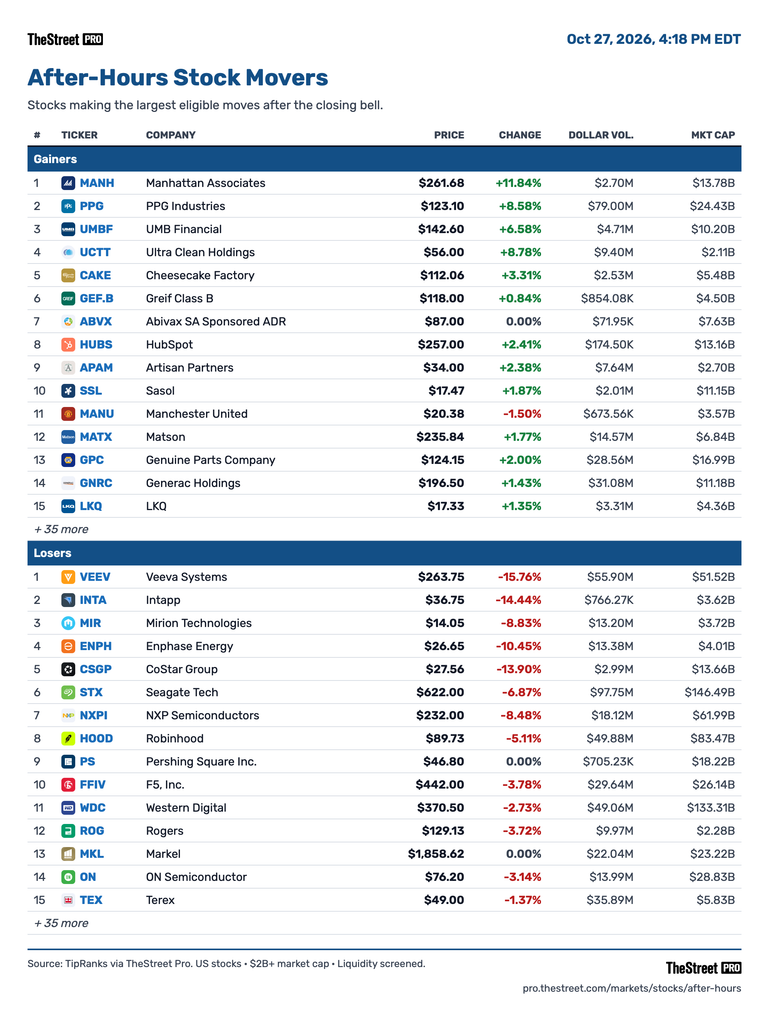
Position: None