Boockvar on ISM Services

The following is from Peter Boockvar:
ISM services and its contribution to growth
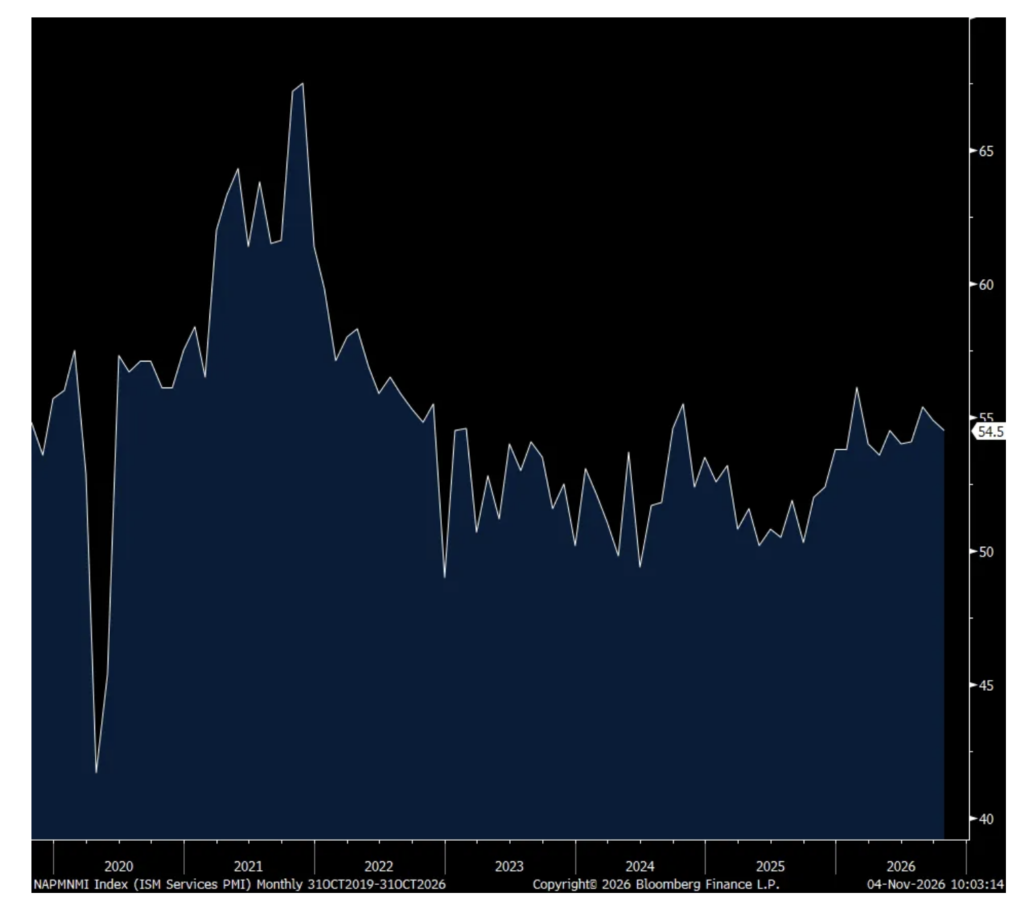
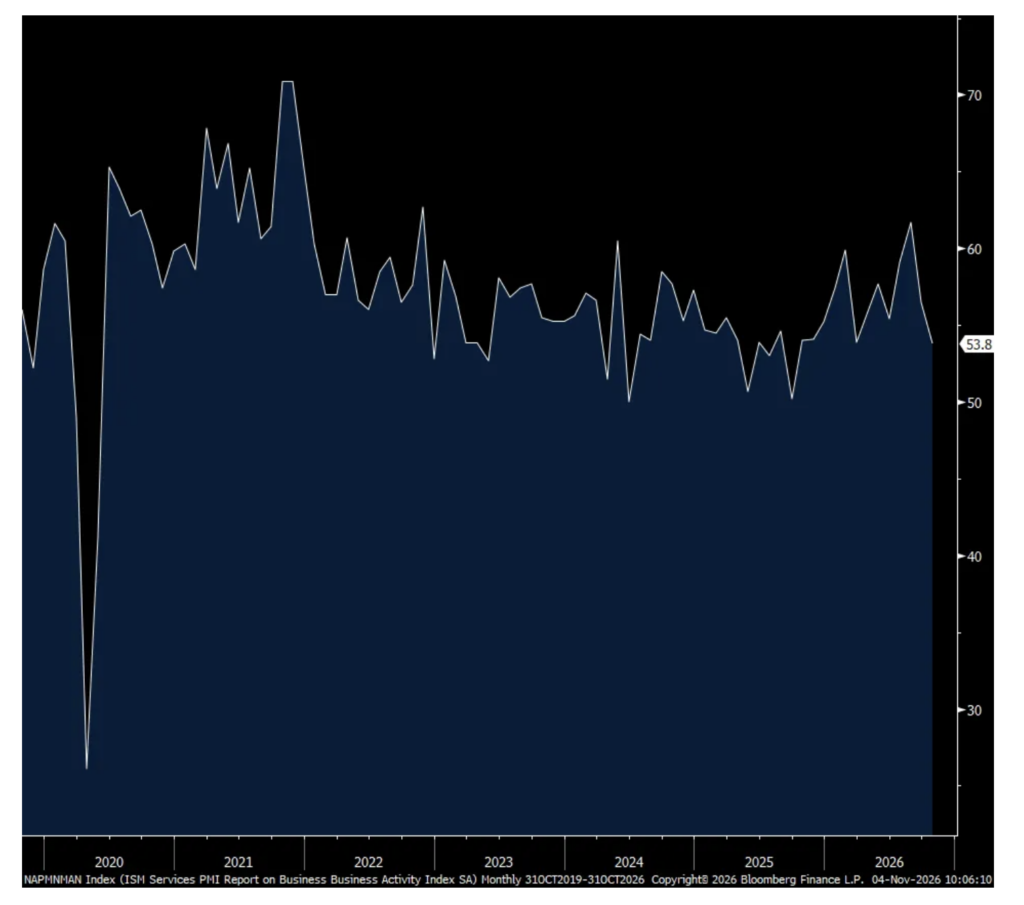
The October ISM services index fell a touch to 54.5 from 54.9 and just below the estimate of 54.8. The Business Activity component in particular fell by 2.7 pts to 53.8 which is the lowest since September 2025.
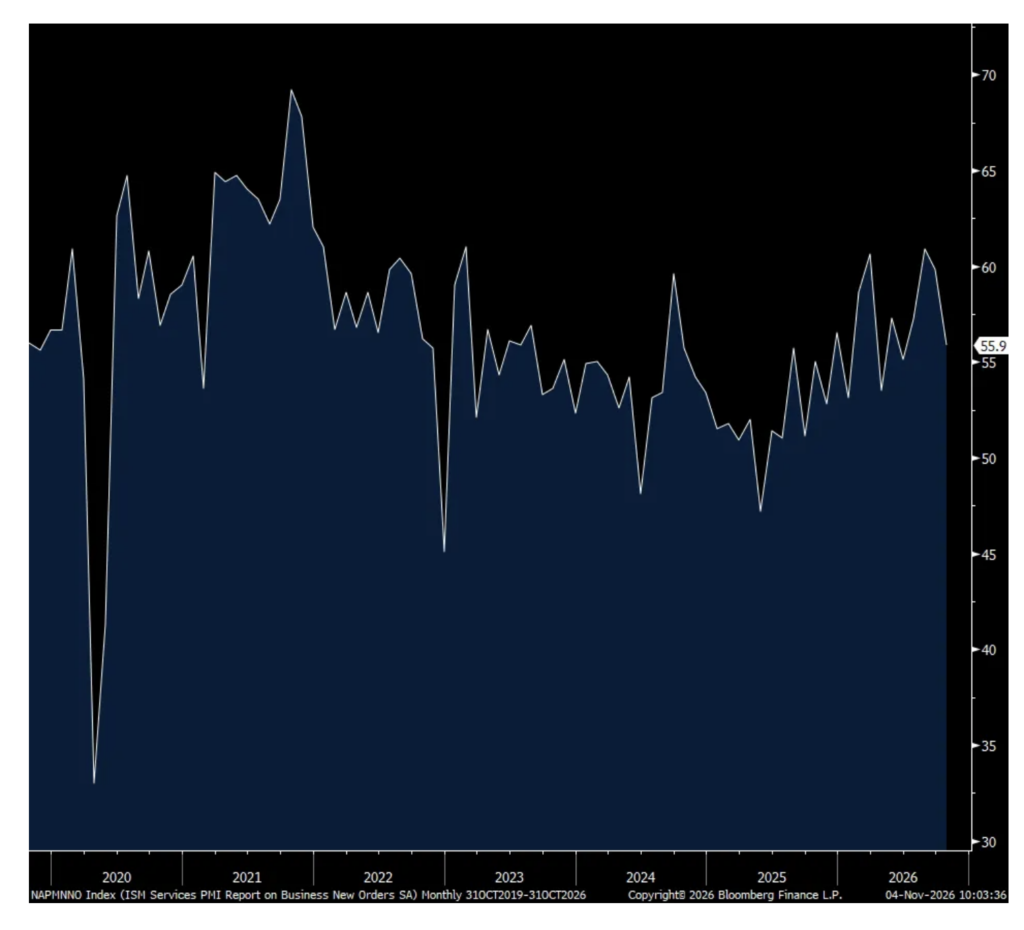
New orders remained well above 50 but declined by 3.9 pts to 55.9, a 4 month low. Backlogs rose 1.4 pts to 58, the highest since July 2022. Inventories slipped by 2.4 pts to 55.4, about in line with the 6 month average.
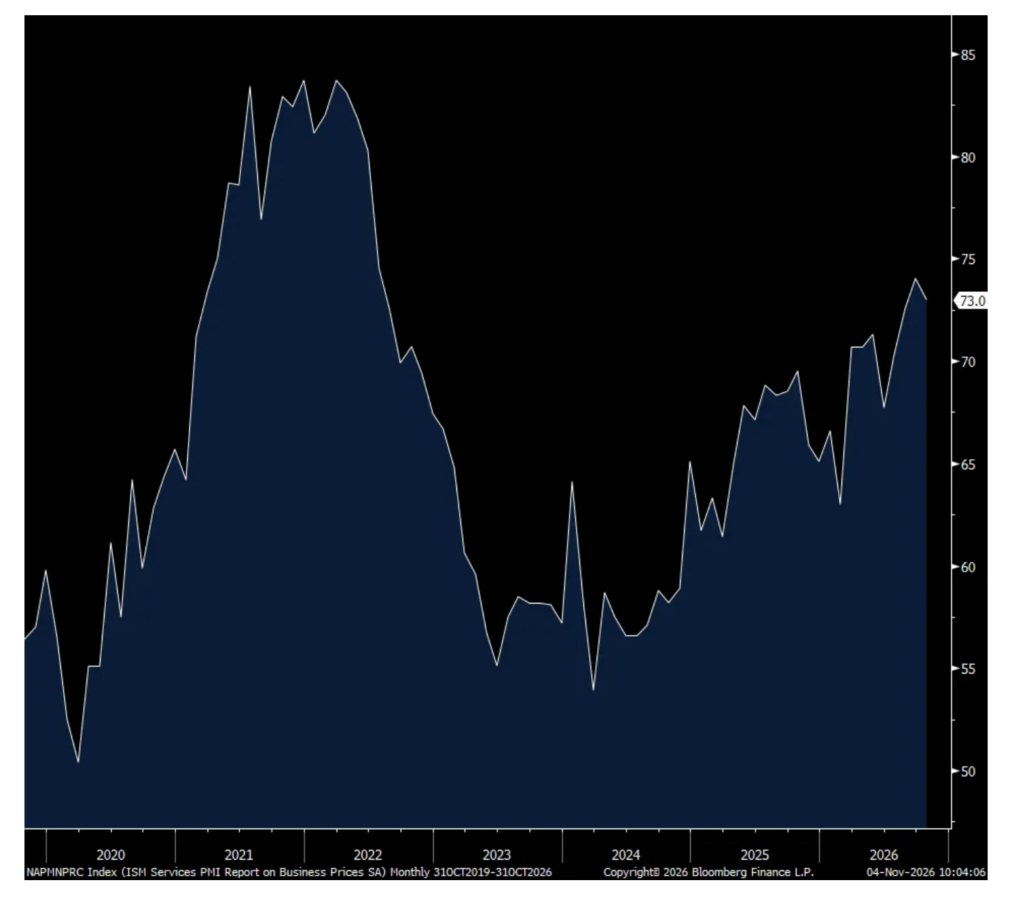
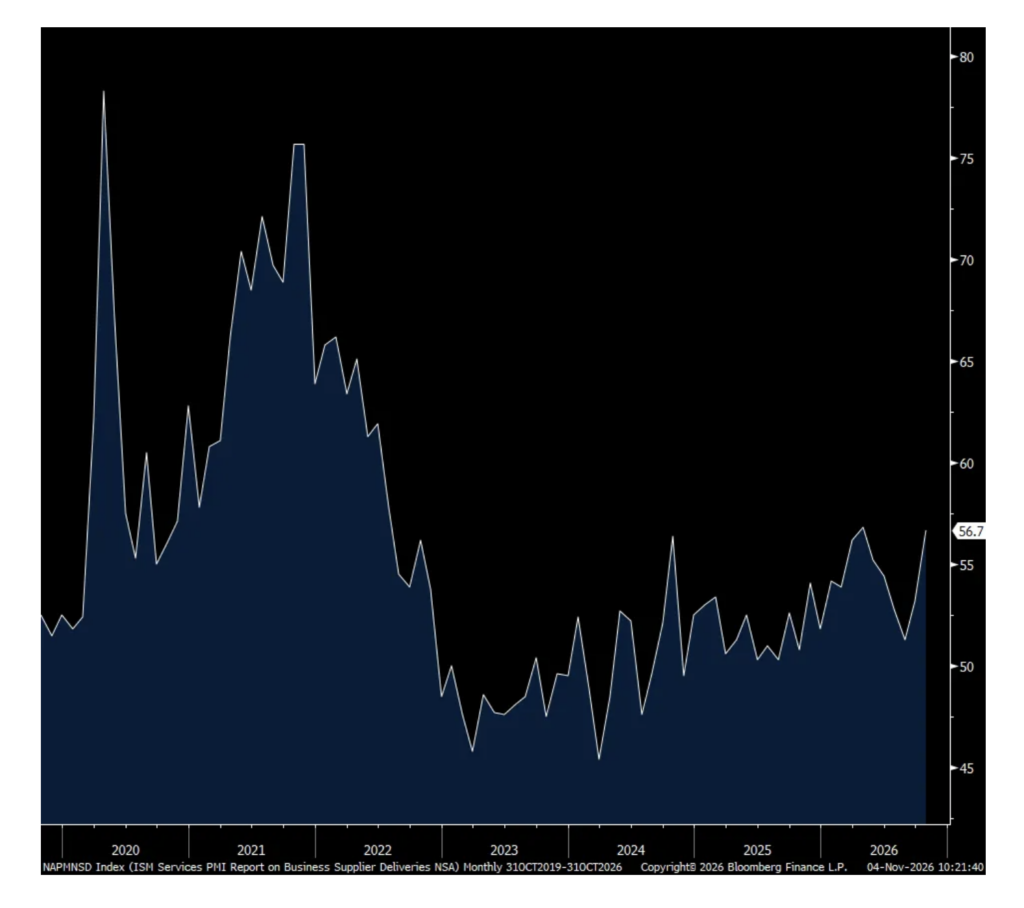
Reflecting still supply chain challenges, Supplier Deliveries rose by 3.5 pts to 56.7, the highest since April. Prices Paid fell 1 pt but staying very elevated at 73. To both of these components, the ISM said “Tariffs and fuel cost impacts continued to be the most-cited issues impacting respondents’ supply chains, while many respondents indicated they are not yet seeing the full impact of these cost escalations or have not passed them through to customers. This indicates that more pricing pressure is on the way if oil and tariff cost impacts are not mitigated, even if they do not increase from current levels. Commentary on supply chain constraints increased significantly month over month.”
Also of note, “No commodities were reported as down in price in October, with fuel reported as up in price for a ninth month in a row. Memory products were reported as up in price for the 10th month in a row, and memory components were reported as in short supply. The number of commodities in short supply decreased from seven to three, all related to computer technologies.” 17 industries of 18 paid higher prices and none paid less.
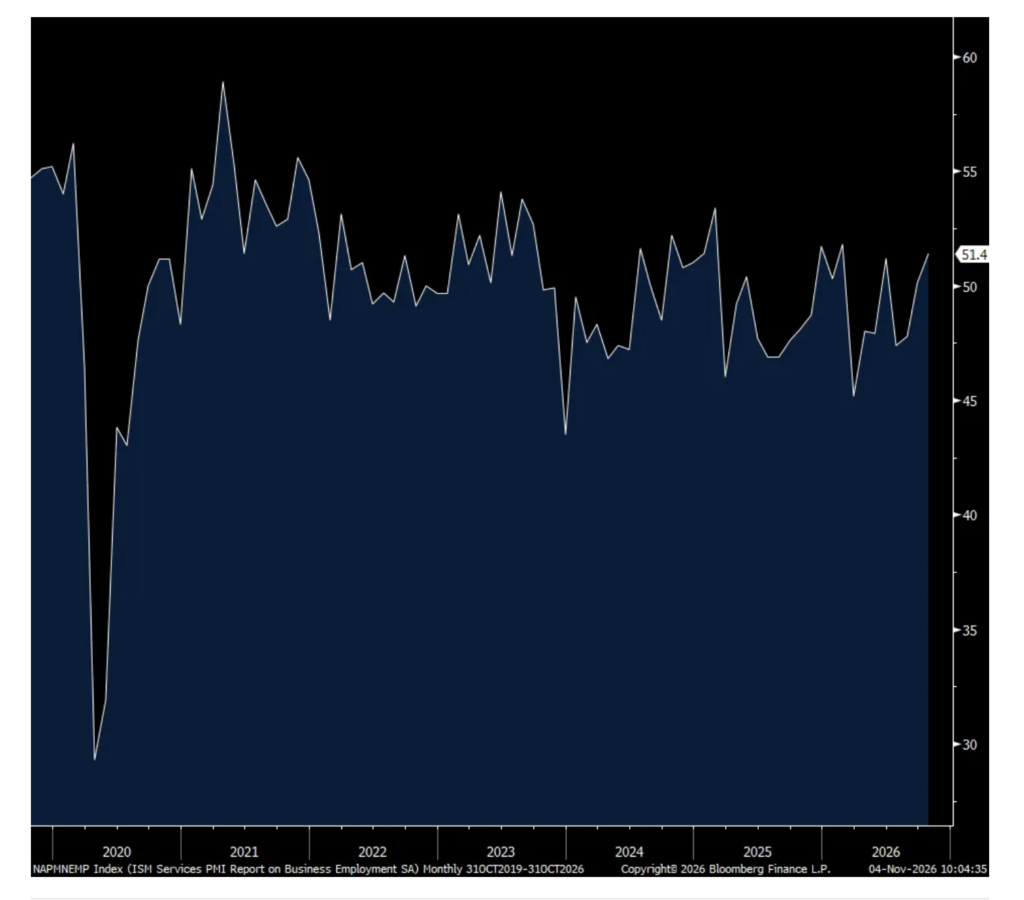
Employment was just above 50 for a 2nd month, up 1.3 pts to 51.4.
Industry breadth improved with 15 of 18 seeing an expansion in their business vs 13 in September. Just two reported a contraction vs four last month.
Bottom line, the services side of the economy remains the dominant force and continues to contribute most of the growth and we have a good idea of the main contributors.
With respect to the respondent comments seen below, tariff talk is still around.
“Fuel and freight markets continue to exert pressure on distribution cost planning. The continued war in Ukraine and drought in the Midwest along with fuel and fertilizer costs are driving up the cost of wheat (30 percent year-over-year).” [Accommodation & Food Services]
· “Overall demand is sluggish.” [Agriculture, Forestry, Fishing & Hunting]
· “Activity remains steady, with a strong backlog of institutional and commercial projects. Material availability has generally improved, though some mechanical and electrical equipment still requires early procurement. Labor shortages and wage pressure continue to impact the market, while higher financing costs are causing owners to closely evaluate project budgets and schedules. Overall outlook remains cautiously positive.” [Construction]
· “Purchasing operations continue to be impacted by elevated costs for goods and services, particularly in construction, facilities maintenance, technology and contracted services. Ongoing uncertainty surrounding tariffs, labor availability and broader economic conditions continues to influence supplier pricing and procurement planning. While overall supply chain conditions have stabilized compared to previous years, suppliers remain cautious with pricing commitments, and cost pressures continue to affect budgets.” [Educational Services]
· “Our company’s AI utilization is increasing, but we have guardrails in place to cap token utilization and evaluate TCO. The price of diesel has impacted our commercial trucking business, and Hurricane Isaias temporarily caused a moratorium on binding certain policies in parts of Alabama, Mississippi and Florida.” [Finance & Insurance]
· “Fuel prices are impacting many of our consumables and delivered goods. This has reduced margins, as we have not passed the expense to our customers because we believe it will be a short-term condition.” [Information]
· “While business activity remains strong, the impacts of tariffs, increased fuel prices, and longer lead times are becoming more challenging.” [Management of Companies & Support Services]
· “Tariffs are causing havoc with international merchandise sourcing.” [Retail Trade]
· “Generation demand is strong. Supplies for services, equipment and materials are constrained. Nuclear uprates (or power level increases) and next-generation plants have strong tailwinds but regulatory headwinds.” [Utilities]
· “Tariff policy remains the main driver of landed cost: Section 301 duties in force since late July replaced the expired flat tariff, raising duties on Southeast Asian canned and dry goods. Ocean freight from Asia remains elevated and volatile, and U.S. East Coast port congestion is expected in November. El Niño is constraining fish supply, and we have suspended one source. Some Asian suppliers have delayed shipments by weeks or months and are raising prices on beverage items and reducing prices on others. Inventory is high in aggregate but unevenly distributed, so service gaps persist on selected items.” [Wholesale Trade]
ISM Services
Business Activity
New Orders
Prices Paid
Supplier Deliveries
Employment