Increasing Exposure to This Chip Name as Shortage Endures


Plus, two other Portfolio positions we’re keeping close tabs on.
Plus, two other Portfolio positions we’re keeping close tabs on.
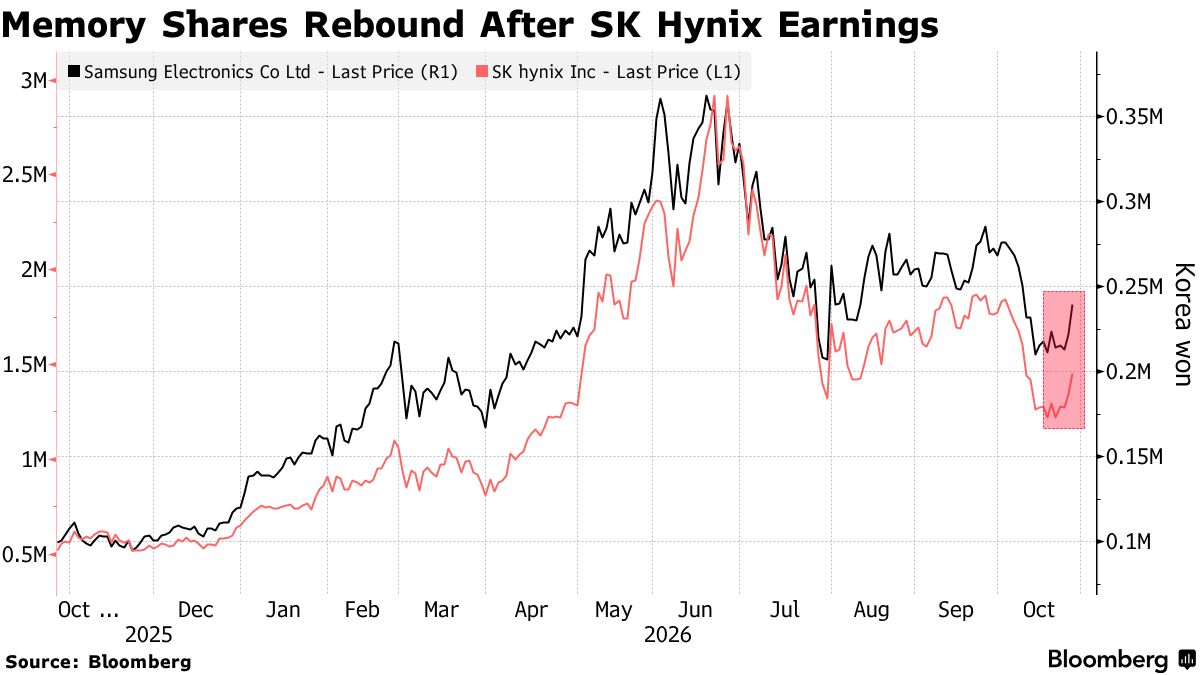
The chip rebound got another boost overnight as SK Hynix ($SKHY) reported record third-quarter results, saying it has sold out of DRAM and high-bandwidth memory (HBM) through 2029 and that HBM demand is double what it can supply, per Reuters. It also unveiled about 60 trillion won (roughly $45 billion) of additional buybacks and dividends. Its shares closed up 10.9% in Seoul, Samsung Electronics rose 9% and the Kospi gained 6.6%, per CNBC. The iShares Semiconductor ETF ($SOXX) is indicated up another 1% premarket as of 8:30 a.m. ET after gaining nearly 7% over the past two sessions.
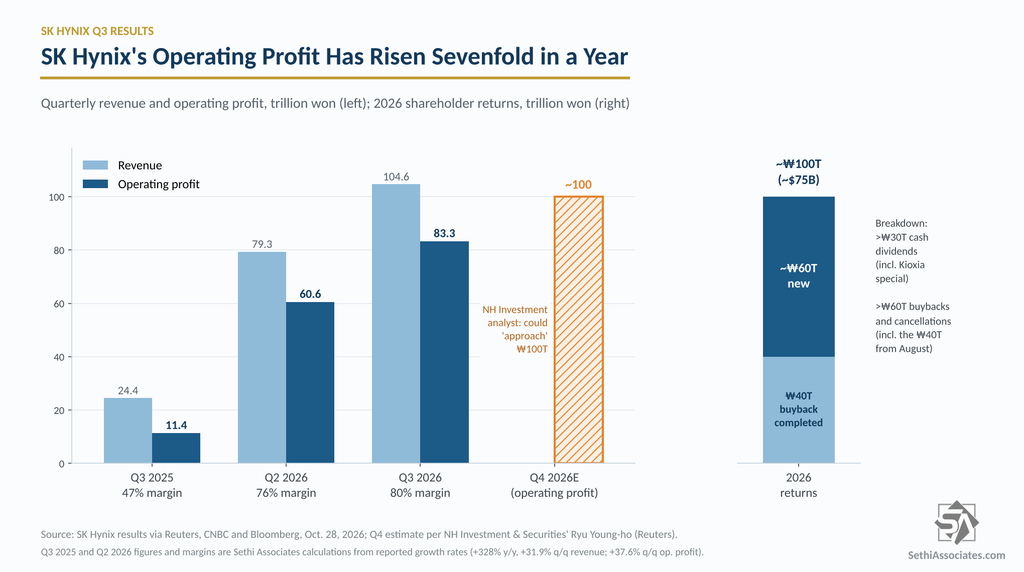
SK Hynix, which holds almost half the HBM market and supplies the memory for Nvidia’s ($NVDA) AI chips, saw revenue more than quadruple from a year earlier to a record 104.6 trillion won ($78.9 billion), beating the 98.3 trillion won LSEG estimate. Operating profit rose more than sevenfold to a record 83.3 trillion won, versus 76.7 trillion won expected. DRAM average selling prices rose by a high-20s percentage from the prior quarter, and server DDR5 shipments jumped more than 40%, per CNBC. One analyst though sees that accelerating through the end of the year: “Given that the fourth quarter is traditionally stronger, operating profit could approach 100 trillion won,” NH Investment & Securities’ Ryu Young-ho told Reuters. Not everything beat, though: net profit of 39.8 trillion won fell well short of the 61.4 trillion won FactSet consensus, per the WSJ.
The outlook is moving the group. SK Hynix expects the memory shortage to last through 2030. It has long-term agreements, typically five years, with 14 major customers covering more than half its 2027-2028 capacity, and it plans to raise capex “significantly” next year from at least 40 trillion won this year. Memory already accounts for about a third of AI data center costs, and Macquarie expects HBM prices to more than double in 2027, per Bloomberg.
And in a sharp contrast with Meta’s equity raise, SK Hynix is sending money to shareholders. After Meta Platforms ($META) announced this week it is raising $98 billion from investors to fund its AI spending, SK Hynix is returning about 100 trillion won (roughly $75 billion) to shareholders this year. That comprises more than 30 trillion won in dividends and more than 60 trillion won in buybacks and cancellations, including the 40 trillion won announced in August.
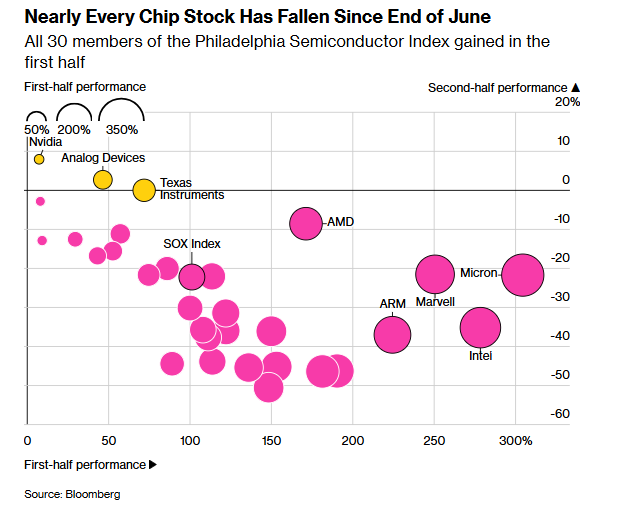
The rebound has ground to make up. SK Hynix shares have more than doubled this year but are still about half their June record, per Reuters, and nearly every chip stock has fallen since the end of June, per Bloomberg. Samsung reports Thursday.
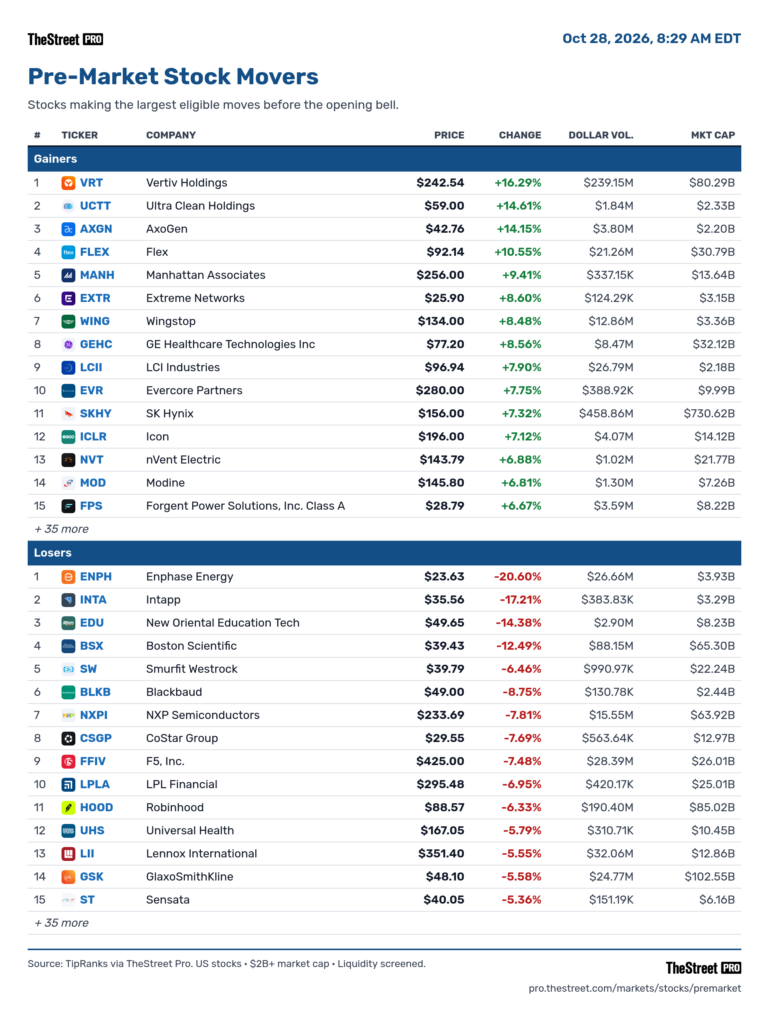
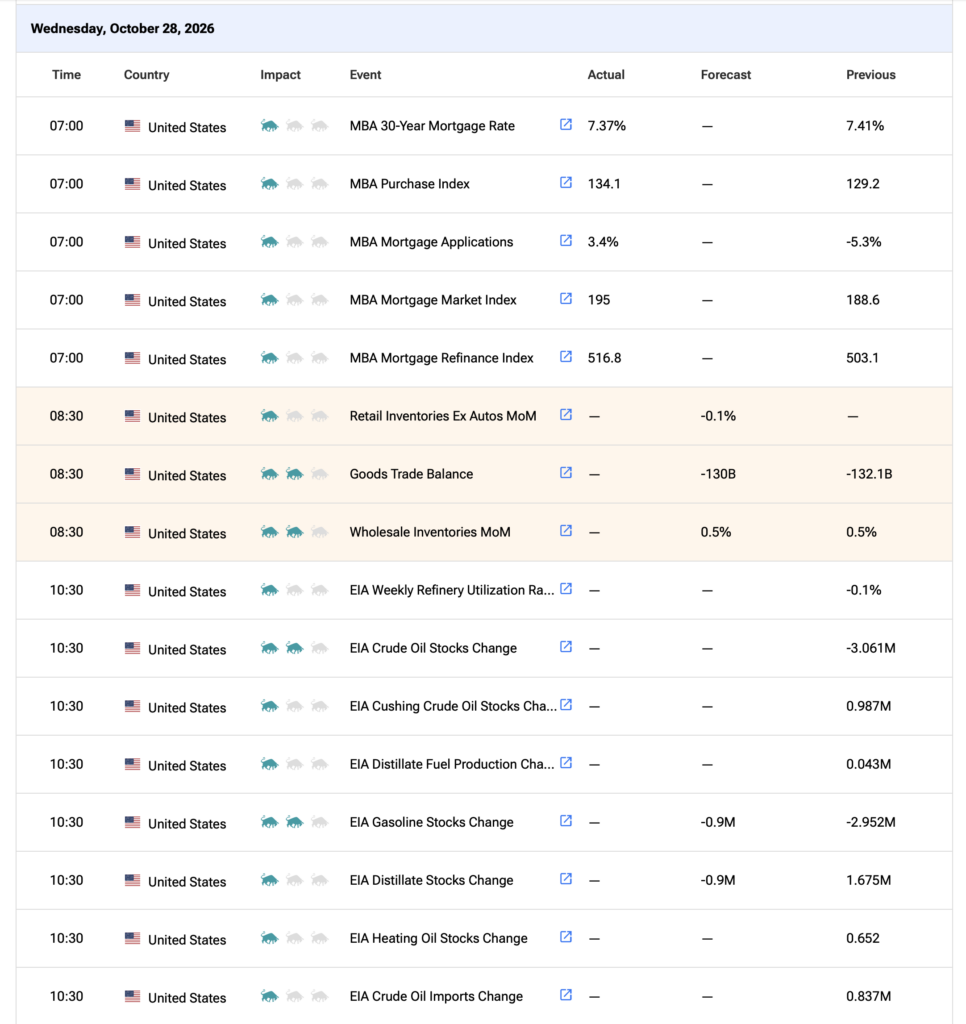
Source: TipRanks
SK Hynix and ASM International see tight chip capacity, here comes Fed Chair Kevin Warsh and other headlines moving the market this morning.
– $ULBI +145% (agrees to be acquired for $16.00 a share in cash)
– $BOOM +21% (Q3 sales and adjusted EBITDA exceeded the high end of guidance as backlog and cash flow strengthened)
– $AXGN +16% (Q3 beat and full-year revenue guidance was raised)
– $VRT +16% (Q3 organic orders more than doubled and full-year sales guidance was raised by $650 million)
– $UCTT +15% (Q3 results and outlook drove a sharp upside reaction)
– $LUNG +12% (Q3 results and outlook drove a sharp upside reaction)
– $GEHC +9.7% (Q3 beat, full-year EPS and free-cash-flow guidance was raised, and a $945 million acquisition was announced)
– $FLEX +9.5% (fiscal Q2 beat and the full-year outlook was raised)
– $LCII +7.6% (confirms an unsolicited $101-a-share cash acquisition proposal)
– $SKHY +7.5% (quarterly revenue exceeded 100 trillion won for the first time)
– $STLA +6.9% (Q3 net loss narrowed about 90% and the 2026 outlook was reaffirmed)
– $ETSY +6.6% (announces a leadership transition)
– $SNDK +4.2%, MU +3.6% (memory names rise after SKHY posted record quarterly revenue)
– $GEV +2.4% (Q3 orders surged 96%, backlog reached $197 billion, cash-flow guidance was raised and the buyback authorization doubled)
– $RAPP -23% ($350 million of stock and convertible-note offerings priced alongside a $30 million private placement)
– $ENPH -19% (Q3 revenue missed and the Q4 sales guide was roughly 20% below consensus amid weak US residential-solar demand)
– $INTA -17% (quarter beat, but the fiscal-year outlook failed to clear elevated expectations)
– $EDU -13% (fiscal Q1 results disappointed investors)
– $BSX -12% (Q3 EPS missed and Q4 and full-year profit guidance came in below consensus)
– $LOGI -12% (holiday-quarter sales guidance called for a decline and included a $70 million–$80 million supplier-incident hit)
– $SEDG -8.7% (solar-equipment sympathy decline following ENPH’s weak demand commentary and Q4 guide)
– $NXPI -8.1% (Q3 beat, but the Q4 guide was only roughly in line and fell short of elevated expectations)
– $FFIV -7.6% (Q4 beat, but fiscal 2027 growth guidance disappointed and operating margins contracted)
– $HOOD -6.4% (revenue missed as crypto revenue fell 55%, outweighing an EPS beat and record total revenue)
– $GSK -5.8% (headline Q3 beat was offset by weak vaccine sales, soft new-product performance and unchanged guidance)
– $LII -4.7% (Q3 profit fell, segment margin contracted 240 basis points and the full-year EPS outlook disappointed)
– $STX -2.5% (fiscal Q1 results prompted a modest sell-the-news reaction)
– $V -1.7% (fiscal Q4 earnings and revenue missed forecasts despite healthy payment-volume growth and a 16% dividend increase)
Let’s chart the market to see how this trade has the potential to absolutely roar into the holiday, and what could throw it off.
Knowledge@Wharton Why Narcissistic Leaders Don’t Like Remote Work.
Why Narcissistic Leaders Don’t Like Remote Work – Knowledge at Wharton
Positions: None.
Beginning at around 6 AM I shorted more indices on a scale.
Here is my cost basis today:
* $SPY $771.07
* $QQQ $724.38
Position: Short SPY (M) QQQ (VS)