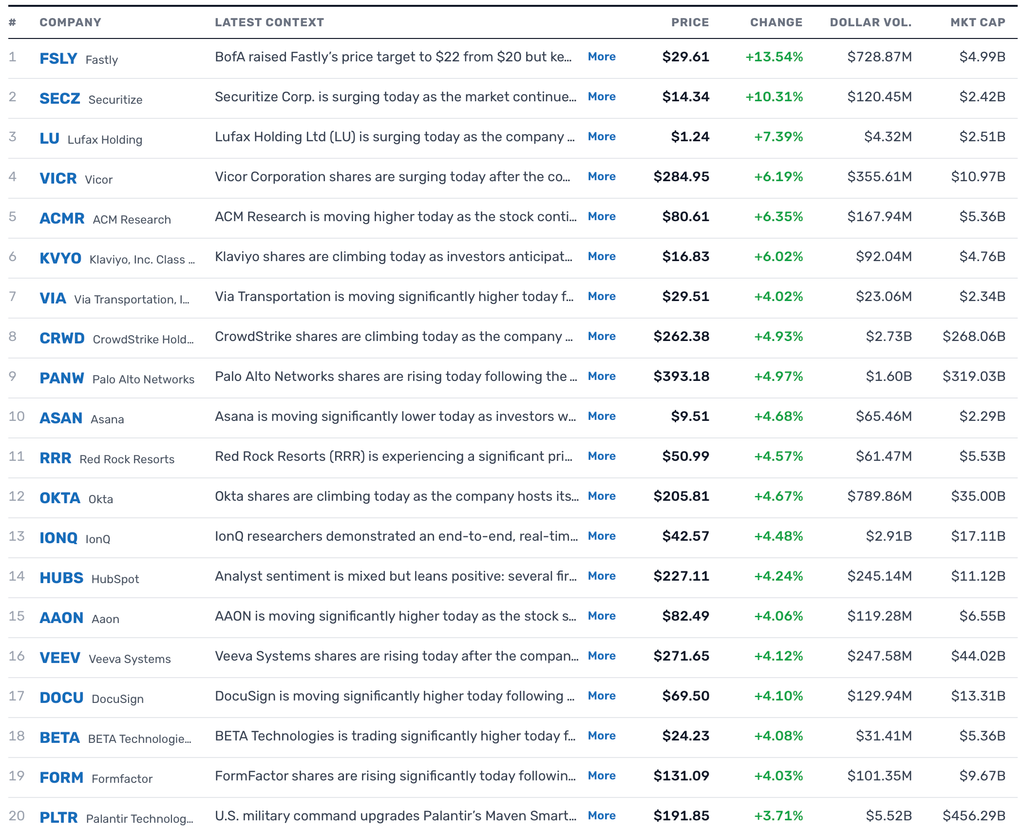
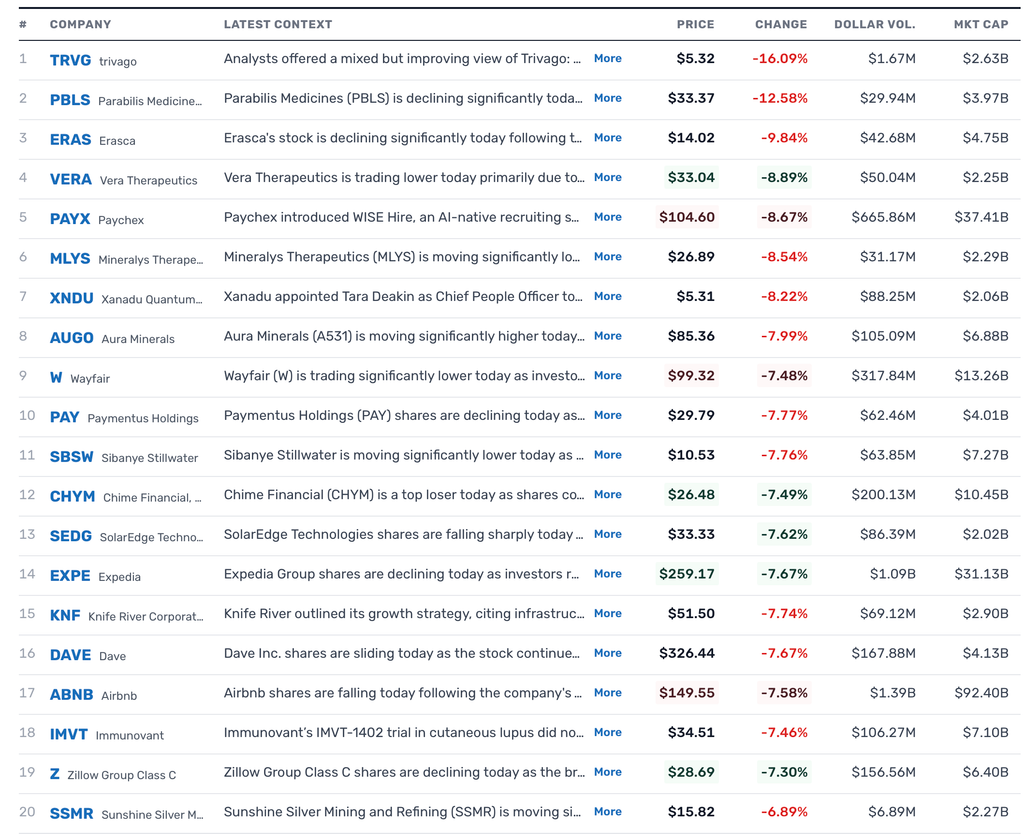
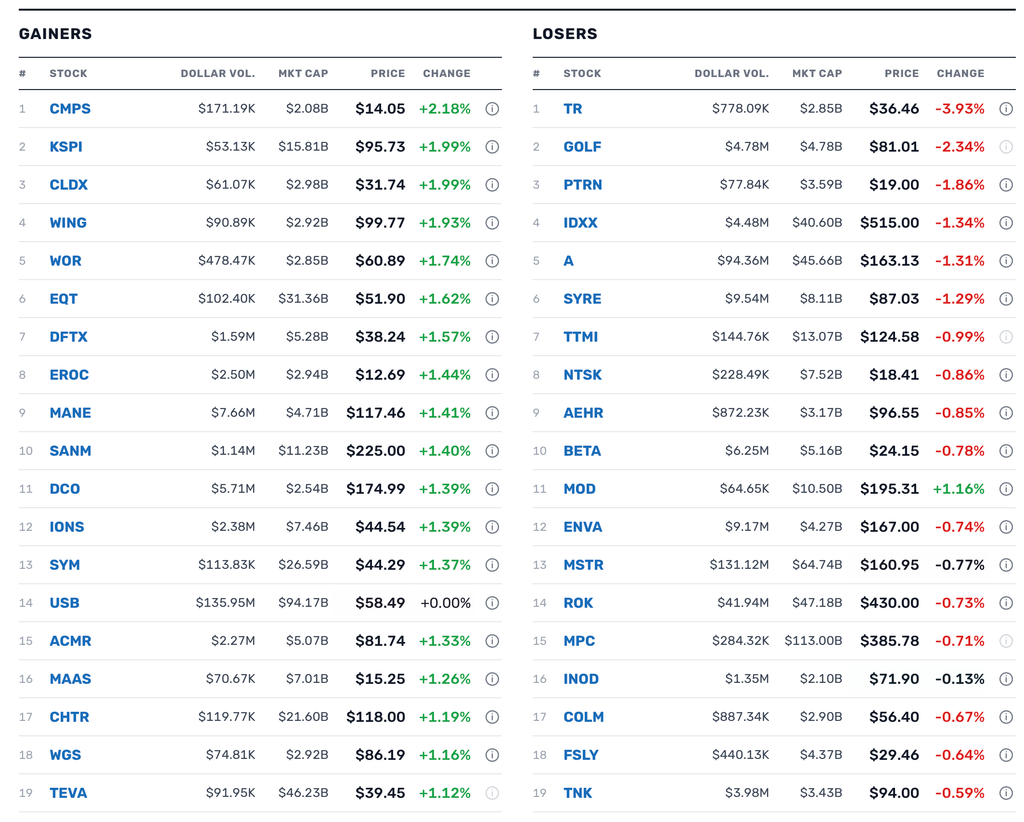
Wednesday’s After-Hours Advancers and Decliners

Position: None
Position: None
The problem with traps is that they don’t seem like traps until it’s too late.
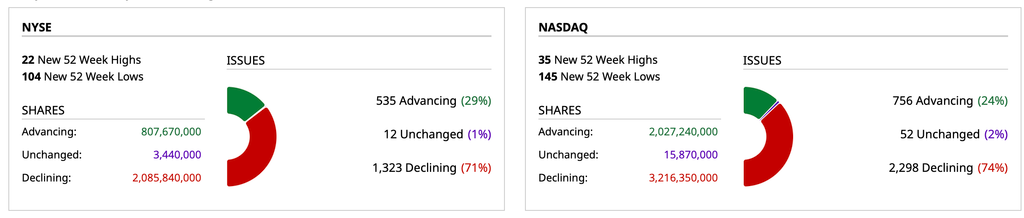
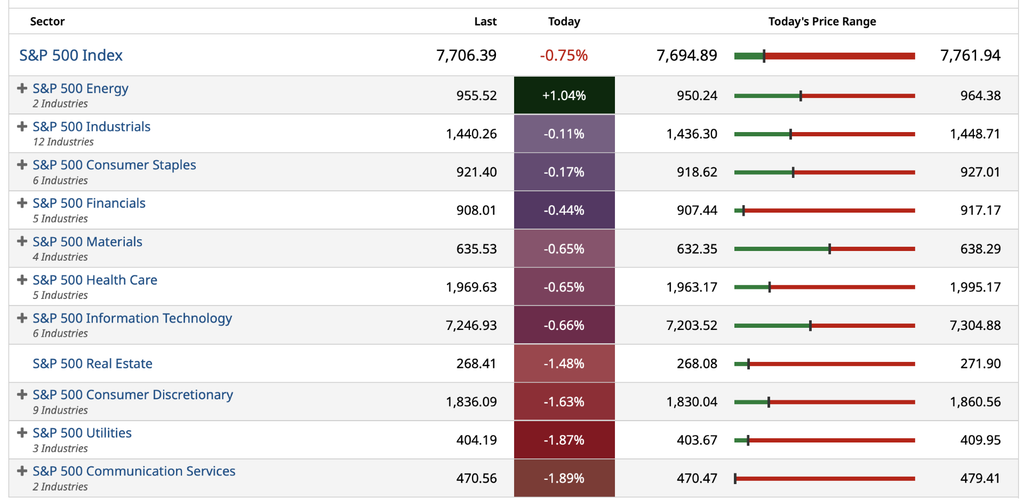
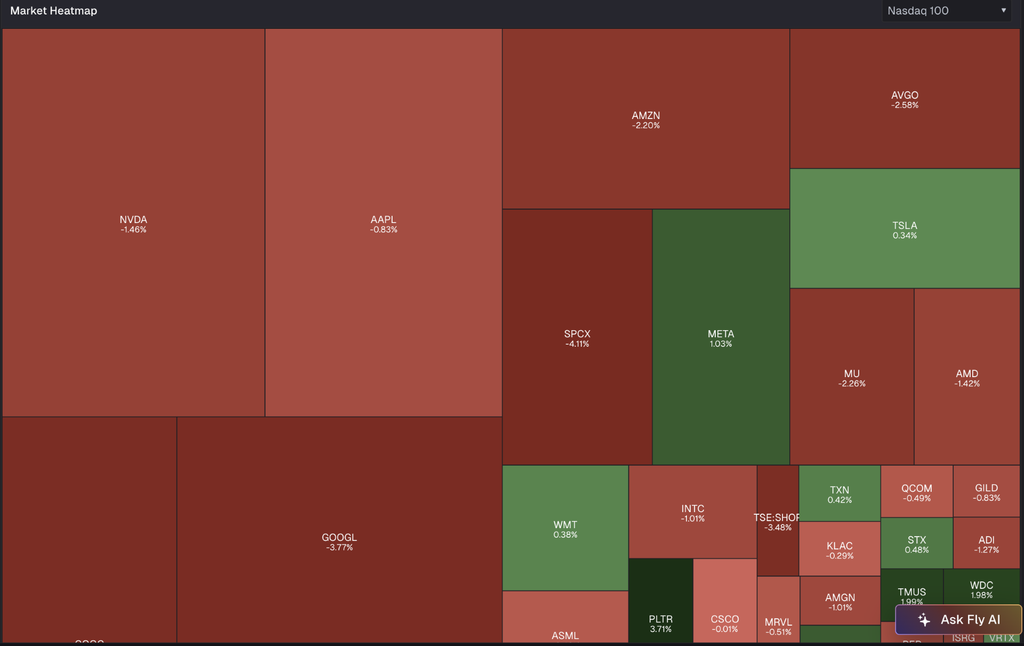
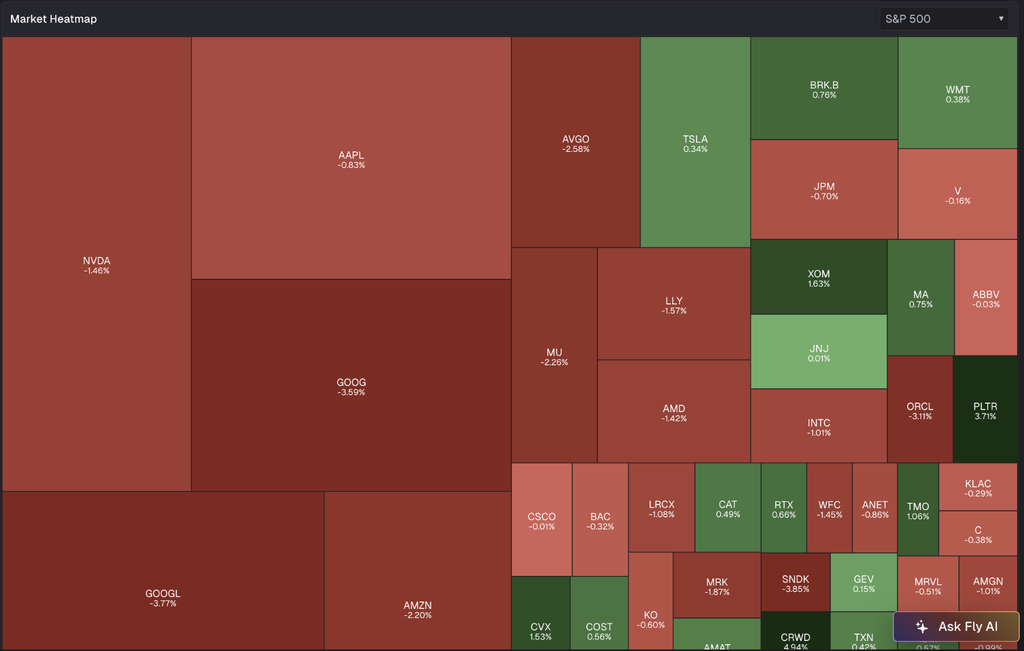
All day long the bulls are denying the validity of today’s decline.
The principal criticism they have is the strength in S&P EPS.
One month ago I debunked the argument that strong EPS means strong stock prices in this column (reposted in its entirety because it was an important one):
BY DOUG KASS · Aug 25, 2026, 9:35 AM EDT
The investment mosaic is far more complicated than suggested by hosts, investment strategists, panelists and guests in the business media.
Specifically, many distill the bullish argument to this: Since 2026 S&P EPS is expected to be about +20% (well above consensus expectations at the beginning of the year), the S&P price gains in 2026 should be about in line with that profit growth (or better). Candidly, that sort of distillation is the essence of “first-level thinking.”
First-level thinking is lazy, simplistic and superficial — it looks for simple formulas and easy answers. To paraphrase Howard Marks:
Most recent examples of when S&P EPS was better than expected and strong were in 2018 (+20.5% EPS growth, -6.6% decline in the S&P), 2006 (+16.7% EPS growth, +11.3% rise in the S&P), 2005 (+19.3% EPS growth, +8.8% rise in the S&P) and 2004 (+20.1% EPS growth, +4.2% rise in the S&P).
Going back, during the last 50 years — other 12-month periods with robust EPS growth and less-than-stellar to down S&P price include the years 1993, 1992, 1987, 1984, 1979 and others.
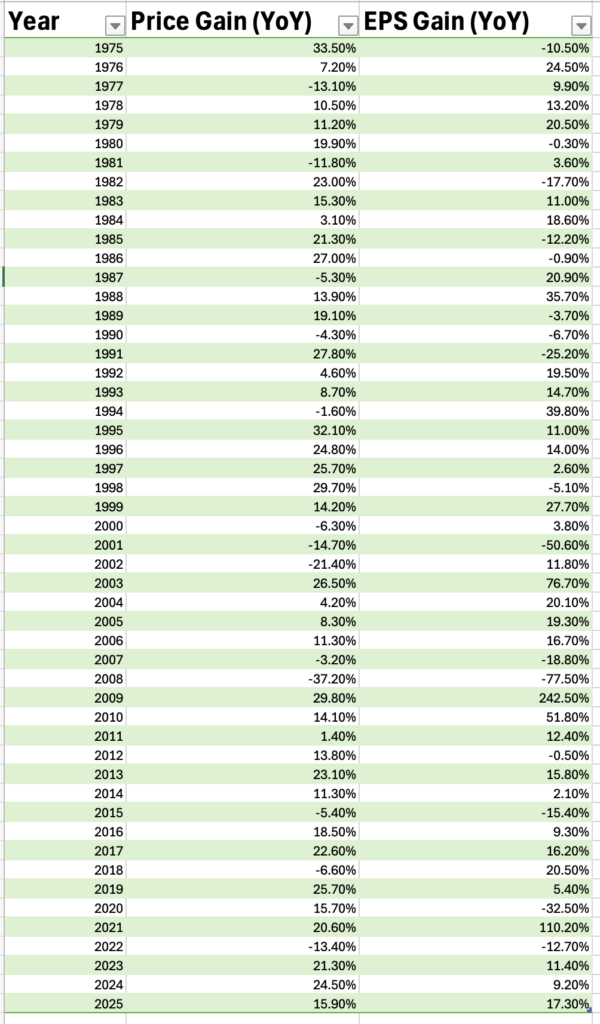
Furthermore, I would argue that the backdrop of 2026-2027 offers unique market challenges relative to prior periods since 1975 (“it’s different this time”):
* High and rising inflation and interest rates.
* A burgeoning deficit and U.S. debtload may be a permanent condition giving the general lack of discipline from both parties in Washington DC.
* Improvisational geopolitical and fiscal policies that present threats to political and economic stability.
* Both parties are moving to extremes — the Republican party more to the right and the Democratic party to the left. With a possible Democratic congressional majority win in November, anti-corporate policy (higher corporate taxes, etc.) may be in the offing.
* Traditional valuation metrics in the 98%-tile and two standard deviations above the average.
* The AI capital spending spree and gains from investments have inflated S&P profit reports — as noted in my “More Tales From Nvidia” series an earnings reckoning may lie in the not too distant future.
Looking at any one variable (e.g. S&P EPS growth) to forecast S&P price is fatuous, simplistic, lazy and is contradicted by past investment returns data.
Stated simply, the correlation between S&P EPS growth and S&P price gains is a crutch and is not a reliable indicator.
The investment mosaic is far more complex than many present in the business media.
Position: Short SPY (VS)
The stock continues to be distributed but is now hovering at a critical level.
Wolf Street howls about the bond blood bath.
Position: None
On the recent strength in cannabis stocks I am selling a portion of all my individual weed holdings and putting the proceeds into Green Thumb ($GTBIF), which has been lagging. Green Thumb is the company likely to attract the most institutional interest and is best of breed.
Moreover, on the announcement of rescheduling of cannabis I expect GTBIF to quickly seek a U.S. uplisting, making it eligible to be included in exchange-traded funds (just as what happened with Trulieve ($TRLV)).
Position: Long MSOS common (VL) and calls (S), GTBIF (M)
From Peter Boockvar:
Poor 5 yr note auction
I rarely comment on a 5 yr Treasury auction but in light of what is going on with bond yields, I’ll give you the stats because they are sending bond yields even higher with the 10 yr now at 5.12% and the 30 yr kissing 5.40%. The 5 yr by the way is at a 19 year high, along with 10s and 30s.
The auction was weak. The yield of 5.033% was a large 3 bps above when issued pricing. The bid to cover of 2.21 was below the previous one year average of 2.34%. Also, I had to go back to May 2024 to see the last time dealers were left with this much of a 5 yr auction at 11%.
Bottom line, a poor auction with Treasury trying to sell paper into a weak market and where yields weren’t attractive enough to bring in the buyers. The bond bear market continues on.
Position: None
We’re staying on the sidelines until we have more clarity on several macro developments.
I am starting to add to a very small $PEP position at $129.64.
The recent decline may have discounted the weak quarterly EPS report that we have expected.
Position: Long PEP (S)