Boockvar on Guidance and Opinions

From Peter Boockvar:
No more ‘forward guidance’ but still plenty of opinions
I know there is a rethink going on about the use of ‘forward guidance’ but we are still getting a form of it in terms of hearing what Fed members are thinking and the minutes certainly gave us plenty of their thoughts. My bottom line is this, there was a lot of commentary on the inflation picture and clearly a main focus of theirs again. So, we’ll have to see if they hike rates, as the market is currently pricing in a 100% chance of one hike and a 48% chance of a second by year end, but for now there is no chance they are thinking about a cut.
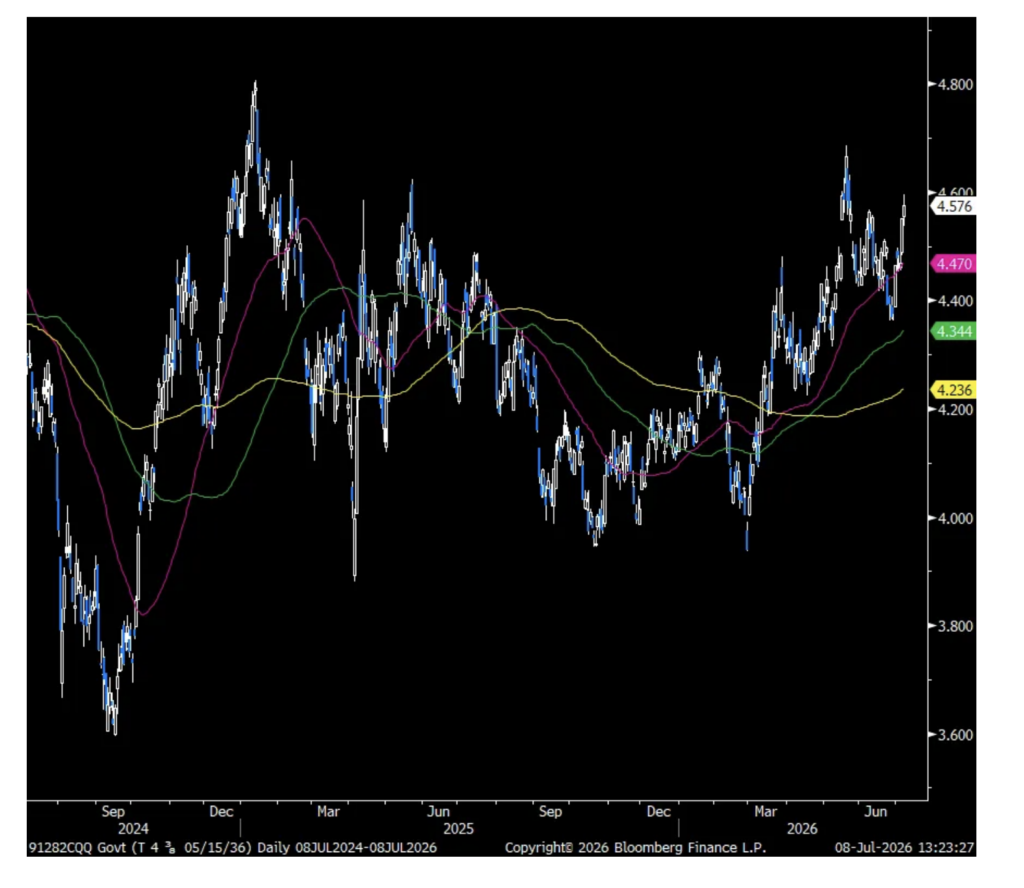
Yields are little changed in response.
I’ll give a bunch of quotes here but try to focus mostly on those that mention ‘several’ or ‘many’ or ‘majority’ when referring to a particular opinion/point.
“Several participants commented that price pressures had become more broad based, with a large share of goods and services—including transportation, airfares, petrochemical products, and agricultural inputs—experiencing substantial increases. Several participants remarked that services price inflation excluding housing had declined little and remained high.”
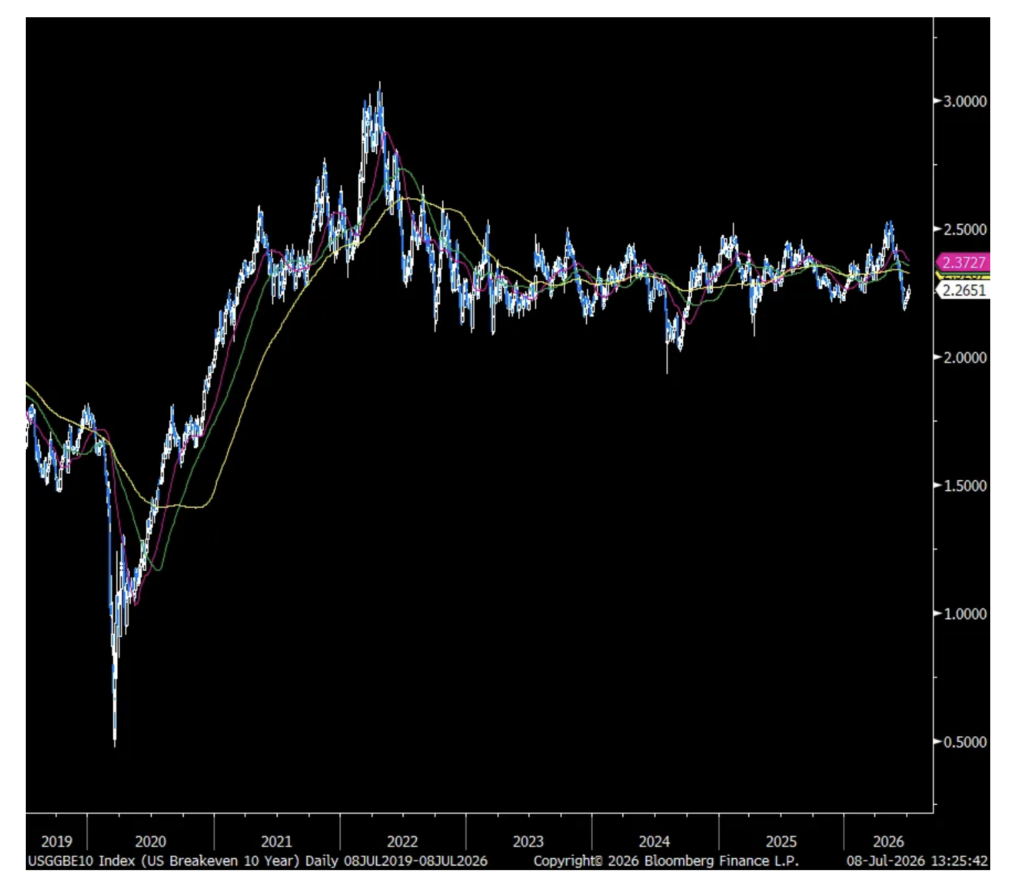
“The majority of participants commented that most measures of medium- and longer-term inflation expectations remained at levels consistent with the Committee’s 2 percent objective.”
“Participants anticipated that inflation would remain elevated in the near term and then begin to decline as the effects of tariffs and energy price increases wane and other supply disruptions related to the closure of the Strait of Hormuz diminish. Participants judged that the risks to the inflation outlook were still tilted to the upside.”
“Many participants noted that elevated commodity prices and supply disruptions could persist longer than currently anticipated. Several participants reported that their business contacts were facing notable cost pressures.”
“Several participants noted, however, that firms in their Districts reported that they had been cautious about increasing prices, citing concerns that higher prices could reduce demand or their market shares. Many participants noted that ongoing strong demand for AI infrastructure would likely sustain upward pressure on prices for technology products and electricity. Most participants remarked that growth in economic activity that exceeded that of potential output, owing in part to strong AI business investment, could contribute to more persistent inflationary pressures.”
“The majority of participants highlighted the possibility that, after several years of inflation above 2 percent, continued elevated inflation rates could begin to affect inflation expectations and wage- and price-setting decisions.”
On the labor market, “Several participants observed that other labor market indicators, such as job openings, initial unemployment insurance claims, and layoffs had remained stable in recent months and that such data pointed to a balanced labor market. Several participants noted, however, that declines in the job-finding rate and certain survey measures of job availability reflected a labor market with relatively low dynamism. Many participants remarked that the labor market was not currently a source of inflationary pressures, or that nominal wage growth remained consistent with inflation moving toward 2 percent.”
And, “several participants noted that the solid payroll employment data in recent months could signal increased labor market momentum. Several participants cited, however, the possibility that uncertainty related to geopolitical developments or the broader economic outlook could lead firms to reduce hiring or begin implementing layoffs.”
The Fed’s bottom line on the economy, “Participants generally expected solid real GDP growth to continue throughout the remainder of the year and pointed to several factors likely to support continued expansion, including ongoing AI-related investment, household spending, and fiscal policy.”
Position: None