Lagarde to Leave ECB Early, Adding to Leadership Turnover

After months of speculation that she would leave before her eight-year term ends in October 2027, European Central Bank President Christine Lagarde announced today that she will step down on February 7, 2027, just hours ahead of the Governing Council’s latest rate decision, according to Bloomberg. Hers is the third of the six Executive Board seats set to turn over by May.
Lagarde becomes only the second president in the ECB’s 28-year history to leave early, after Wim Duisenberg, whose shortened stint had been agreed in advance to break a France-Germany deadlock before the bank’s launch.
Lagarde, 70, told fellow policymakers she wanted “greater freedom to express her views” because she could not stay neutral on developments in France ahead of its April presidential election, the Financial Times reported. She has ruled out running herself and has been in talks to chair the World Economic Forum. In a video message, she said she leaves with “a sense of good work done, and an ECB that is fit for the future,” per Bloomberg.
The Decision
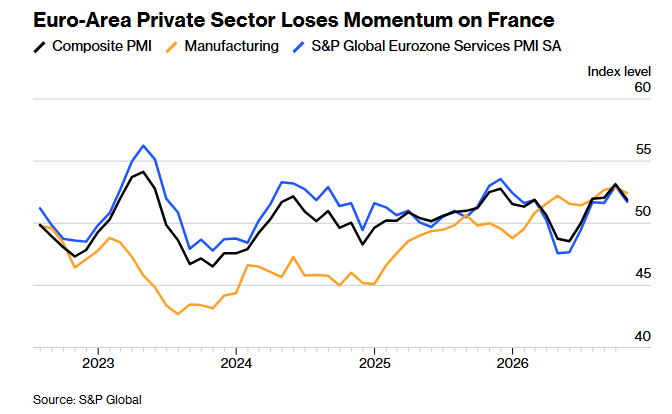
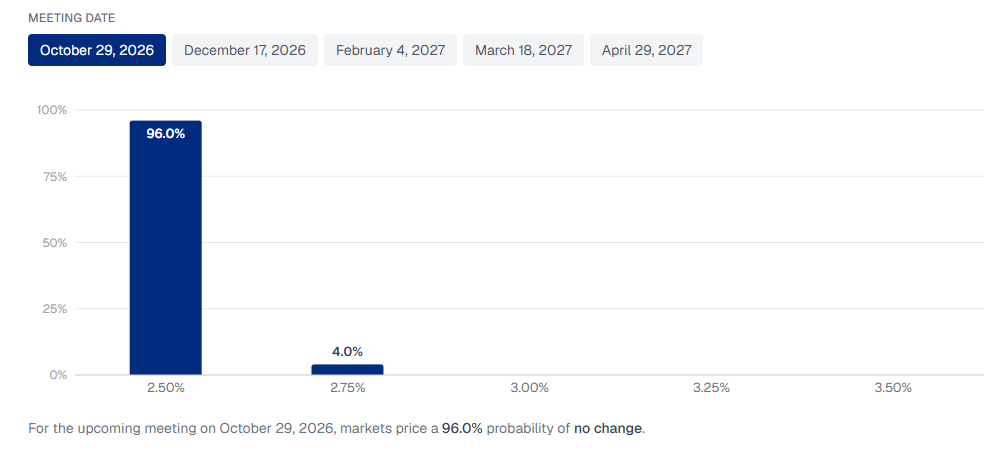
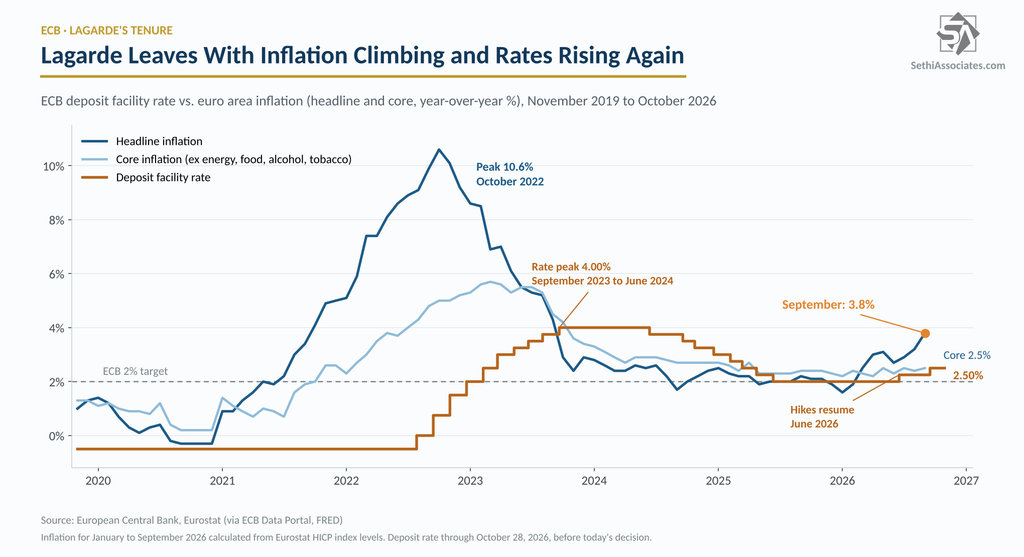
Markets and economists widely expect the ECB to hold its deposit rate at 2.50% later this morning as officials weigh higher energy prices and recent bond-market turmoil. That would follow hikes in June and September to counter elevated inflation tied to the Iran war, but markets expect further tightening, Bloomberg noted. Bloomberg Economics expects Lagarde to wrap up the hiking cycle in December, which could give her successor some room before any further rate changes are needed. Euro area inflation rose to 3.8% in September from 3.2% in August, with core at 2.5%, according to Eurostat.
The decision is due at 9:15 a.m. ET, followed by Lagarde’s press conference at 9:45 a.m. ET.
The Succession Race
Three of the six Executive Board seats — the presidency, the chief economist and the markets portfolio — turn over by May. Isabel Schnabel is leaving a year early to join the International Monetary Fund and Philip Lane’s term expires in May, so governments will likely try to settle all three in one deal, with EU summits in November and December, per Bloomberg.
For the presidency, Spain is backing Pablo Hernández de Cos, general manager of the Bank for International Settlements and former Bank of Spain governor, while the Dutch government is backing former Dutch central bank chief Klaas Knot, the FT reported. Economists surveyed by Bloomberg in October see De Cos as the favorite. Knot built a reputation as a hawk during the eurozone debt crisis but has since softened into a pragmatist seen as responsive to bond-market stress, according to The Wall Street Journal, which also noted that an outsider can’t be ruled out given Lagarde herself was a last-minute pick in a 2019 package deal.
The timing also lets President Emmanuel Macron help pick Lagarde’s successor before his final term ends, with far-right candidate Marine Le Pen leading French polls, which risks accusations of political encroachment on the ECB’s independence, Bloomberg added. Banque de France’s governor also left early, with Macron naming his chief of staff, Emmanuel Moulin, to the post.
Market Reaction
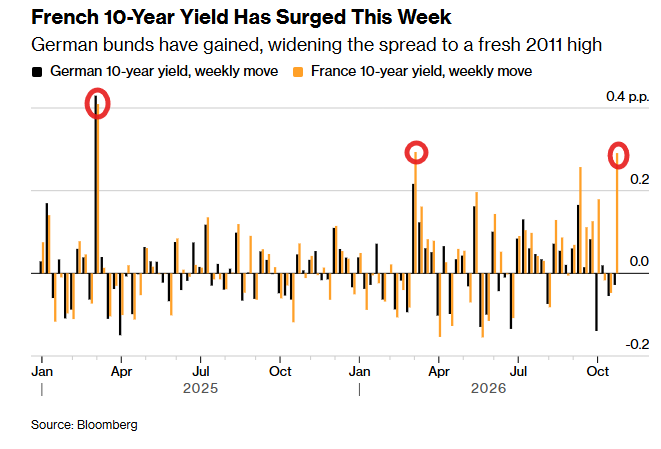
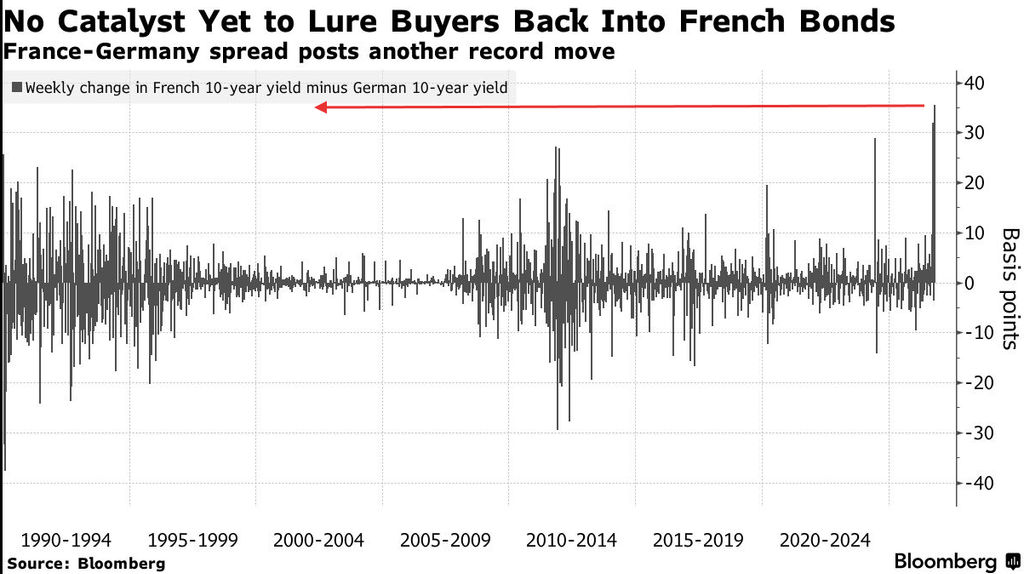
The news barely moved markets following the announcement. The euro was down 0.1% against the dollar at $1.114, per the FT, while the 10-year German Bund yield was 1 basis point lower at 3.36% and the French-German 10-year spread held at 154 basis points, according to Bloomberg. That spread recently hit its widest since 2011, and French long-term borrowing costs topped 5% last week for the first time since 2002 per the FT. Berenberg chief economist Holger Schmieding told the FT the departure doesn’t change the outlook for ECB policy or for how the bank handles French risks.