Atlanta Fed Q3 GDP Tracker Eases to +3.5%

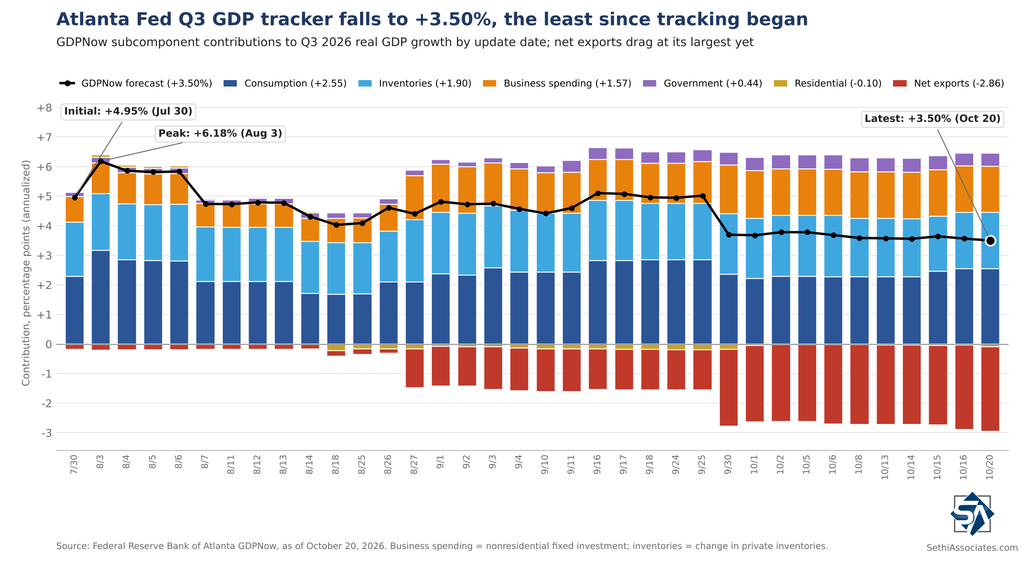
The Atlanta Fed’s Q3 real GDP tracker slipped to +3.50% as of October 20, the least since it initiated tracking and down from +3.59% on October 8th.

A +0.28% rise in the contribution from consumption (to +2.55% from +2.27%) after the retail sales report was more than offset by three declines: a -0.17% drop in net exports (to -2.86% from -2.69%) after the import and export prices data, and smaller declines in inventories (-0.08%) and residential investment (-0.07%, after this morning’s housing starts).

This continues to be consistent with my ongoing caveat that in both Q1 and Q2 we saw this indicator fall sharply the month before the actual GDP reads (which for Q3 will be next week).

The reading for now remains above the blue chip consensus* of ~+2.5%.

Here’s the breakdown of the components as of October 20 and changes from my last update October 8:

Consumption = +2.55% (+0.28%)

Inventories = +1.90% (-0.08%)

Nonresidential fixed investment (biz spending) = +1.57% (+0.01%)

Gov’t = +0.44% (-0.04%)

Residential investment = -0.10% (-0.07%)

Net exports = -2.86% (-0.17%)

GDPNow Forecast: +3.50% (-0.09%)
Pending Home Sales Plummet to Record Low

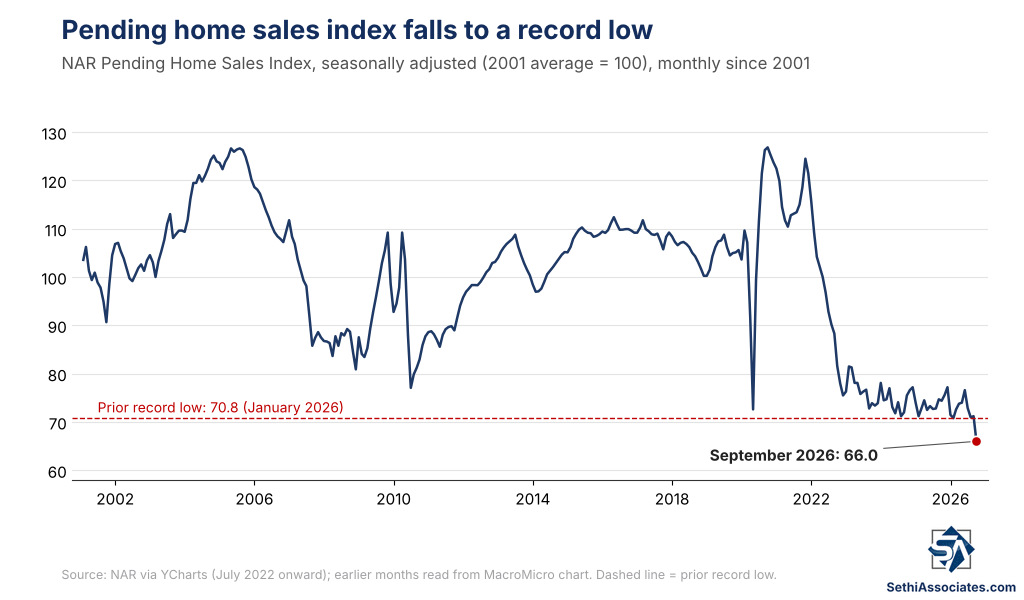
Contract signings for existing homes plunged 7.3% in September, the biggest drop since December, far worse than the 3.9% decline expected and taking the index to a record low.

▪️ The index fell to 66.0, a record low in data back to 2001, well below January’s prior low of 70.8

▪️ All four regions saw declines, led by the West (-9.2% month-over-month, -15.0% year-over-year)

▪️ 30-year mortgage rates per Freddie Mac averaged 6.86% in September, the highest since January 2025

And these do not account for cancellations, which have been rising.

BofA Still Looks for October Fed Hike

BofA’s Bhave sticks with an October Fed hike call, though markets price only ~20%.

BofA’s take: It comes down to who Chair Warsh really is.

“The inflation picture has gotten worse on net since the Sep meeting. The beat in Sep inflation was large/broad-based enough to offset last month’s bigger-than-expected downward revisions. Core PCE could plausibly end the year at 3.4%, especially since the booming nominal economy increases the risks that the energy shock will get passed through. Most of the FOMC was on board with two hikes this year. Why not do the second one in Oct, to retain the optionality for a third in Dec?”

  • Core PCE was 3.0% y/y in August; BofA sees ~3.1% in September
  • Year-end lands at 2.9% to 3.4% depending on Oct-Dec monthly prints
  • Even 0.15%/month (~1.8% annualized, below the Fed’s 2% target) only gets it to 2.9%

“Delivering a hike in Oct would firmly signal to markets that the Fed has exited the business of coordinated messaging [referring to speeches from several policymakers].”

“With the Oct meeting just six days before the elections, policymakers might not want to risk a market disruption by delivering a large hawkish surprise. This is perhaps the best reason for the Fed to stay on hold in Oct.”

“We have low conviction as to whether Warsh is serious about bringing a ‘sea change’ to the Fed. We’re giving him the benefit of the doubt for now, by sticking with our forecast for a hike in Oct. But it’s a very close call.”

Housing Starts Second-Least Since May 2020

Housing starts fell 5.2% in September to 1.221 million, the lowest since May (which was the lowest since May 2020), below all estimates in a Bloomberg survey (1.305 million median). August’s decline was also revised deeper, to 5.9% from 2.6%.

Single-family starts fell 4.6% to 859,000, the largest drop since April, to the lowest since September 2025. Multifamily fell 7.2% to 349,000.

Building permits though slipped just 0.2% to 1.400 million, better than the 1.3% decline expected, after an upwardly revised 2.1% drop in August, as multifamily rose 5.9% to 503,000, offsetting a 4.0% drop in single-family permits to 845,000, the lowest since March 2023.

Completions rose 2.2% to 1.192 million, but single-family completions were 840,000, the lowest since May 2020.

ADP Weekly Job Growth Estimate Pulls Back

Preliminary weekly hiring report from ADP for the four weeks ending October 3rd fell for the first time since mid-August to +74k (+18.5k/wk), but only after upward revisions to the prior two weeks took the prior week to the highest since early June.

That takes the 4-week moving average to +80.7k, a seventh week of gains and the best since July 11th.

Image

Tech Under Renewed Pressure

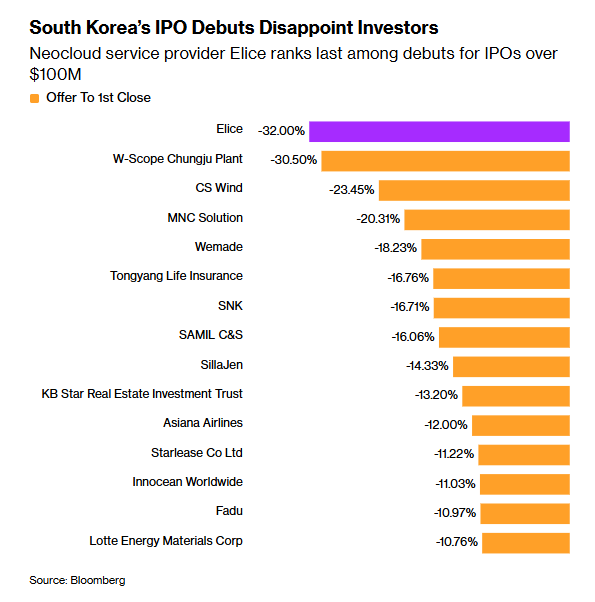
After Mondays bounce, Tech is lower in the premarket with the most recent pressure coming after Elice Inc., a $750 million Korean data center and AI developer saw its shares drop as much as 35% following its IPO.

In a sharp reversal from the broad-based pile-in of recent years, global markets are now being much more selective and demanding with AI bets. “Elice’s disastrous debut is another confirmation that the era of ‘buy everything AI’ has given way to ‘question everything AI,’” said Hebe Chen, senior market analyst at Vantage Global.

Meanwhile, AI funder Softbanks credit-default swap level hit the highest among major Japanese companies.

From Bloomberg.

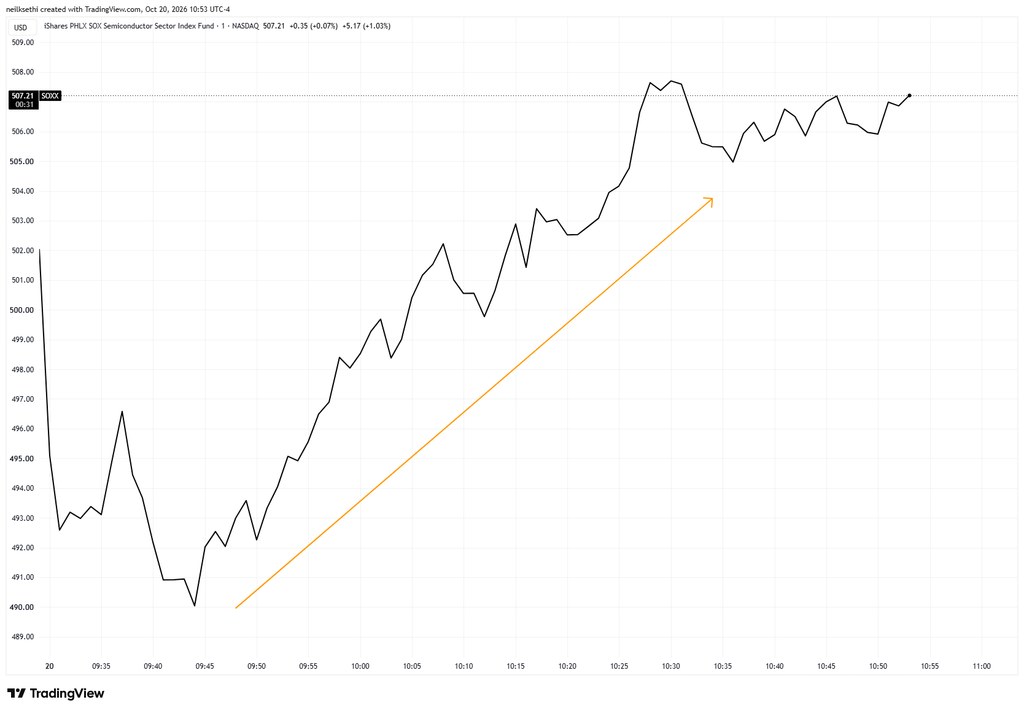
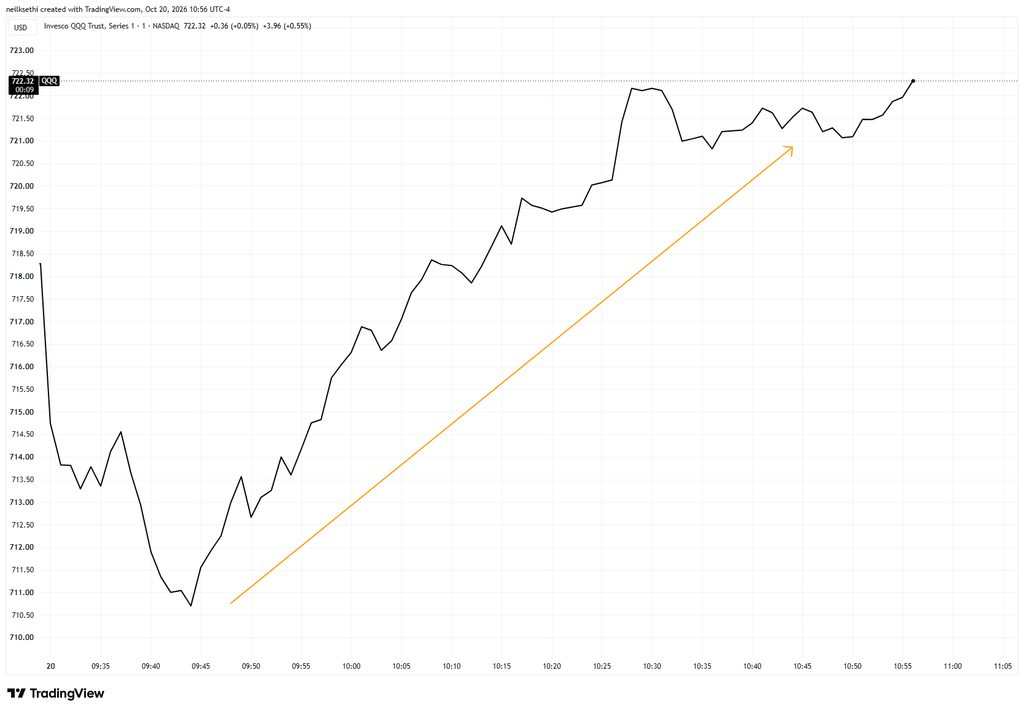
Tech Bounces Back but Rising Yields Pressure Non-Tech

The megacap growth sectors went from worst (Friday) to first (Monday) as chipmakers snapped an eight-session losing streak, but rising Treasury yields left seven sectors, the Dow Jones Industrial Average, and the equal-weight S&P 500 lower.