Meanwhile, in France

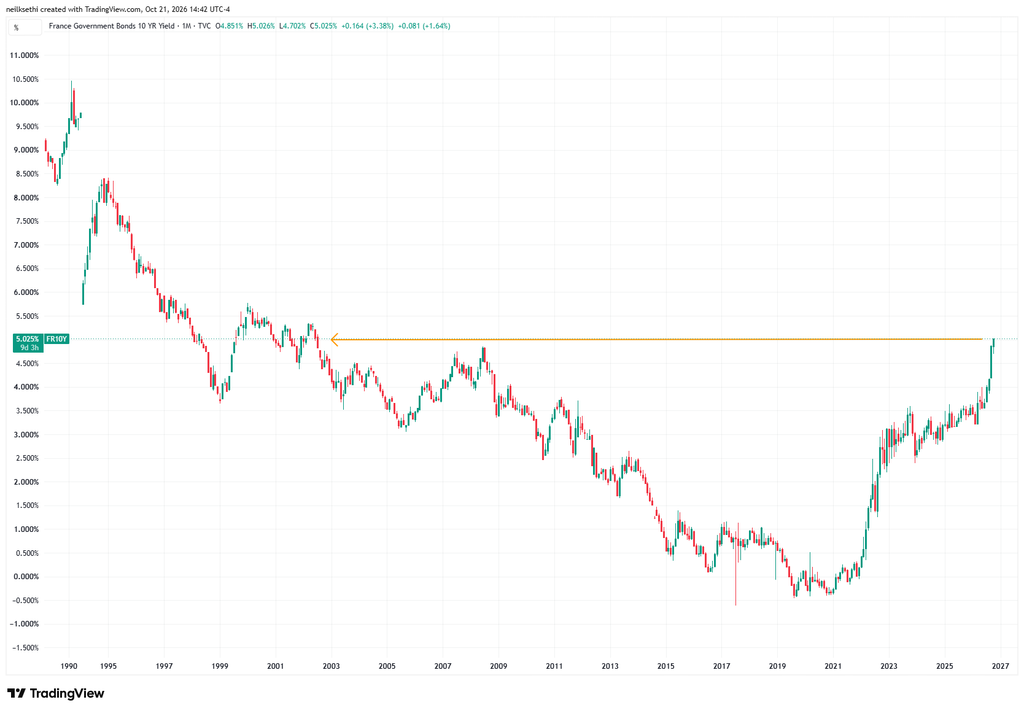
French 10-year bond yields join the U.S. in the 5% club, hitting that mark for the first time since July 2002.
While bond yields are rising globally, France has been hit especially hard by concerns over its precarious fiscal position, made worse by higher energy prices. Leadership there faces growing discontent over cost-of-living issues that have sparked violent protests, with similar unrest flaring in Italy, Belgium and Portugal. But its options are limited with the debt ratio already near 120% of GDP, almost twice Germany’s. Some investors are going so far as to draw parallels with Greece, the epicenter of the crisis that nearly splintered the euro zone early last decade.
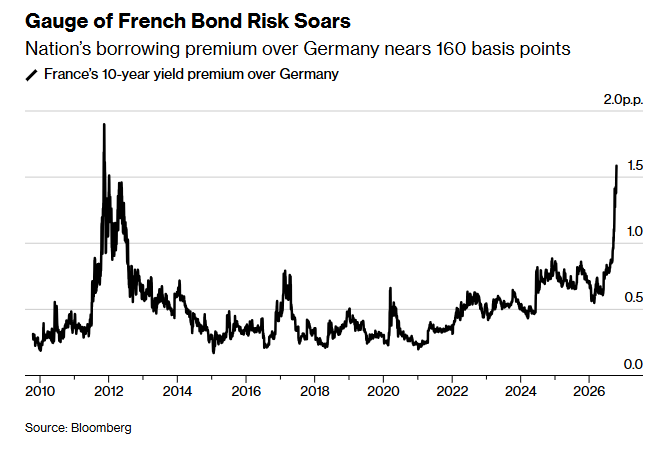
Those worries have pushed the gap between French and German yields to nearly 160 basis points, the most in 15 years (chart via Bloomberg). That has forced policymakers to more seriously consider a proposed 2027 budget with about €43 billion ($48 billion) in deficit-cutting measures, but Prime Minister Sébastien Lecornu still lacks a majority to pass it. Moody’s is also due to rule on France’s credit rating Friday, with most economists expecting a downgrade. Oh, and presidential elections are just six months away.